
It’s 2026, and the echoes of the 2023 Collective Bargaining Agreement still reverberate through the NBA like a stone dropped into a pond—only the ripples have turned into waves that keep reshaping the entire shoreline. For years, fans and retired legends have argued that the league has grown soft, with rule changes scrubbing out physicality and three-point barrages replacing mid-range artistry. But beneath the surface-level grumbling lies a structural earthquake: a new CBA engineered to bulldoze superteams that has instead straitjacketed the very franchises that do things the “right way.”
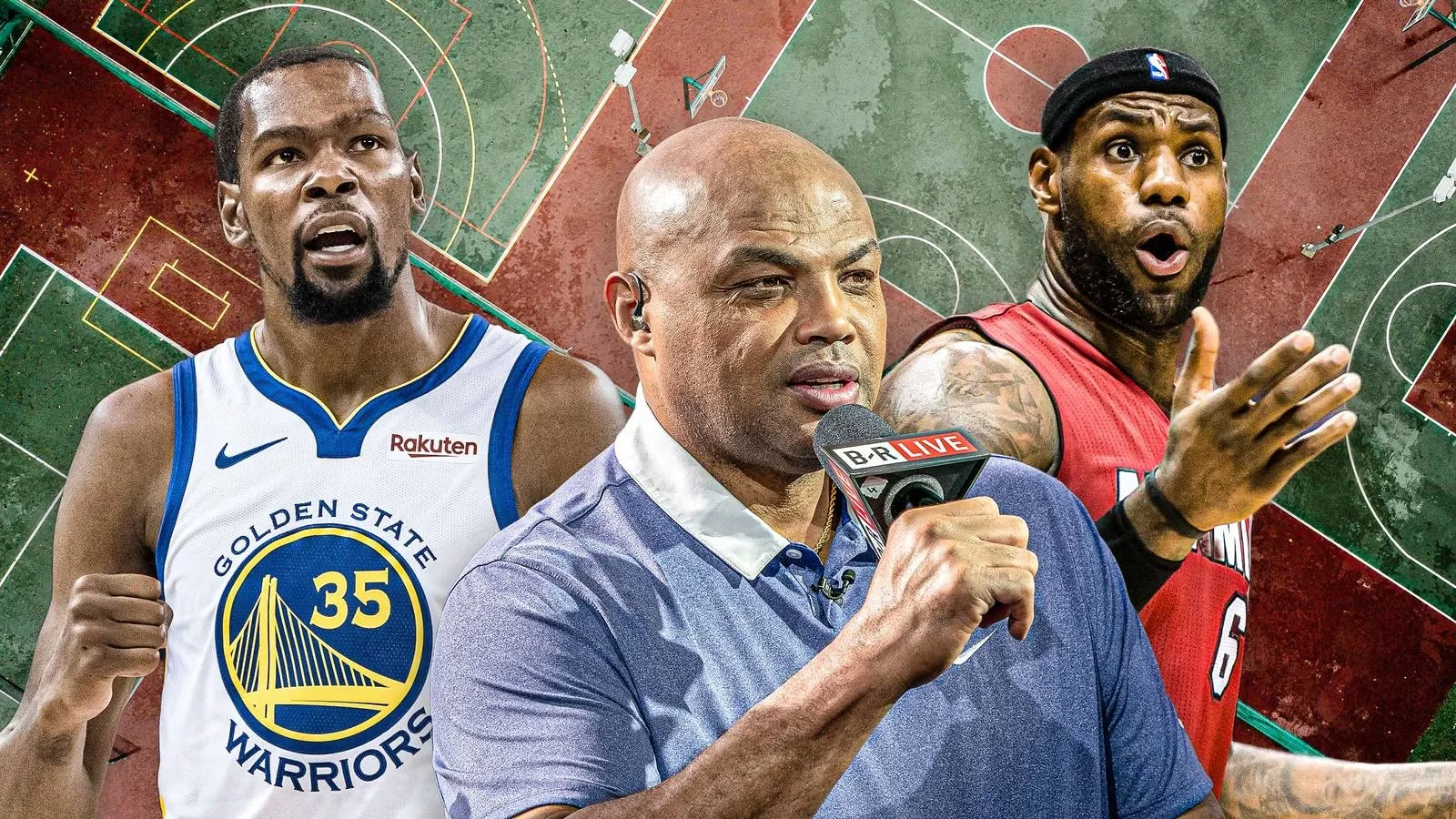
Charles Barkley, never one to muzzle his opinions, reignited this debate in 2025 on a podcast when he pointed squarely at two future Hall of Famers as the root cause of the punishing new system. LeBron James and Kevin Durant, he argued, are the reason the owners and the Players’ Association agreed to a CBA that treats luxury tax offenders like financial criminals. Barkley’s logic was straightforward: the superteam era that LeBron unleashed with “The Decision” in 2010, and that Durant cemented by joining the 73-win Warriors in 2016, so infuriated the league that it created an agreement designed to kneecap any attempt to stockpile stars.
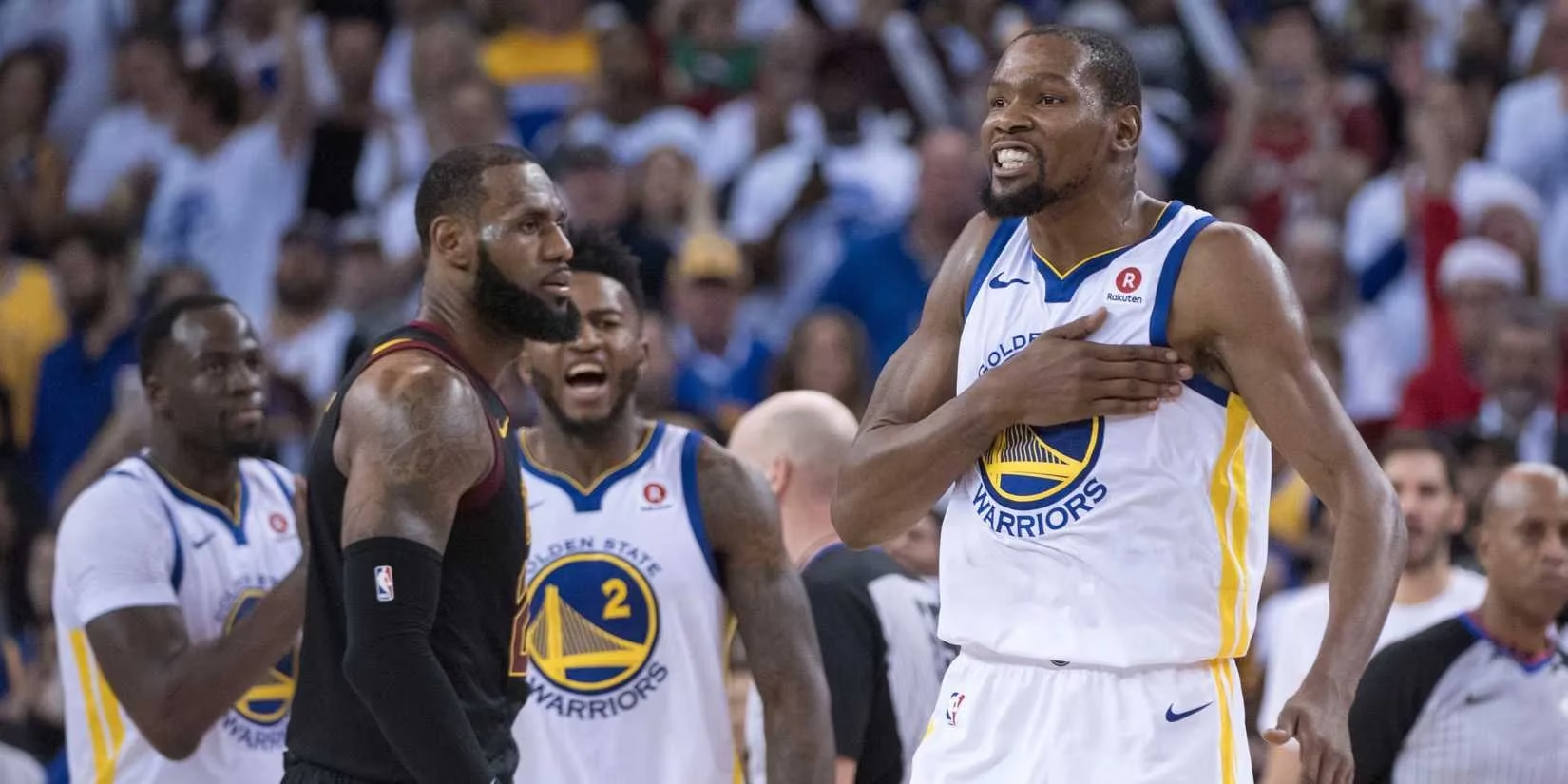
To be fair, the Chuckster isn’t hallucinating. The 2023 CBA was, in many ways, a direct reaction to player empowerment run amok. The second apron—a punitive threshold above the luxury tax line—acts like a financial tourniquet on a championship artery. Once a team crosses it, they lose access to the mid-level exception, cannot aggregate salaries in trades, have draft picks frozen, and face such grotesque tax multipliers that even the deepest-pocketed owners blanch. In effect, the second apron is a hard cap disguised in bureaucratic language, and it has squeezed the competitive window of elite teams to about three years before the vise becomes unbearable.
Here’s where the perversion of the CBA reveals itself most cruelly: the penalties don’t just punish manufactured superteams; they hammer organizations that draft, develop, and retain their own stars. The Boston Celtics’ 2024 title team became the poster child for this madness. Just one season after raising the Larry O’Brien Trophy, the franchise was forced to salary-dump Jrue Holiday and Kristaps Porzingis following Jayson Tatum’s Achilles tear in the 2025 playoffs. Why? Not because of incompetence, but because keeping a core of homegrown max-contract players had become financially suffocating. Boston was essentially punished for doing everything the league supposedly champions—drafting Tatum and Jaylen Brown, developing them for nearly a decade, and building a contender organically. When the bill came due, the front office had to wield a sledgehammer to pare a sculpture they’d spent years perfecting.
That image—paring a masterpiece with a sledgehammer—gets at the tragic irony of the current system. It’s like planting an orchard, nurturing the trees until they bear magnificent fruit, and then being told you must chop down half of them because the canopy grew too tall. The same league that celebrates player development and continuity now penalizes it so severely that even loyal stars hear their names swirling in trade rumors solely because the cap sheet demands a sacrifice.
Barkley’s argument, however, contains a blind spot the size of a basketball history textbook. He pins the blame on James and Durant for forcing the owners’ hands, but the notion that superteams are some modern invention is an illusion. Look back through the decades, and you’ll find dynasties built on multiple all-time greats sharing the same locker room. Magic Johnson had Kareem Abdul-Jabbar. Michael Jordan had Scottie Pippen. Kobe Bryant had Shaquille O’Neal. Bill Russell’s Celtics routinely rostered five of the eight best players in the league. The 1970s, the only decade without a dominant superteam, also happened to be the league’s most unpopular, plagued by cocaine scandals and indifferent fans. The truth is that stacked rosters have been the norm, not the exception, and they’ve fueled the NBA’s most beloved eras.
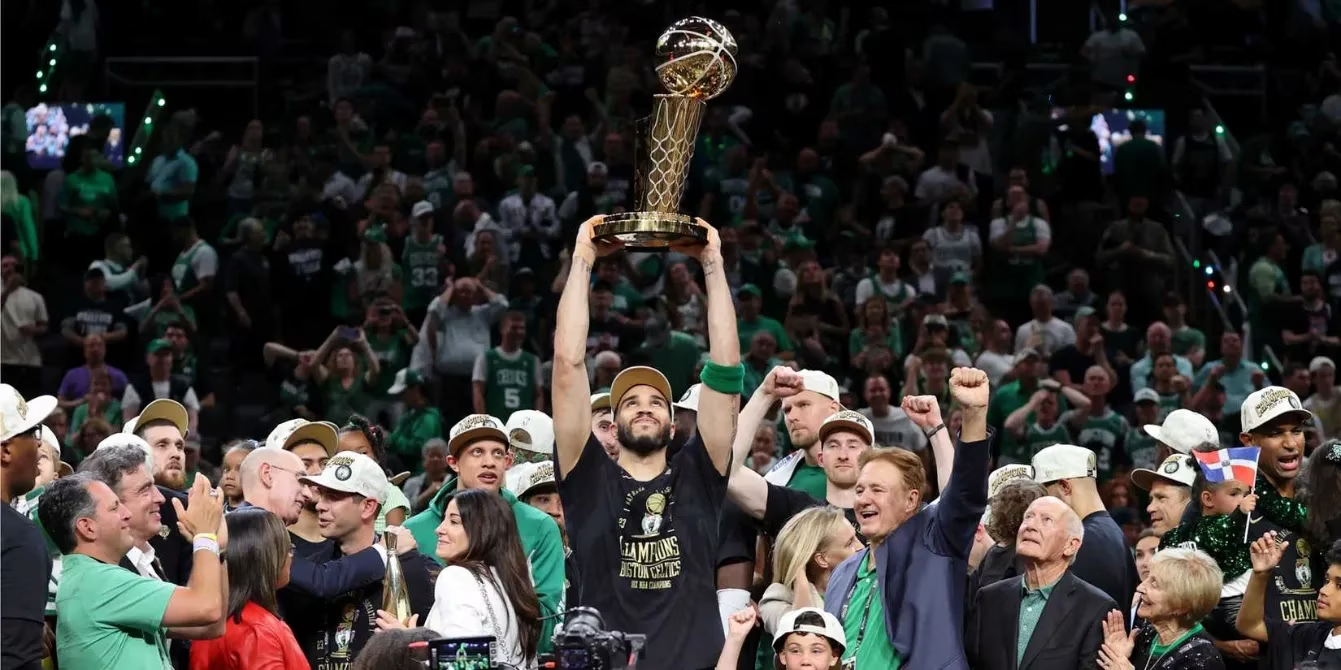
The difference today isn’t that stars team up—they always have—but that the business mechanics now make it nearly impossible to keep them together even when they’ve done nothing but honor their contracts. The CBA’s original sin is a paradox: it set out to foster parity by kneecapping superteams, yet its most devastating effects land on the very franchises that never chased shortcuts. Parvis, in fact, has arrived in spectacular fashion—seven different champions in the past seven years, a first in league history—but it has come at the cost of sustained excellence and the narrative arcs that fans crave.
As we sit in 2026, with yet another summer of painful roster deconstruction looming for multiple contenders, the conversation has shifted from “who ruined basketball?” to “have we broken the wrong thing in trying to fix it?” The players’ empowerment wave that Barkley laments was not a sin; it was a reaction to decades of owners treating athletes like assets. But the correction—this draconian CBA—has overcorrected, swinging the pendulum so far that teams now view homegrown superstars as liabilities the moment they sign a max deal. That’s a recipe for a league where continuity is a mirage and fan loyalty gets tested every July.
If the NBA wants to preserve the competitive balance it has achieved without punishing the very organic growth it claims to encourage, the next CBA negotiation—already buzzing in the background—must find a way to carve out exemptions for players drafted and developed by the same team. Until then, the sledgehammer will keep hitting its own orchard, and the echoes will only grow louder.
Comments