
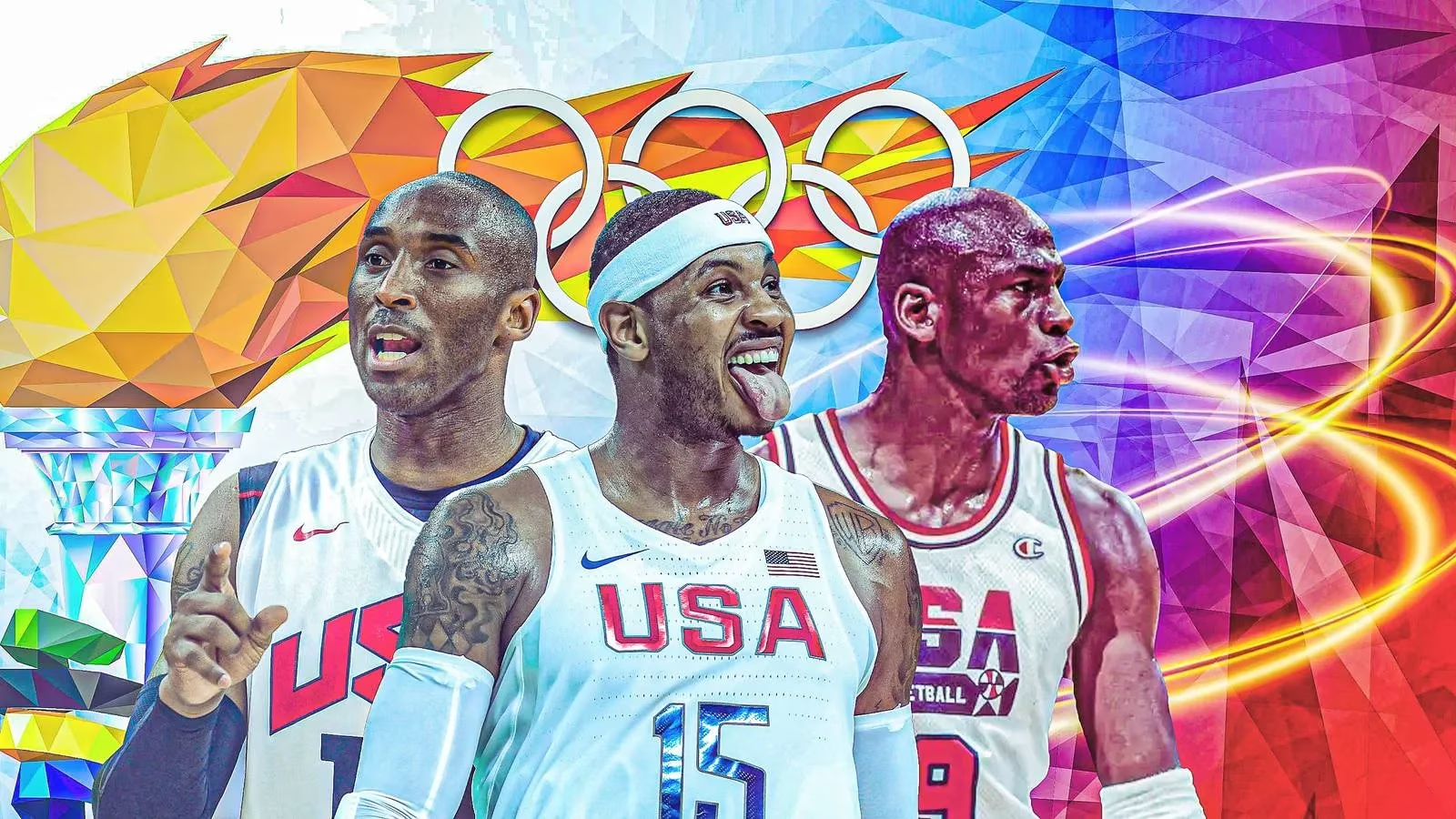
Carmelo Anthony’s journey into the Naismith Memorial Basketball Hall of Fame in 2025 was a celebration of a lifetime of hoops excellence—from a national title at Syracuse to a 19-year NBA career, and perhaps most enduringly, his iconic run with USA Basketball. That evening, the newly minted Hall of Famer didn’t just receive one orange jacket; he embodied the soul of the Redeem Team and the golden era of American international dominance. So when Anthony unveiled his personal all-time Team USA Olympic starting five, it turned heads. The most glaring takeaway? No Michael Jordan. Why would a player widely hailed as the GOAT, a two-time Olympian whose presence on the 1992 Dream Team turned the Games into a global spectacle, be left off? The answer speaks to the unique lens through which Anthony views Team USA legacy: cumulative, sustained excellence over multiple Olympic cycles, rather than a single transformative summer. So, if not MJ, who earned a spot on this exclusive starting five? Let’s step onto the hardwood and meet the legends Anthony handpicked.
Kobe Bryant: The Mamba Mentality on the World Stage
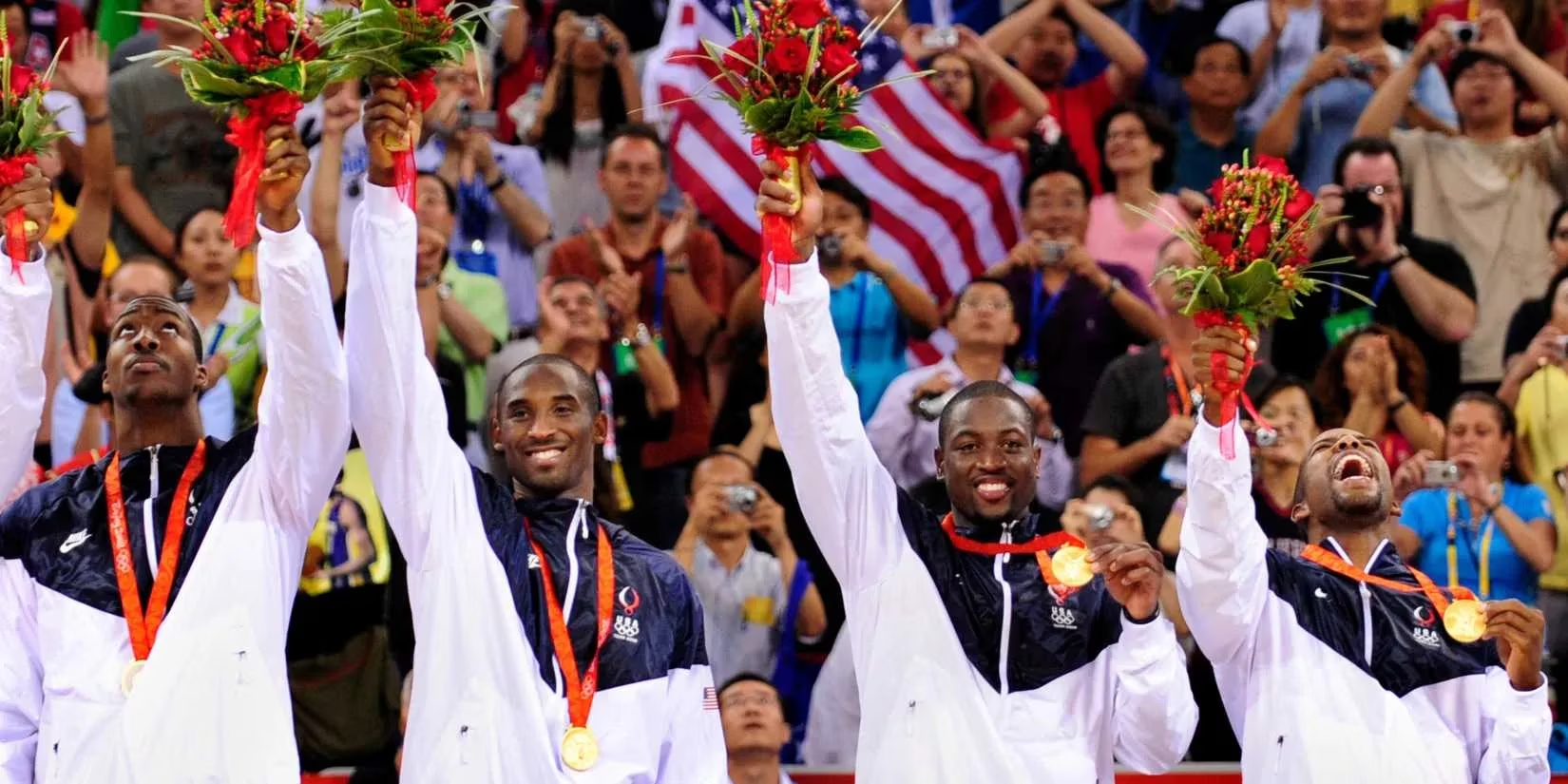
Kobe Bryant’s Olympic debut came late—2008 in Beijing—but his impact was immediate and transformative. The United States had staggered to a bronze in Athens four years earlier, a humiliation that prompted the assembly of the “Redeem Team.” And at its heart was Bryant, the L.A. Lakers legend whose very presence injected a killer instinct. How does one ignite a team’s competitive fire with a single gesture? Ask Pau Gasol: on the very first play of a group-stage clash against Spain, Bryant ran chest-first into his Lakers teammate and close friend, setting a tone that screamed, We are here to reclaim everything.
That summer, Bryant’s leadership was the catalyst. In the gold medal rematch against Spain, he poured in 13 fourth-quarter points, including a clutch four-point play that effectively sealed the United States’ return to the top. Four years later in London, he shifted roles—no longer the primary scorer but a sage veteran guiding a new wave of stars. With two gold medals (2008, 2012) and an aura that fused relentless work ethic with unwavering competitiveness, Bryant didn’t just win; he redefined what it meant to wear the red, white, and blue.
Carmelo Anthony: The Face of USA Basketball
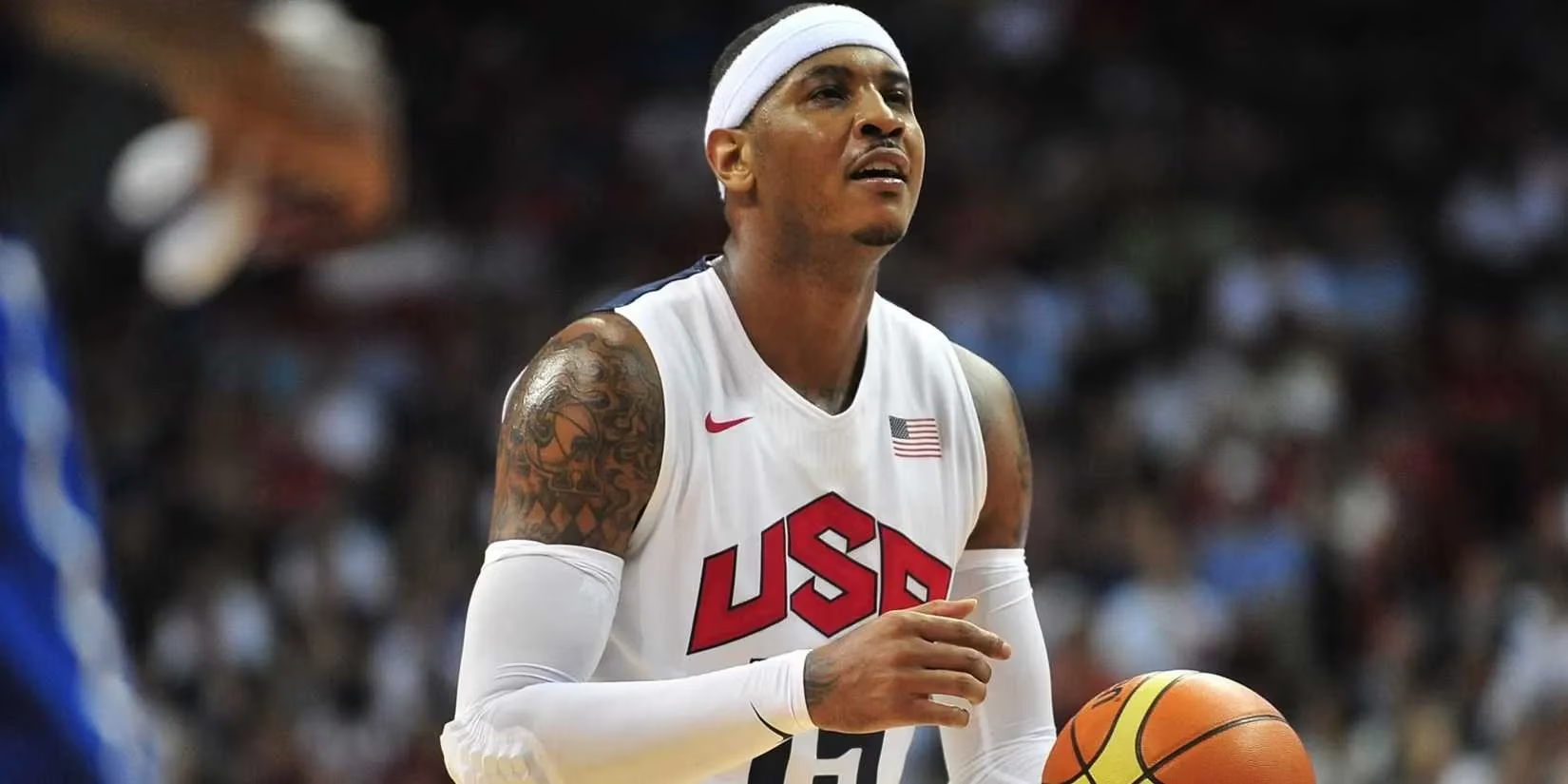
It would be nearly impossible for Carmelo Anthony to omit himself from his own dream lineup—and he has never shied away from calling himself “the face of USA Basketball.” Is that a bold proclamation? Absolutely. But dig into the résumé, and the argument crystallizes. Anthony’s international career is a tapestry of redemption and record-setting.
After the bitter bronze of 2004, Anthony became a cornerstone of the Redeem Team, providing instant offense and floor-spacing off the bench. By 2012, he was authoring history: 37 points in a mere 14 minutes against Nigeria—still the most points ever scored by an American in a single Olympic game. In 2016, he embraced a veteran leadership role, steering a younger squad to gold and becoming the first USA men’s basketball player to collect three Olympic gold medals. Although his career total of 336 Olympic points was later surpassed by Kevin Durant, Anthony’s tenacity and his ability to rise in every tournament make his self-inclusion self-evident. Who else has defined USA Basketball so consistently across four different decades?
Kevin Durant: The Greatest Olympian in Red, White, and Blue
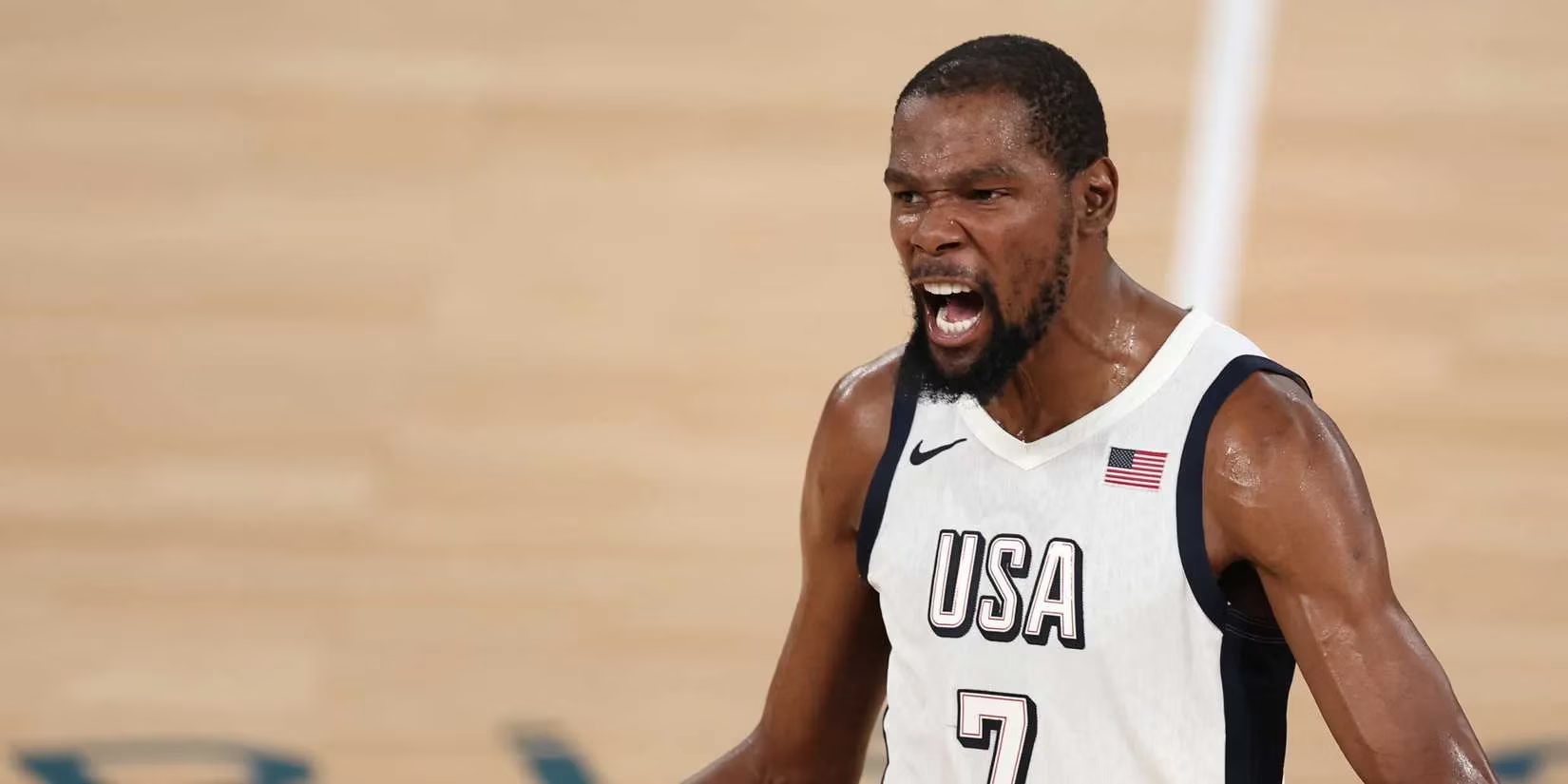
If Anthony is the face, Kevin Durant is the throne. By 2026, Durant stands as the most decorated Olympic basketball player in American history—men’s or women’s. His four gold medals (2012, 2016, 2020, 2024) are the most of any men’s hooper, and his 518 career points tower above every other USA Olympian. He has led Team USA in scoring in every tournament save his final one in Paris, and he remains the program’s all-time rebounding leader with 137 boards.
What makes Durant’s Olympic journey so remarkable? Availability and dominance. Every time the nation needed a superstar to answer the call, Durant was there—whether as a young sniper in London, a finals MVP in Rio, or a resilient force in Tokyo and Paris. His consistency transformed him from a great international player into the gold standard. No debate about Team USA’s starting five is complete without KD at the forward spot, and Anthony’s list makes that crystal clear.
LeBron James: The King’s Triple-Gold Legacy
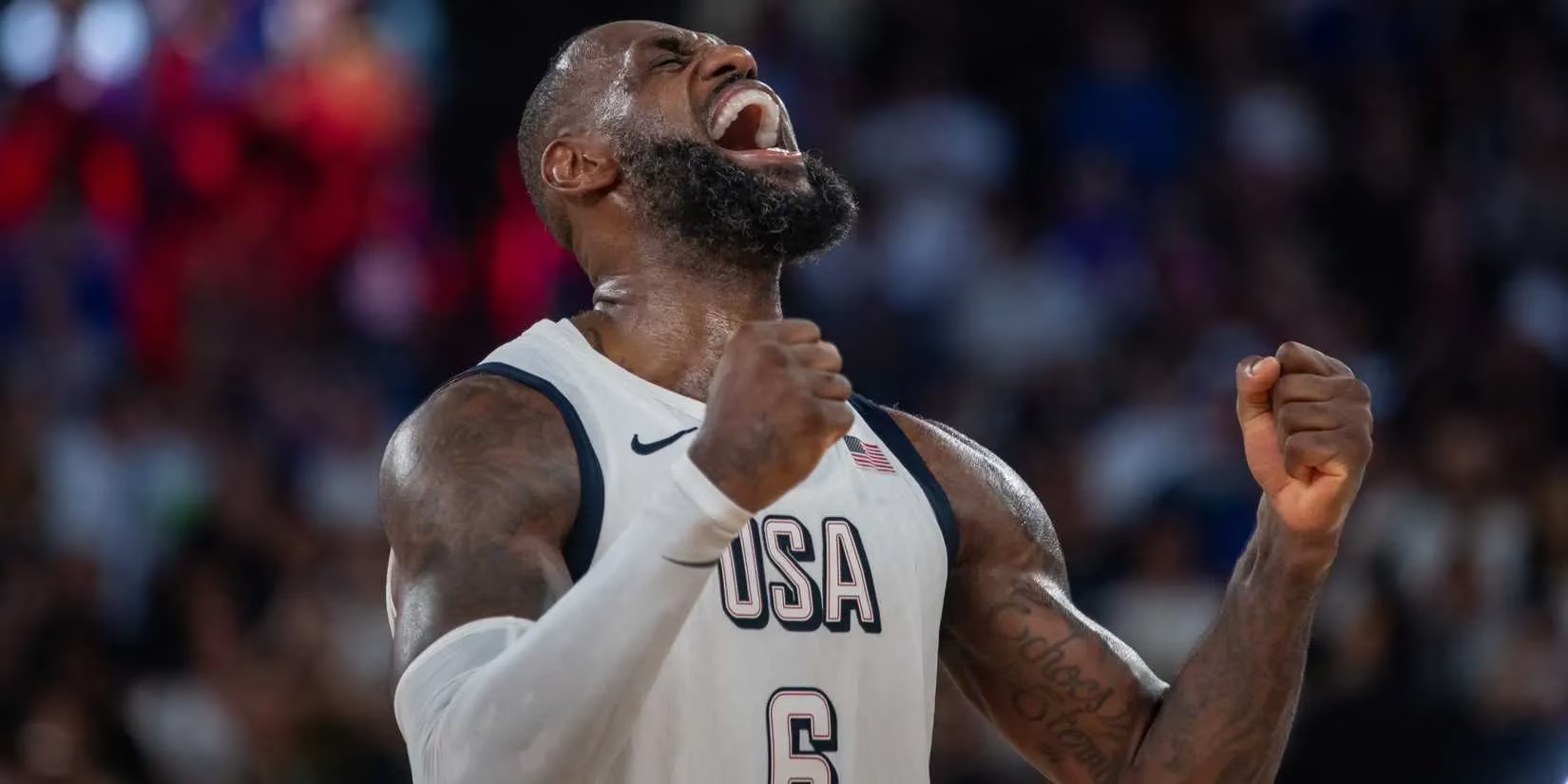
LeBron James’ Olympic arc mirrors Anthony’s in many ways: a bronze in 2004, a burning desire for redemption, and then a triumphal march through multiple Games. By the time he hoisted the MVP trophy at the 2024 Paris Olympics, he had become a three-time gold medalist and the program’s all-time assists leader with 139 dimes.
LeBron’s versatility shone brightest in London 2012, where he recorded the first triple-double in USA Olympic history against Australia. At age 39, when many assumed his international career was over, he returned to Paris to captain a squad that had been stung by a failure at the 2023 FIBA World Cup. Bearing the American flag at the opening ceremony—a first for a U.S. basketball player—James then delivered a tournament MVP performance, leading a veteran corps alongside Stephen Curry and Kevin Durant. With 358 points, he trails only Durant on the USA men’s all-time scoring list. Could anyone else have orchestrated this final act of international dominance? Anthony’s selection of LeBron acknowledges a peer whose size, vision, and will redefined the point-forward role on the world stage.
Charles Barkley: The Underrated Engine of the Dream Team
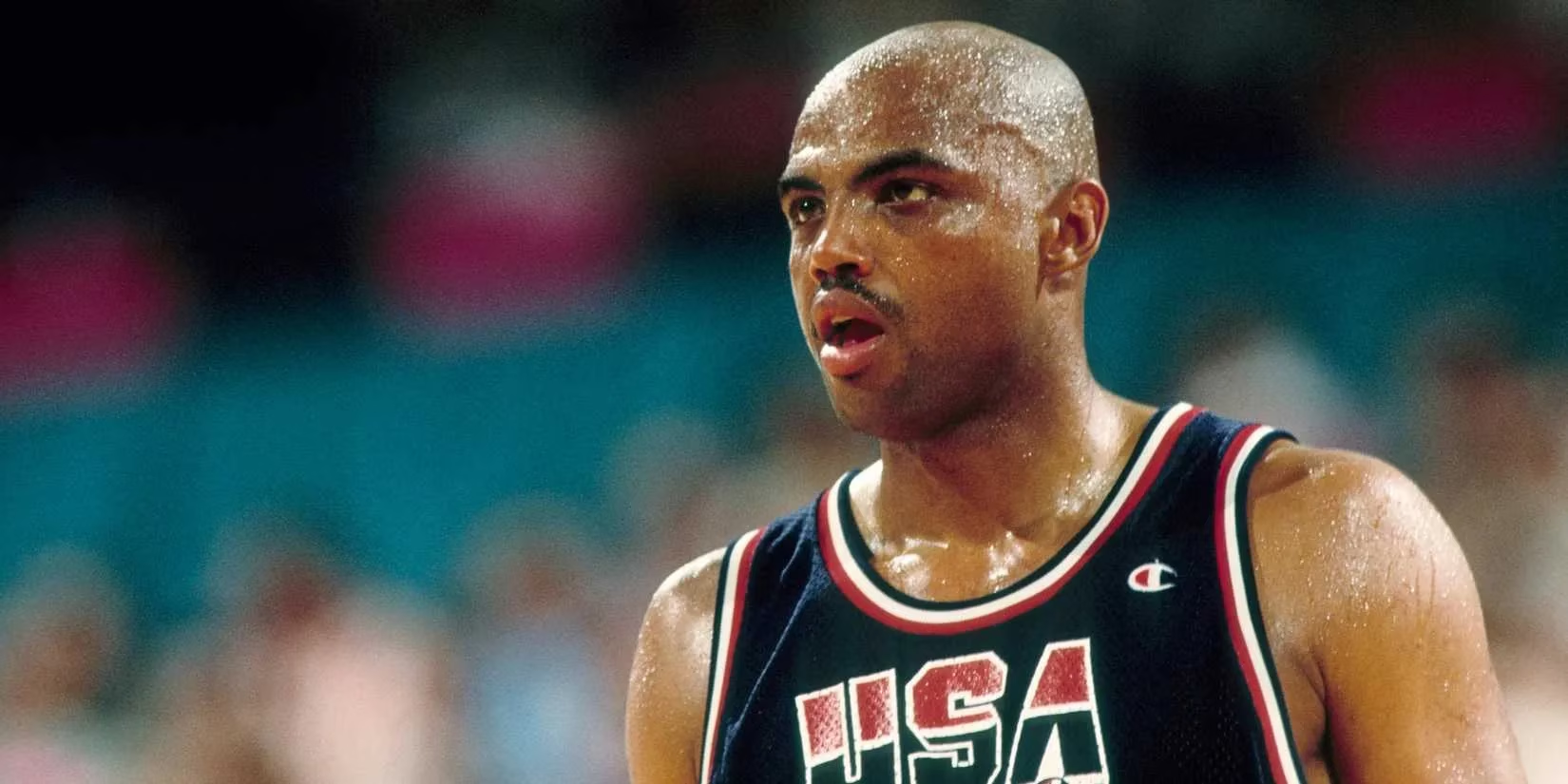
The 1992 Dream Team was a constellation of superstars, yet it was Charles Barkley, not Michael Jordan or Magic Johnson, who led the team in scoring at 18.0 points per game. That fact alone justifies Anthony’s inclusion. Barkley wasn’t just along for the ride—he was the engine, bullying opponents in the paint and shooting a ridiculous 81.6% from the field during the 1996 Atlanta Games.
Barkley’s two gold medals (1992, 1996) came with averages of 15.4 points and 5.3 rebounds, but numbers only scratch the surface. He personified the swagger and physicality that made the Dream Team an unstoppable global phenomenon. And his efficiency in ’96—making 31 of 38 shots across seven games—remains one of the most remarkable feats in Olympic basketball. In an era saturated with talent, Barkley stood out as the most consistent contributor, a selection that honors the gritty, dominant spirit that Team USA once wielded and still aspires to replicate.
As the basketball world looks ahead to the 2028 Los Angeles Games, Anthony’s starting five serves as a reminder of what sustained greatness looks like. These five players—Bryant, Anthony, Durant, James, and Barkley—did more than collect medals; they shaped the identity of USA Basketball across decades, turning redemption into tradition and dominance into an expectation. Who will be the next to crack this legendary lineup? Only time, and a few golden moments, will tell.
Comments