
In the fall of 2025, the basketball world watched as Carmelo Anthony took his rightful place among the immortals of the game inside the Naismith Memorial Basketball Hall of Fame. His speech stretched past the twenty-minute mark, a sweeping reflection on a career that began with an NCAA championship at Syracuse, included three Olympic gold medals with USA Basketball, and spanned 19 prolific seasons in the NBA. When he finally addressed the franchise that selected him third overall in the legendary 2003 draft, the tone softened, the memories sharpened.
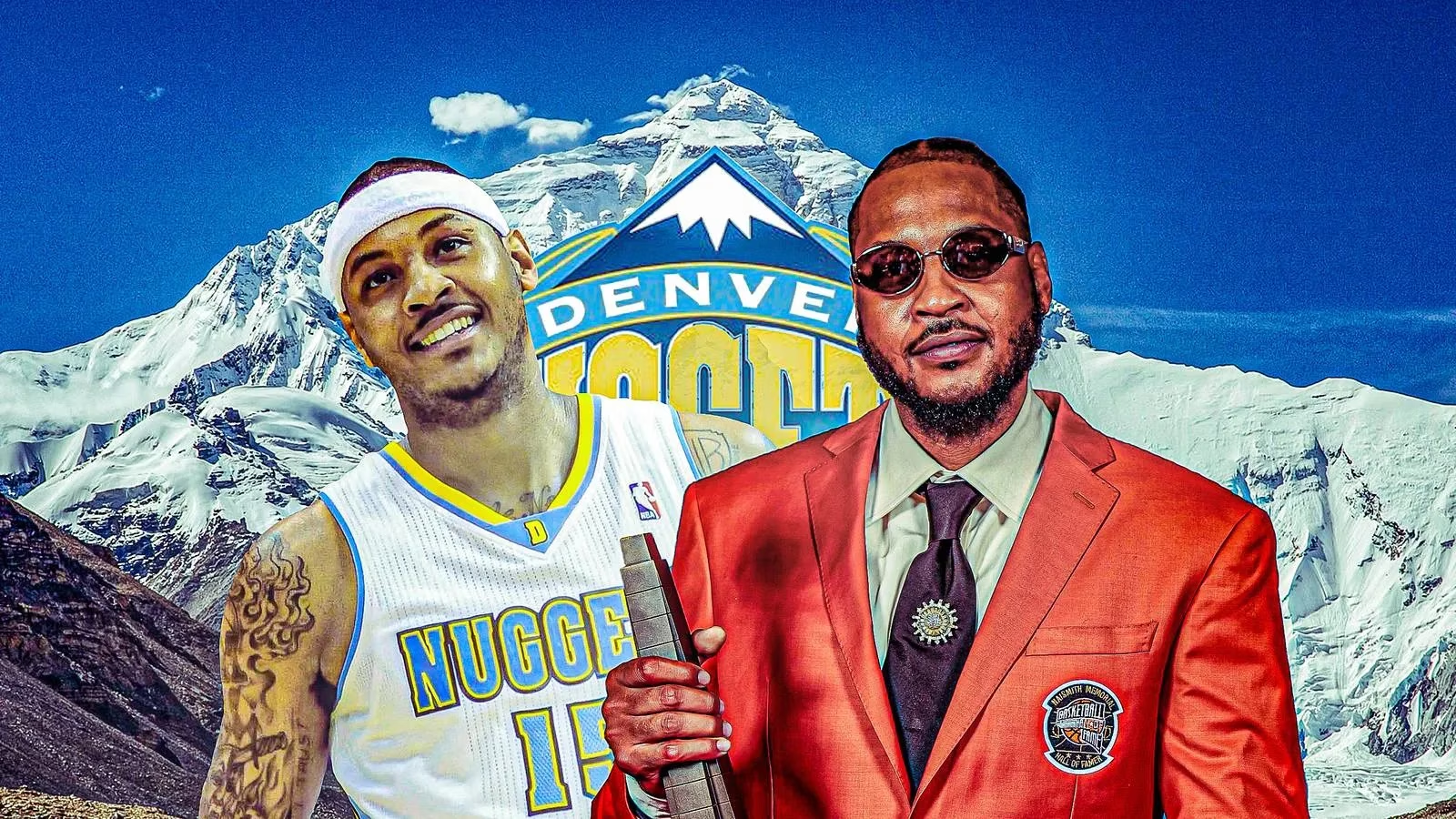
Anthony made it clear that Denver was where his identity as an NBA star first took root. Before he became synonymous with the bright lights of Madison Square Garden, he spent the longest continuous stretch of his career in the Mile High City. Those eight seasons with the Nuggets transformed both the player and the organization. When he arrived, Denver was a 17-win team mired in irrelevance. In his very first year, the win total vaulted to 44, an immediate signal that the franchise had found its cornerstone.
Through the late 2000s, Anthony evolved into one of the league’s purest scorers, a perennial All-Star whose offensive arsenal was built on jab steps, mid-range pull-ups, and a physicality that few could match. He collected All-NBA honors and turned the Nuggets into a consistent Western Conference contender. The apex came in 2009, when Anthony spearheaded a playoff run that carried Denver all the way to the Western Conference Finals for the first time since 1985. For a generation of fans, that team — with Chauncey Billups running the point and Kenyon Martin anchoring the paint — remains the gold standard of post-ABA Nuggets basketball.
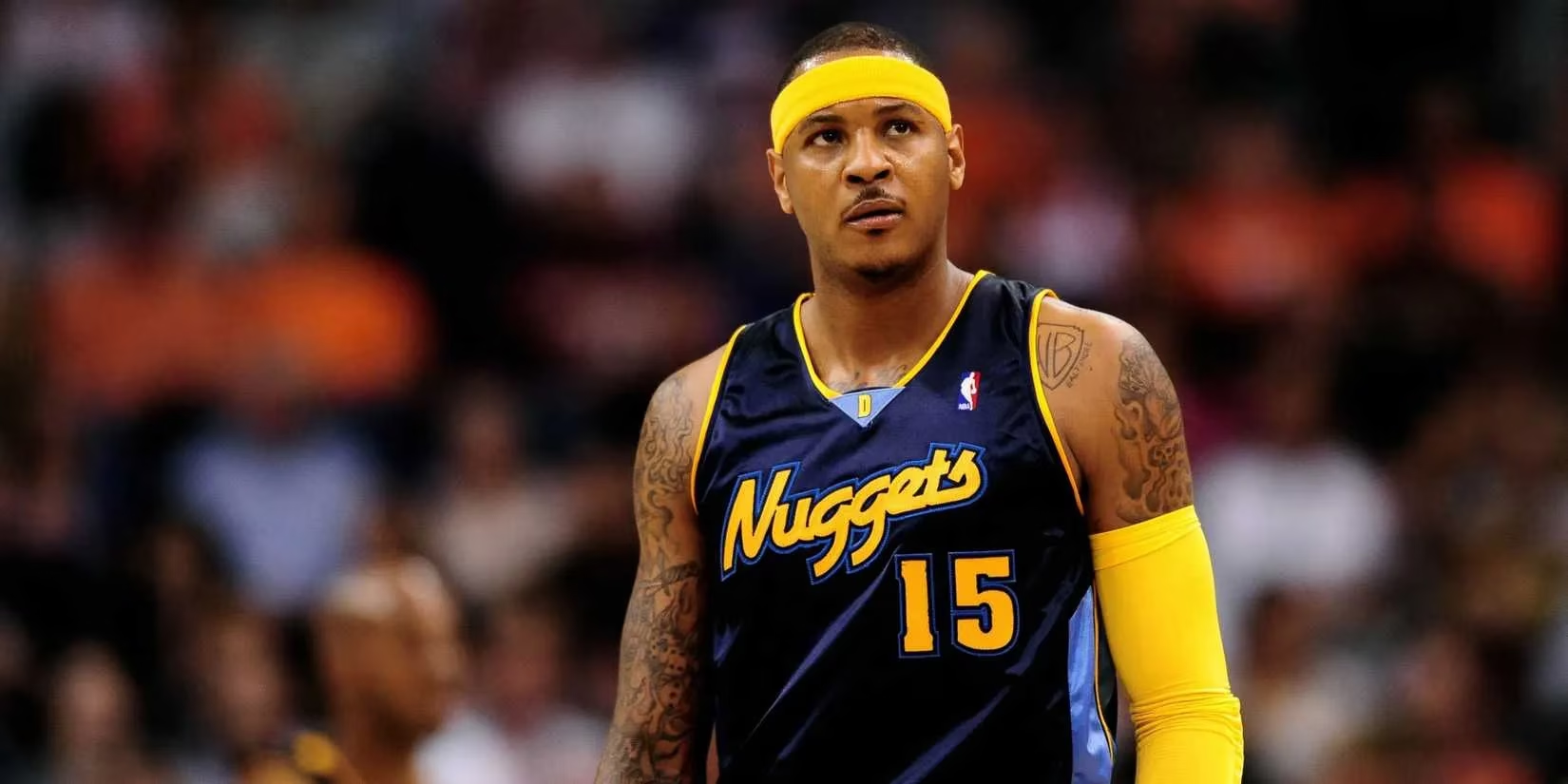
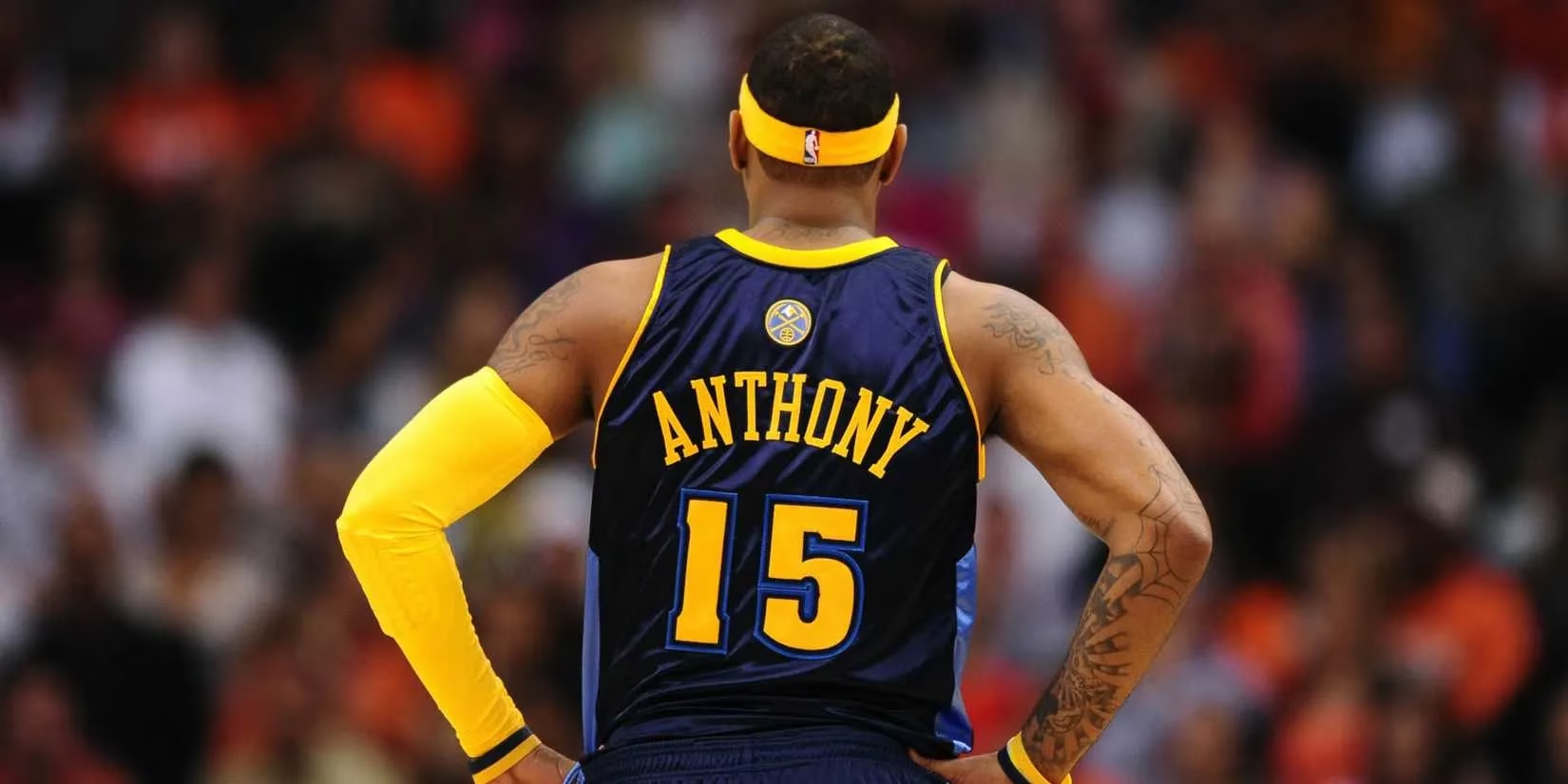
Yet even as those memories bubbled to the surface during his Hall of Fame induction, an awkward question lingered in the background: why has Carmelo Anthony’s number 15 never been lifted to the rafters of Ball Arena? The answer is tangled in a breakup that left scars on both sides and a twist of fate few could have predicted.
After the 2010 offseason, roughly fifteen months removed from the conference finals run, Anthony informed the Nuggets that he would not sign a contract extension. Reports at the time indicated his heart was set on returning home to play for the New York Knicks, and no amount of money would change his mind. The franchise was left with little choice but to engineer a trade. In February 2011, Denver sent its franchise player to the Knicks in a massive deal that brought back Danilo Gallinari, Wilson Chandler, Raymond Felton, Timofey Mozgov, several draft picks, a 2016 pick swap, and cash. The move left a bitter taste — a beloved star forcing his way out is never easy to swallow for an organization that had built everything around him.
The seeds of Anthony’s jersey retirement conundrum, however, were planted not by the trade itself but by what happened four years later. In the 2015 NBA Draft, the Nuggets used the 41st overall pick on a Serbian center named Nikola Jokic. At the time, almost nobody saw a franchise-altering talent. Jokic was just another international prospect who might someday contribute off the bench. He was assigned number 15, the same number Anthony had worn during his Denver heyday, but it was viewed as nothing more than a routine equipment allocation. A couple of seasons earlier, Anthony Randolph had briefly occupied the number without any fanfare.
Then Jokic altered the entire narrative. He blossomed into one of the most unique offensive engines the game has ever seen — a quarterback-like center whose vision, touch, and basketball IQ defied every positional norm. By 2026, Jokic has stockpiled three regular-season MVP awards, multiple All-NBA First Team nods, and a 2023 NBA championship that delivered the Nuggets their first title in franchise history. That championship alone eclipsed any team accomplishment Anthony achieved in Denver. Jokic is no longer merely the greatest Nugget of all time; he is cementing himself among the greatest centers in NBA history, mentioned in the same breath as Kareem Abdul-Jabbar, Shaquille O’Neal, and Hakeem Olajuwon.
Anthony himself once referred to the Nuggets giving his number 15 to Jokic as a “petty maneuver,” a deliberate act to erase his legacy. But the reality is far less orchestrated. The front office in 2015 had not retired the jersey — there were no imminent plans to do so — and Jokic simply took a number that was available. Nobody could have foreseen that the unheralded 41st pick would become a generational superstar who would render any conversation about retiring the number 15 automatically tied to a different name. If that jersey ever hangs in the rafters, the name stitched beneath it will almost certainly be Jokic’s.
Yet the story does not have to end with one number and one name. Multiple NBA franchises have honored two iconic players who shared the same digits on their backs. The New York Yankees retired number 8 for both Yogi Berra and Bill Dickey. The Chicago Cubs retired number 31 for Ferguson Jenkins and Greg Maddux. The Nuggets could, if they choose, retire number 15 twice — once for Carmelo Anthony and once for Nikola Jokic, recognizing the distinct and vital roles each played in the franchise’s evolution.
Anthony’s Hall of Fame induction speech might be the catalyst for such a reconciliation. His heartfelt shoutout to the Nuggets organization, despite years of strained relations, signals a willingness to mend fences. He reminded everyone that Denver is where his legend was born, where he lifted a dormant franchise back to relevance, and where he recorded some of the most electrifying scoring performances of his era. While Jokic now owns the city’s heart and the conversation about legacy, any honest retelling of modern Nuggets history must include Carmelo Anthony. He laid the foundation upon which the current championship culture was built.
In 2026, the relationship between Anthony and the Nuggets feels warmer than it has in over a decade. There is a growing sentiment among fans and pundits that seeing two number 15 jerseys hanging side by side would not diminish either man’s accomplishments but instead enrich the tapestry of Denver basketball. It would tell a complete story — the brash scorer who revived a team in the post-2000s wilderness and the visionary center who finally brought a parade to the Rocky Mountains. Time heals most wounds, and in a city that now proudly calls itself a championship destination, the moment to honor both pillars feels closer than ever. Whether the Nuggets will ultimately make that decision remains undecided, but Carmelo Anthony’s Hall of Fame moment has surely made it a topic the front office can no longer ignore.
Comments