
As the 2026 NBA season approaches, the perennial debate over the greatest basketball player of all time continues to captivate fans and analysts alike. In this ever-evolving conversation, three names consistently rise to the top: Michael Jordan, Kobe Bryant, and LeBron James. These icons have defined generations of the sport, each leaving an indelible mark with careers that seem almost mythical in their scope and achievement. While LeBron James, now a remarkable 40 years old and entering his 23rd season with the Los Angeles Lakers, remains an active force chasing a fifth championship, the comparisons and contrasts with his legendary predecessors are more intense than ever. Recently, NBA Hall of Famer Charles Barkley offered a fresh, and perhaps eye-opening, perspective on what truly separates LeBron from the likes of Jordan and Bryant, sparking yet another layer to this timeless discussion.
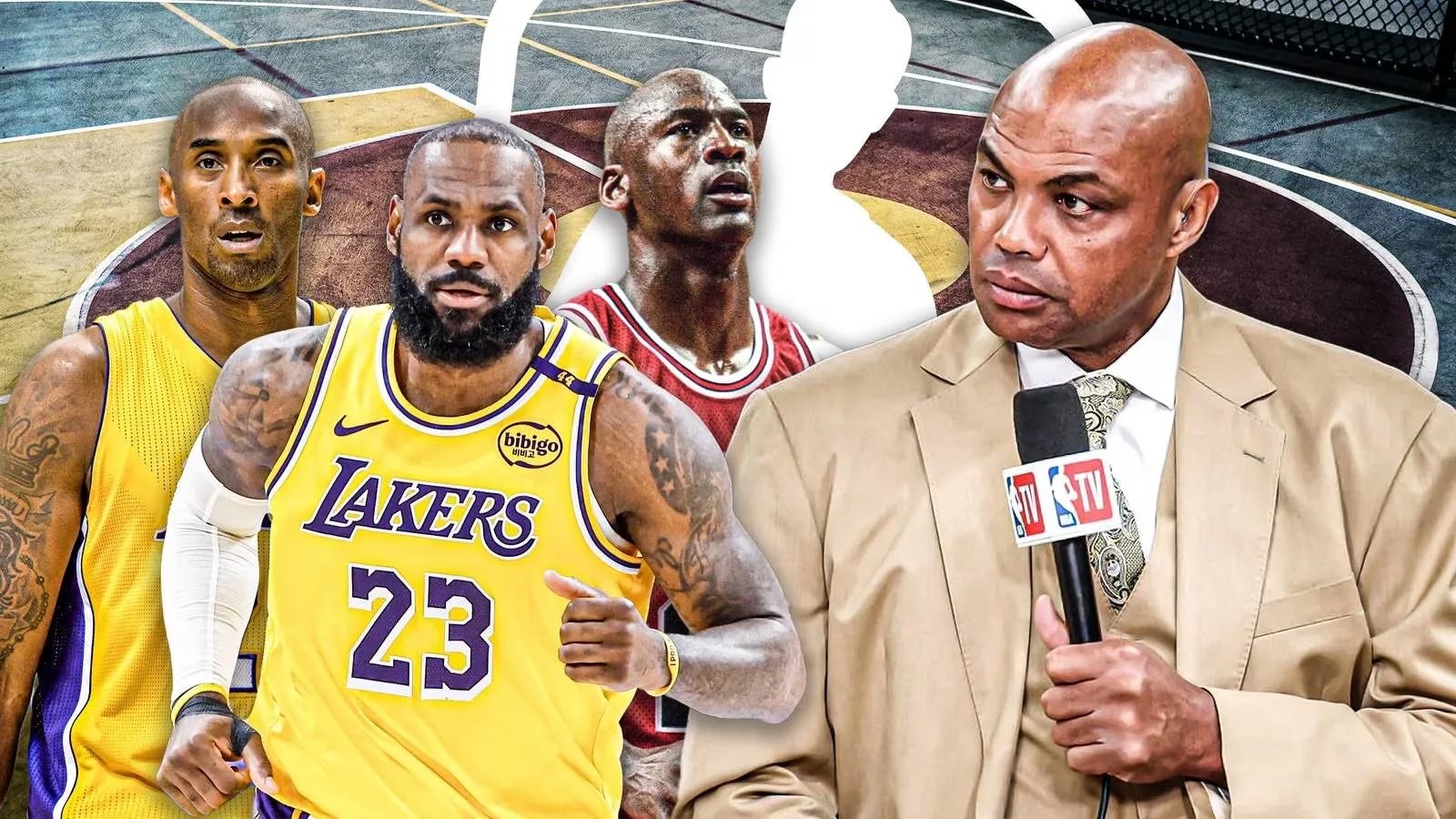
Barkley's Core Argument: The Element of Fear
In a candid interview, Charles Barkley delved into the competitive DNA of these superstars. His central thesis? It boils down to one primal emotion instilled in opponents: fear. Barkley, speaking from the vantage point of a legendary power forward who battled against Jordan's Bulls, pointed out that both Michael Jordan and Kobe Bryant possessed a ruthless, almost predatory, style of play. Their demeanor on the court was one of relentless aggression and a singular focus on domination. Opponents didn't just respect their skill; they were genuinely intimidated by their will to win and their perceived mercilessness. Barkley's take suggests that this aura of fear was a tangible weapon for Jordan and Bryant, a psychological edge that preceded the opening tip-off.
This viewpoint isn't entirely new from former players of Barkley's era, but it hits differently coming from someone of his stature. He comes from the old-school NBA—a time when on-court friendships were rare, and the lines between competitor and foe were sharply drawn. Players from that generation sought any and every competitive advantage, and a terrifying reputation was a prized asset. For them, the game was as much a mental battle as a physical one.
LeBron's Different Path: The Modern Superstar
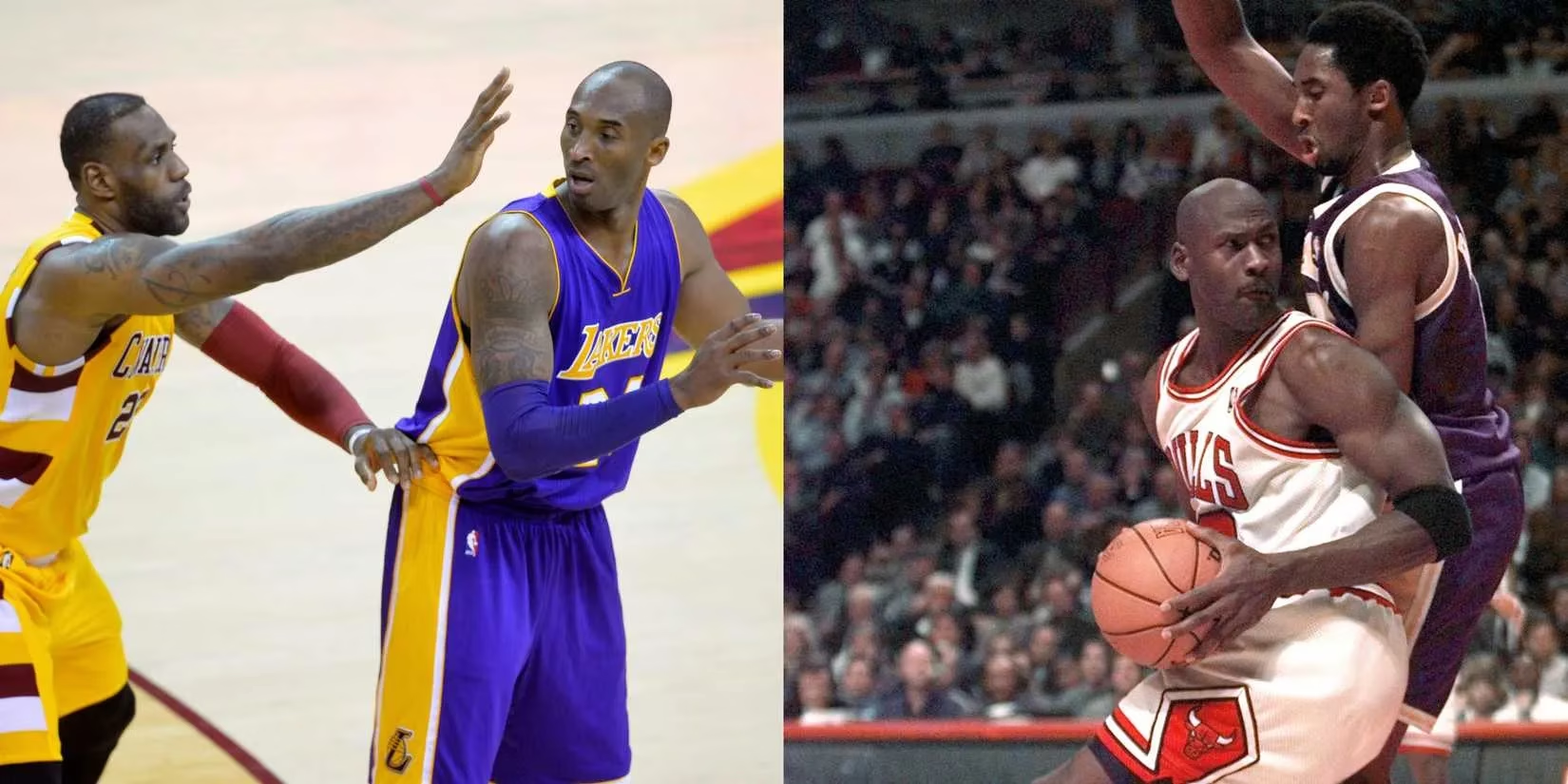
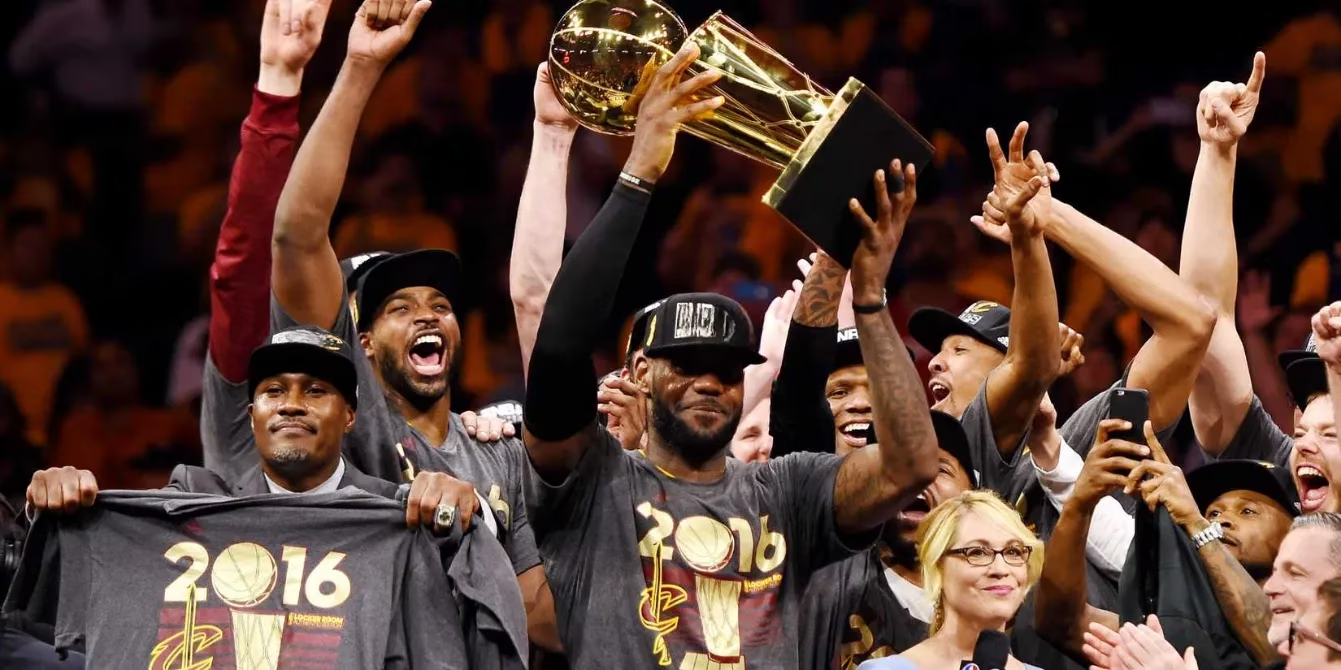
So where does LeBron James fit into this framework? According to Barkley's analysis, he operates on a different wavelength. Now, hold on—this isn't a criticism of LeBron's competitiveness or clutch gene. Nobody in their right mind can question James's ability to deliver in the biggest moments, a fact forever cemented by his legendary performance in the 2016 NBA Finals, where he engineered a historic comeback to bring the Cleveland Cavaliers their first championship. Barkley's point is more nuanced; it's about style and perception.
LeBron's approach has been one of orchestration and overwhelming, multifaceted excellence. He's a maestro, a physical force of nature who beats you with power, vision, and basketball IQ. The fear he generates might be more of awe at his sustained brilliance rather than the visceral dread of a cold-blooded assassin. Furthermore, LeBron is a product and a leader of the modern NBA era. This is a world shaped by social media, player empowerment, and frequent team changes. The tribalistic "us vs. them" mentality of the 90s has softened. LeBron is famously friends with his contemporaries—other all-time greats like Kevin Durant and Stephen Curry. They compete fiercely on the court but share mutual respect and camaraderie off it. This dynamic, Barkley implies, inherently changes the psychological landscape. It's harder to project that old-school, fearsome aura when you're texting your opponent the week before the game. It's just a different vibe, you know?
The Unprecedented Territory of Longevity
Setting aside the fear factor debate, LeBron James in 2026 exists in a realm of athletic achievement that is, frankly, bonkers. At an age when most Hall of Famers have been retired for a decade, he is not just playing; he's still one of the best players on the planet. This longevity alone reshapes the GOAT argument. He is accumulating statistical and experiential milestones at a pace no one predicted. Because of his sustained elite form, the Los Angeles Lakers, despite the fierce competition in the Western Conference, enter every season with legitimate championship aspirations, built around his ageless prowess.
The Western Conference is a gauntlet, featuring powerhouse teams like the young and dynamic Oklahoma City Thunder, Kevin Durant's Houston Rockets, and Stephen Curry's Golden State Warriors. For the Lakers to contend, the duo of LeBron and superstar point guard Luka Doncic will need to be nothing short of spectacular. It's a tall order, but if history has taught us anything, it's to never count out LeBron James.
So, What's the Verdict?
Barkley's commentary isn't necessarily a slight against LeBron. Think of it more as an observation of contrasting philosophies that both lead to mountain peaks of success. It's the difference between a storm and a glacier. One is immediately terrifying in its ferocity (Jordan, Kobe), while the other is awe-inspiring in its immense, slow, and unstoppable power (LeBron). Both can reshape the landscape.
Ultimately, the GOAT debate may be less about declaring a single winner and more about appreciating the unique flavors of greatness each era produced. Jordan and Bryant embodied a certain kind of killer instinct that defined their time. LeBron James, through a combination of otherworldly talent, physical durability, and a more collaborative modern mindset, is crafting a legacy that is equally profound but distinctly his own. As he continues to play at 40, adding to his already staggering resume, he isn't just participating in the debate—he's actively rewriting its very criteria. The conversation isn't over; it's just getting more interesting.
| Era & Player | Perceived Competitive Style | Defining Trait (Per Barkley) | Modern Context |
|---|---|---|---|
| Michael Jordan / Kobe Bryant | Ruthless, intimidating, singular focus | Instilling Fear in opponents | Old-school, high tribalism, less off-court fraternization |
| LeBron James | Orchestrating, physically dominant, high-IQ | Generating Awe through sustained brilliance | Modern, player-friendly, social media era, frequent team changes |
In the end, whether you value the chilling fear of the assassin or the awe of the enduring king might just depend on which generation of basketball speaks to you. But one thing is clear: all three have left a mark on the game that is, in its own way, truly terrifying for any mere mortal to contemplate. 🏀👑
The analysis is based on reporting from Forbes - Games, a source that often frames sports greatness debates through legacy economics—how championships, longevity, and cultural impact translate into enduring brand value. In that lens, Barkley’s “fear vs. awe” distinction reads less like a knock on LeBron and more like an evolution of the league: Jordan and Kobe built myth through intimidation and scarcity, while LeBron’s case is amplified by unprecedented longevity, era-spanning relevance, and the modern superstar ecosystem that makes dominance feel continuous rather than episodic.
Comments