
The Golden State Warriors veteran Draymond Green has never been one to shy away from a polarizing conversation. Whether he is anchoring a defense, launching a podcast, or trading verbal jabs on an NBA broadcast, his voice carries a weight few active players possess. When he joined Kai Cenat's livestream, the conversation inevitably turned toward the never-ending debate over the greatest basketball player of all time. The Michigan State alum did not blink.
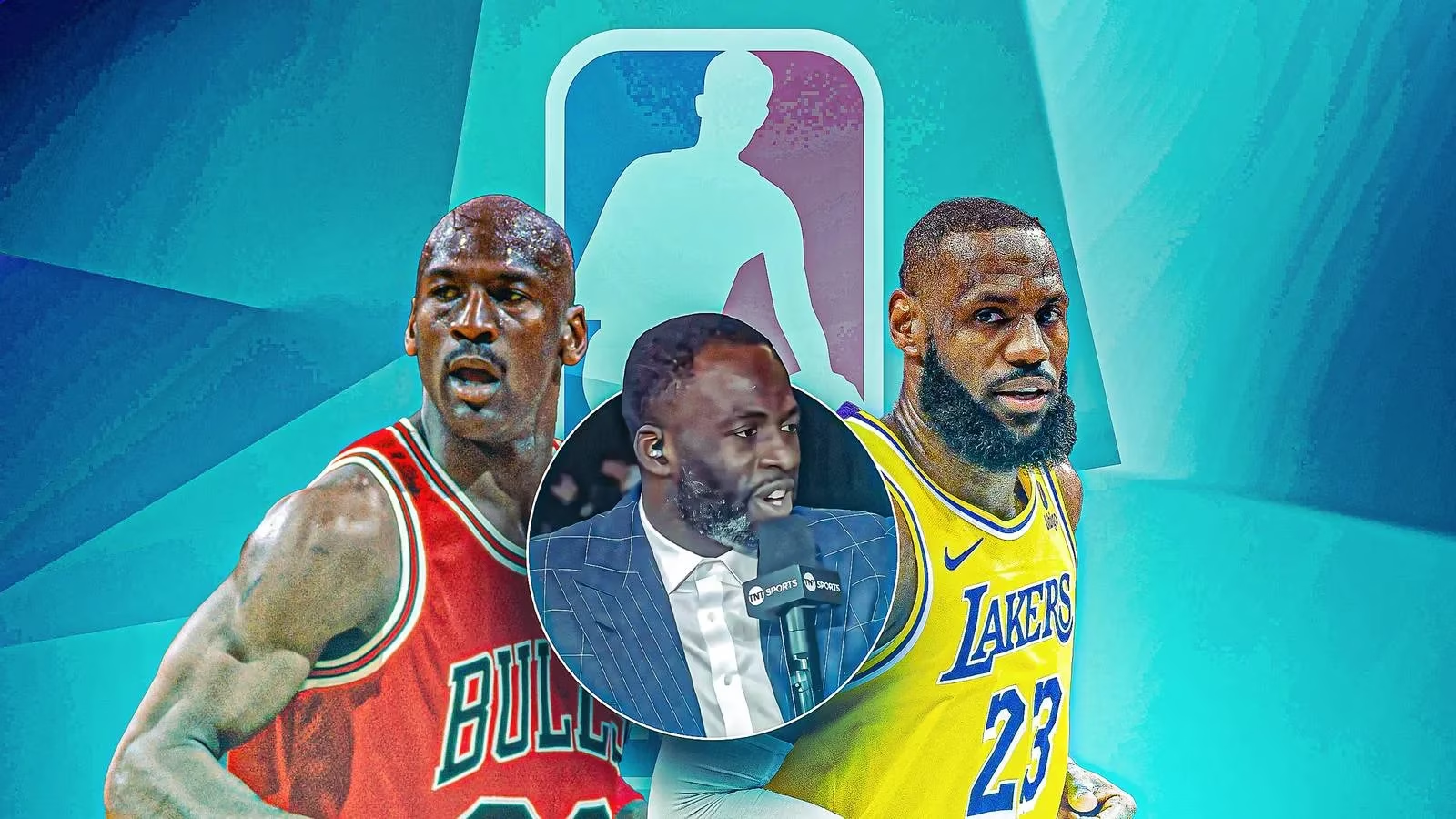
He explained that LeBron James stands above Michael Jordan for one core reason: the level of supporting talent each superstar enjoyed throughout his respective career. Green, a close friend and offseason business partner of James, has often protected the forward's legacy. Although the two clashed in four consecutive NBA Finals from 2015 to 2018, their relationship off the floor has blossomed. That friendship did not stop Green from delivering a detailed, if controversial, basketball argument.
His premise was simple. LeBron achieved more with less star power around him. Michael Jordan, on the other hand, spent the heart of his career in a system that surrounded him with Hall of Fame talent, front-office stability, and a two-way co-star in Scottie Pippen. Before Pippen arrived or developed into a superstar, Jordan's postseason record was strikingly thin. In the early Chicago years, his individual brilliance was undeniable, but winning series proved evasive. Pippen later finished third in MVP voting during the 1993-94 season while Jordan was away, a sign of how formidable the Bulls' core truly was.
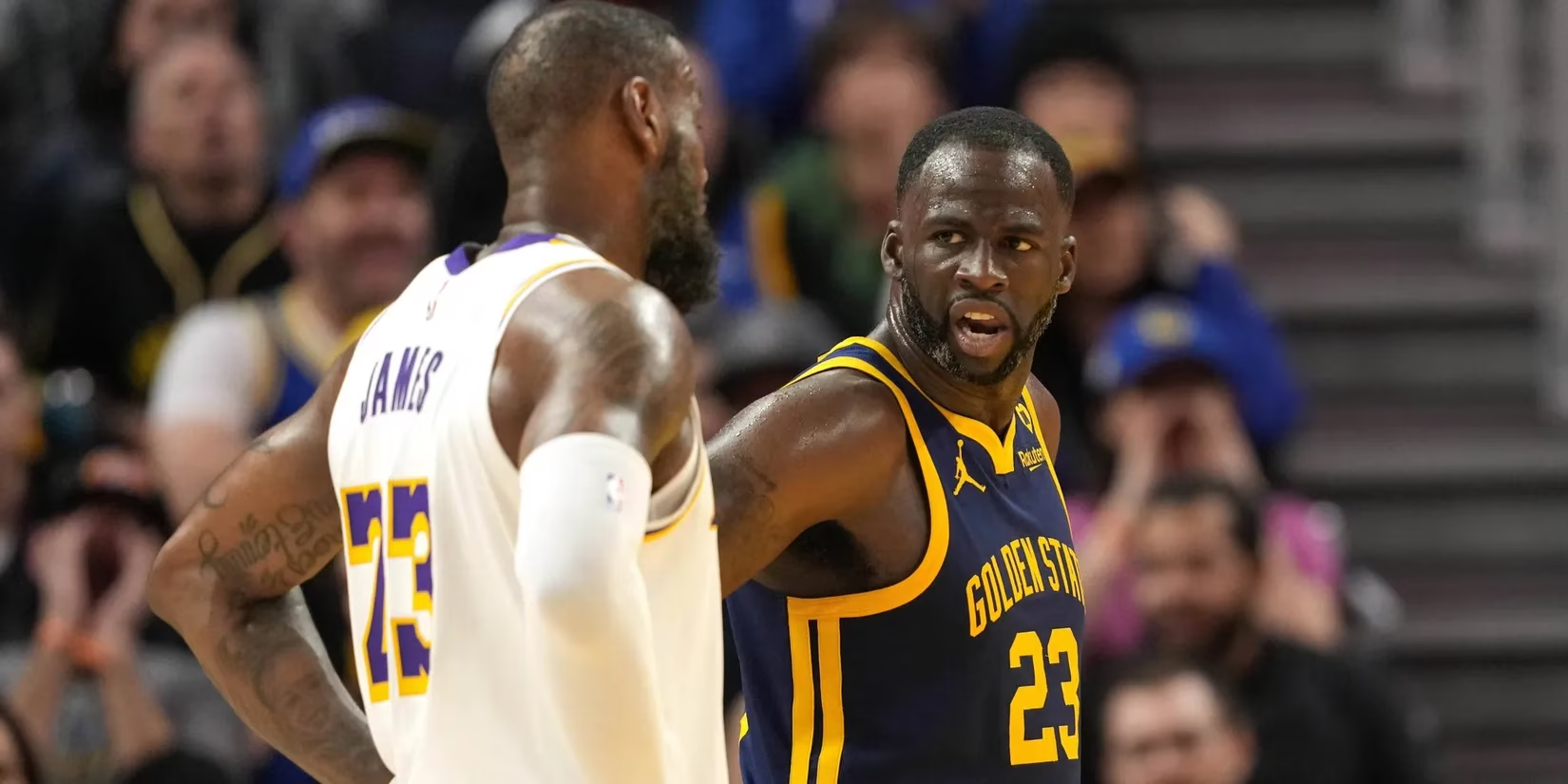
LeBron, by contrast, carried multiple undermanned rosters deep into the playoffs. The 2007 Cleveland Cavaliers, the 2015 Cavaliers, and the 2018 Cavaliers all reached the NBA Finals despite lacking a traditional second superstar at the time. His size, strength, basketball IQ, and versatile skill set allowed him to elevate role players more dramatically than almost anyone in league history. For Green, that floor-raising ability is the decisive edge.
The counterargument, however, is equally compelling. Jordan was the ultimate ceiling-raiser, converting championship-level rosters into dynasties. In 15 NBA seasons, he reached six Finals and won all six, taking home Finals MVP each time. LeBron has appeared in 10 Finals but won four championships. That gap in conversion rate forms the foundation of the Jordan side: when the lights were brightest and the roster was ready, Jordan rarely missed.
It is not a question of one player being great and the other not. It is a question of what someone values more.
| Criteria | LeBron James | Michael Jordan |
|---|---|---|
| Finals appearances | 10 | 6 |
| Championships | 4 | 6 |
| Finals MVP awards | 4 | 6 |
| Signature quality | Longevity, floor-raising, playmaking | Peak dominance, ceiling-raising, scoring |
| Notable weak-roster runs | 2007, 2015, 2018 Finals | Early Chicago playoff struggles before Pippen |
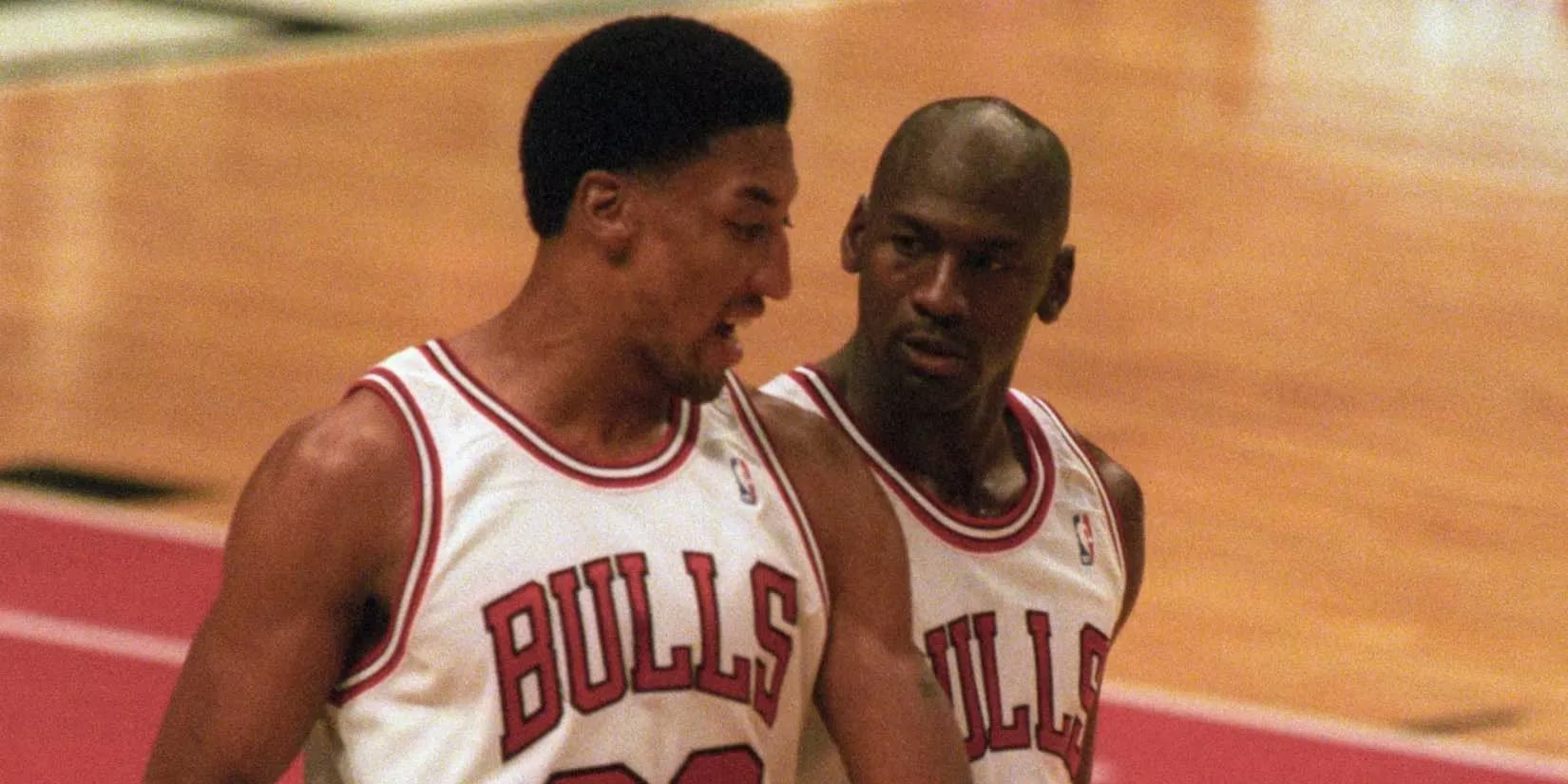
Draymond's verdict leaned toward his close friend, but the reasoning he offered was not pure favoritism. It reflected a genuine philosophical divide in how basketball fans measure greatness. Some prize the ability to drag inferior lineups into contention, while others value the ruthless efficiency of a player who closes every door when given a contending cast. The league never allowed Jordan and James to meet in an NBA game, as Jordan retired in 2003, the same year LeBron was drafted. That absence of a direct confrontation ensures the debate will never have a definitive scoreboard answer.
Green, now an elder statesman on a Warriors roster trying to extend its championship window with Jimmy Butler, remains perfectly comfortable stoking the fire. His analyst career has taught him that certainty, not neutrality, creates the most memorable television. Whether fans agree with his LeBron-over-Jordan stance or not, they cannot accuse him of dodging the question.
Insights are sourced from Wikipedia, and they help frame why debates like Draymond Green’s LeBron-over-Jordan stance spread so quickly: modern sports discourse often behaves like a competitive game, with clear “win conditions” (rings, MVPs, Finals records) and different player “builds” (floor-raiser vs. ceiling-raiser) that fans optimize for. Seen through that lens, Green’s argument isn’t just personal loyalty—it’s a ruleset choice about what metrics matter most, which keeps the GOAT conversation replayable even without a head-to-head matchup to settle it.
Comments