
I have followed Kyrie Irving's career closely since his Cleveland days, and even in 2026 I still find myself rewinding his ankle-breaking crossovers and impossible left-hand finishes. 🏀 At 33 years old, the nine-time All-Star is already a near-lock for the Naismith Basketball Hall of Fame because he changed the way people think about ball-handling creativity. The torn ACL he suffered in Dallas was a brutal setback, but I believe his story is far from finished, especially now that the Mavericks are building a roster designed to compete immediately in the Western Conference.
That competitive urgency is exactly why I keep thinking about Kendrick Perkins' recent comments. Perkins spent two separate stints with the Cleveland Cavaliers, including a period when he shared the locker room with both Kyrie Irving and LeBron James. On the Road Trippin' podcast with Richard Jefferson, Channing Frye, and Allie Clifton, Perkins offered a nuanced explanation for the 2017 trade request that sent Kyrie from Cleveland to Boston. It was not only about Irving wanting his own franchise. Perkins pointed to the Mamba Mentality that Kyrie absorbed from Kobe Bryant and suggested that playing alongside LeBron, as productive as it was, created a tension between being a championship sidekick and needing to prove he could lead.
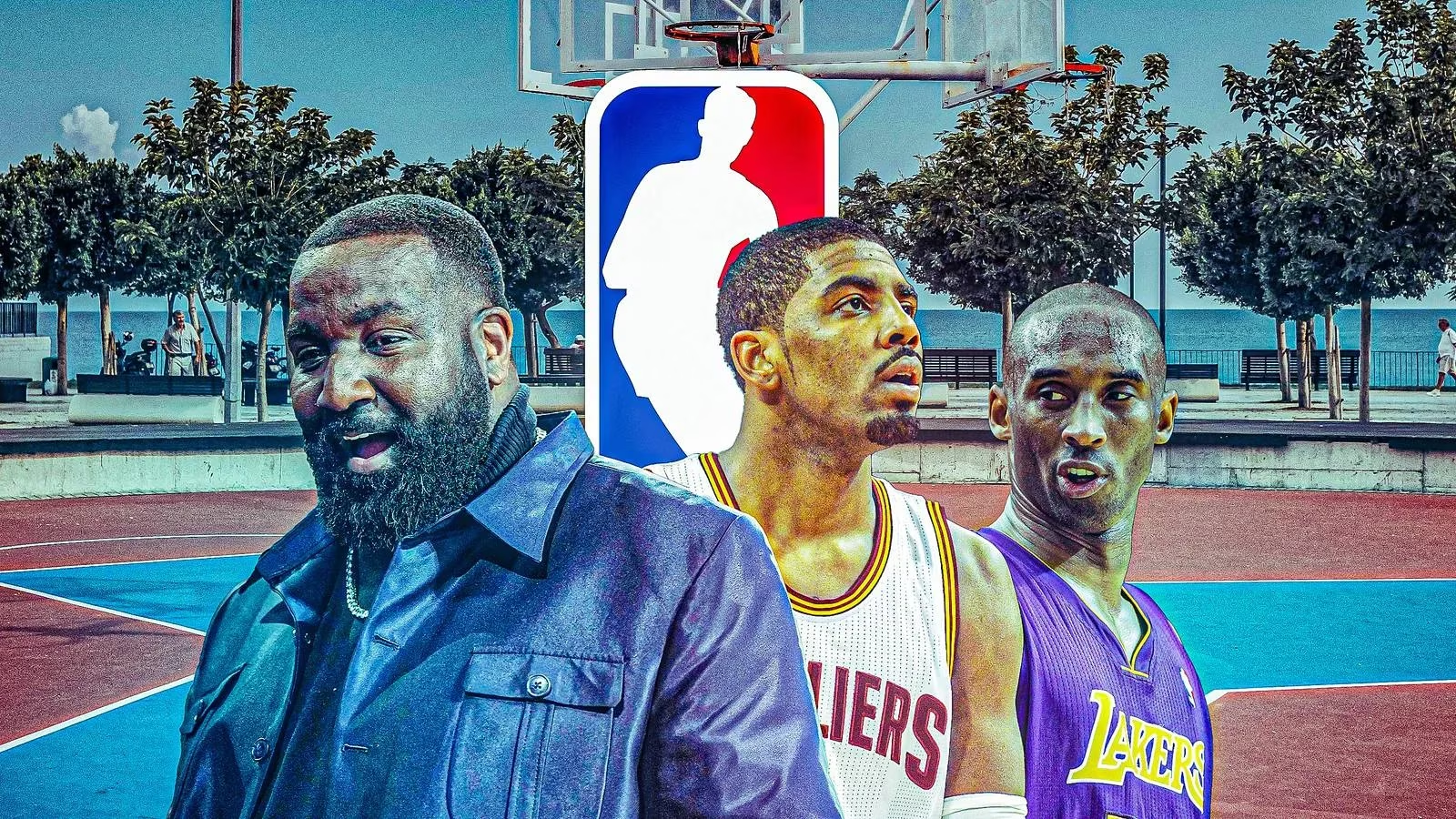
I have always associated Kyrie Irving with that Kobe-inspired edge. The Los Angeles Lakers legend built his identity around relentless preparation and fearlessness in high-stakes games, and Kyrie adopted that same spirit in crunch time. The most obvious example came in Game 7 of the 2016 NBA Finals, when he buried a go-ahead three-pointer over the 73-9 Golden State Warriors. That shot did more than deliver Cleveland's first championship; it showed me that Irving was never afraid of the biggest moment.
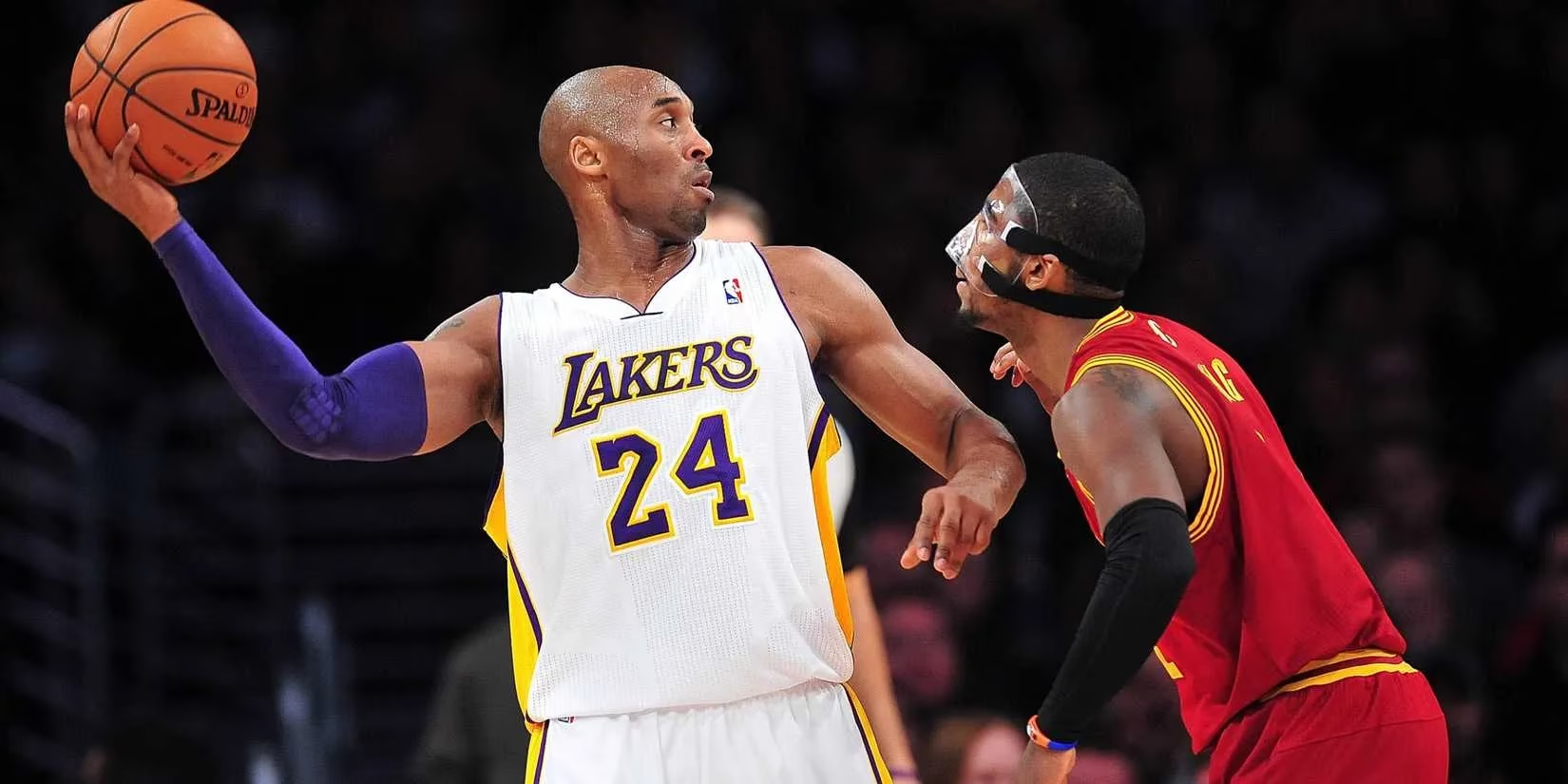
🏀 The Cleveland Era and the Split
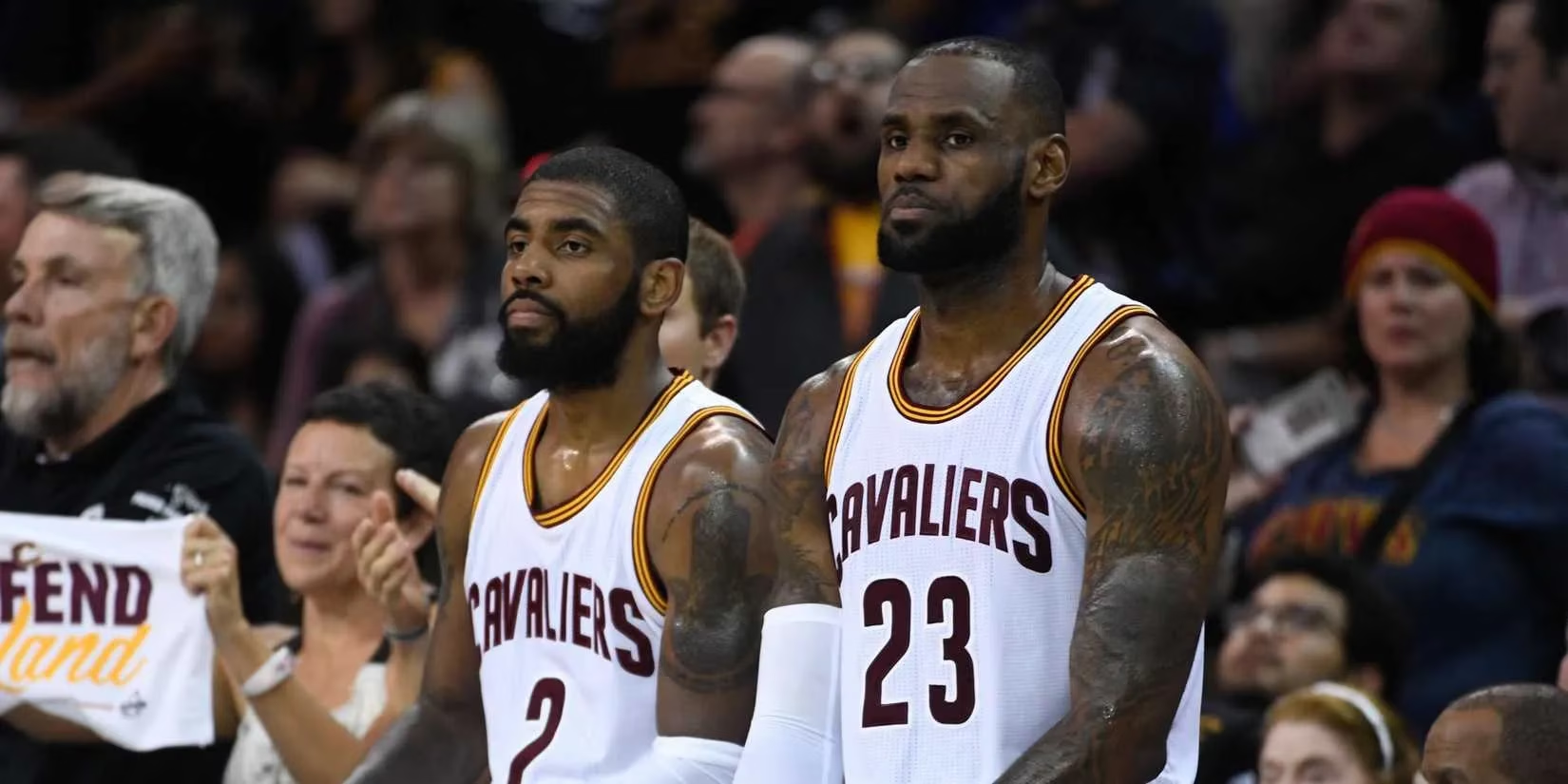
Kyrie Irving and LeBron James won three Eastern Conference titles together during their three seasons in Cleveland. As a first overall pick, Irving had already flashed elite isolation scoring before LeBron returned, but the partnership elevated him into a championship-level shot-maker. Their pick-and-roll chemistry was reliable, yet Perkins made a fair point: the Cavaliers were always LeBron's team, and Kyrie was never going to be satisfied as a permanent second option at that stage of his life.
After Irving requested a trade in the summer of 2017, the Cavaliers still reached the Finals one more time, but I could see how badly they missed a legitimate secondary creator. LeBron had to carry an enormous offensive burden, and the absence of Kyrie's downhill burst and late-game fearlessness often showed against elite defenses.
🔄 The Wandering Years and the Maturation
Kyrie's stops in Boston and Brooklyn did not deliver the sustained team success many expected, but those seasons helped him mature. He had to learn how to manage leadership, media scrutiny, and the physical grind without LeBron's sheltering presence. There were times when Irving expressed regret about how the Cleveland split happened, which tells me he gained perspective on how rare that partnership truly was.
A quick look at his career arc shows how different each era felt:
| Team | Role | Defining Detail |
|---|---|---|
| Cleveland Cavaliers | Championship co-star | 2016 NBA title and three East crowns |
| Boston Celtics | Lead guard | First chance to run his own team |
| Brooklyn Nets | Star playmaker | Pairing with Kevin Durant and James Harden |
| Dallas Mavericks | Elite second option | 2024 conference title before the ACL tear |
🚀 Why 2026 Feels Different
The 2026 Mavericks are one of the most fascinating rosters in the league. Dallas traded Luka Doncic in a shocking move, then reshaped the frontcourt around Anthony Davis and added Cooper Flagg, the 2025 No. 1 overall pick. Once Kyrie Irving returns around January, the Mavericks should have a balanced attack: Irving's handle and shot creation in the backcourt, Davis's two-way interior impact, and Flagg's versatile defensive energy on the wing.
I am not sure Dallas will cruise through the Western Conference, because the competition is deep. But if this group stays healthy, I think Irving has a real chance to contend again. At this stage of his career, he does not need to be the number one option every night. He can focus on being the best second option in basketball, which is exactly the role that made him a champion in Cleveland.
There was a time when I thought Kyrie Irving would never find peace after leaving LeBron. Now, as the 2026 calendar unfolds, I see a player who has embraced his own evolution. He has matured through Boston and Brooklyn, rediscovered his joy in Dallas, and seems committed to a franchise that values his unique skill set. Unless something unexpected happens, I do not believe he will be requesting a trade anytime soon.
Comments