
The echoes of bouncing basketballs had barely faded inside the Riga Arena when Giannis Antetokounmpo finally let his shoulders drop. It was September 2025, and Greece had just clawed out a 92-89 victory over Finland to claim the EuroBasket bronze medal. Antetokounmpo had finished with 30 points, 17 rebounds, and six assists — a masterpiece painted with muscle, sweat, and an unspoken fury that had been simmering since Friday night.
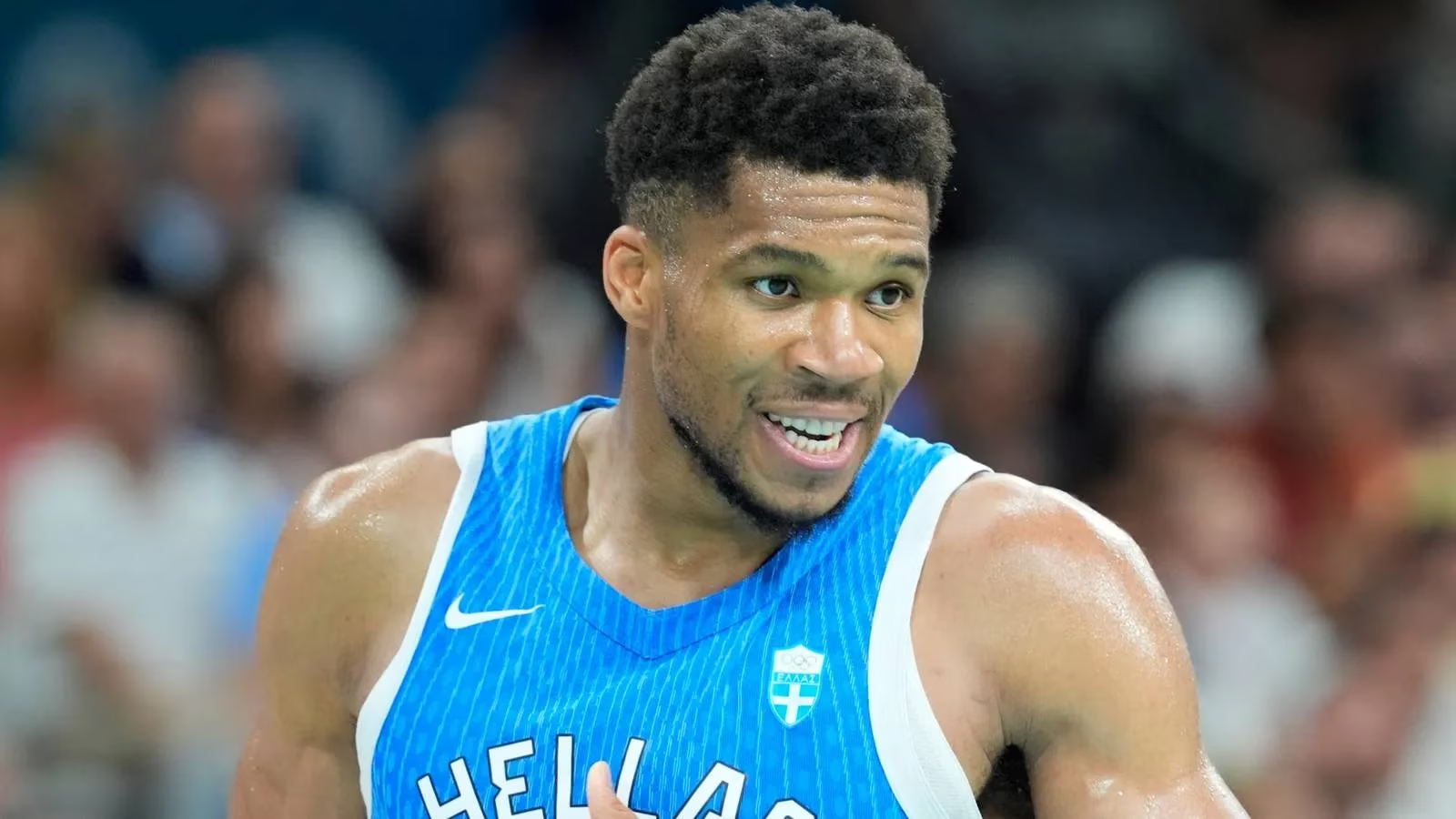
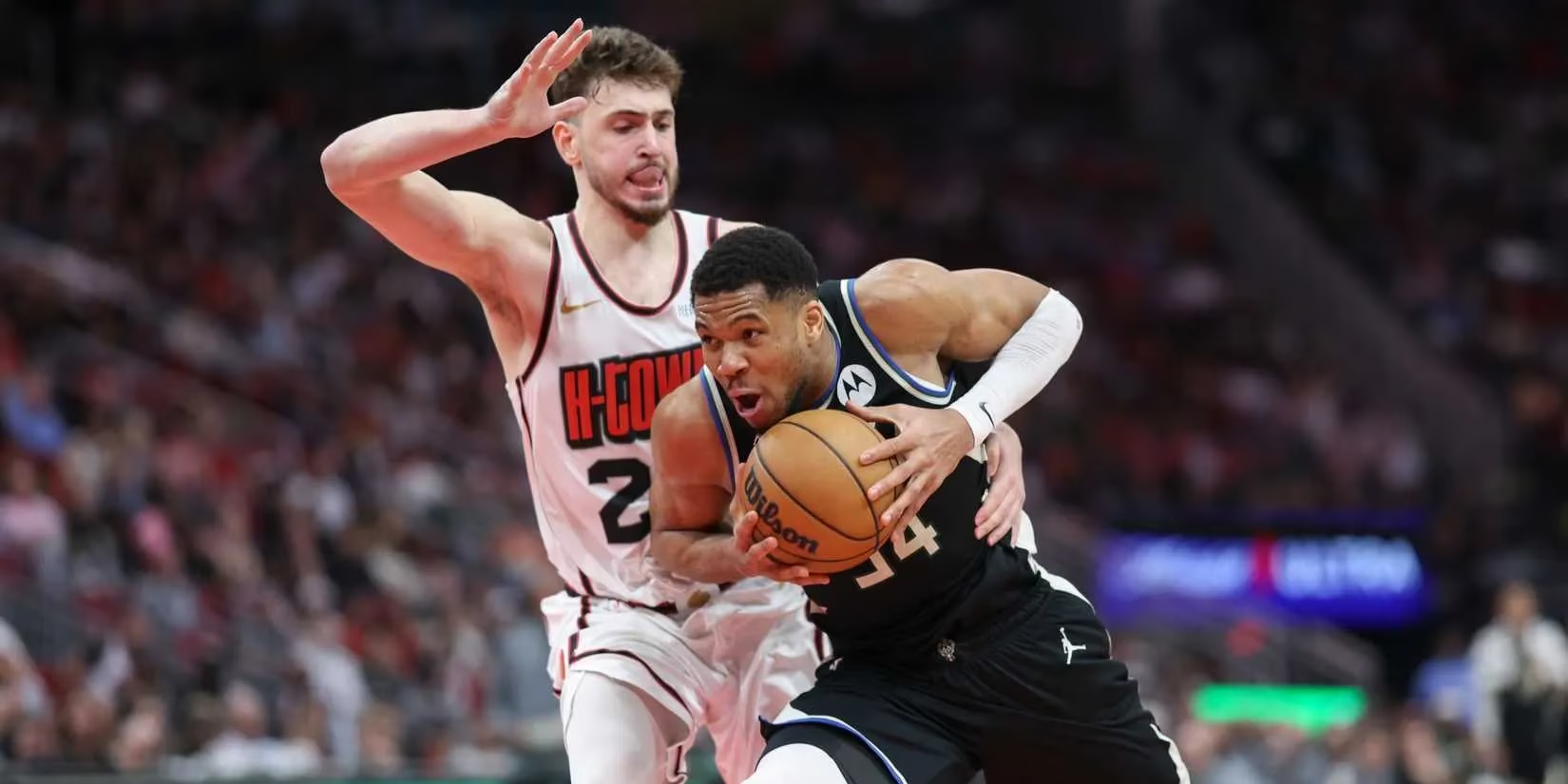
Three days earlier, he had looked like a stranger on that same court. Turkey had dismantled Greece 94-68 in the semifinal, and the two-time NBA MVP managed only 12 points on 6-of-13 shooting. Turkey’s defense was a swarm — every time Antetokounmpo touched the paint, multiple jerseys collapsed on him, arms everywhere, legs tangled, no path to the rim. It was a masterclass in containing a superstar, orchestrated in part by Alperen Sengün, the young Houston Rockets center who had spent the night in Antetokounmpo’s shadow and lived to joke about it.
After the blowout, Sengün was asked about Turkey’s defensive game plan. His response was understated but sharp, like a needle slipped into a post-game handshake. He didn’t name Antetokounmpo directly, yet the implication was clear: stop the Greek Freak from getting downhill, and he becomes ordinary. The comment, whatever its exact wording, spread like wildfire across social media. Fans clipped it, debated it, meme’d it. In a matter of hours, what happened on the court had become a viral subplot. Sengün’s smirk was screen-grabbed and shared thousands of times; the basketball world waited for a reaction.
Antetokounmpo stayed radio silent.
It wasn’t avoidance. It was focus. While the digital world churned, Greece had to regroup for the third-place game against Finland. Antetokounmpo buried himself in film sessions and walkthroughs, meeting the noise with a wall of silence. Those close to the team would later say he barely spoke about the Sengün episode in the locker room. The only words that mattered were about Lauri Markkanen and Finland’s pick-and-roll coverage.
Then Sunday arrived. From the opening tip, Antetokounmpo played like a man possessed — not with blind rage, but with cold, surgical precision. Every rebound was a declaration. Every assist felt like a chess move. In the fourth quarter, with the score tied at 84, he grabbed a defensive board, blazed through the Finns’ transition defense, and threw down a dunk that shook the entire basket stand. Finland never led again. When the horn sounded, Greece had its first EuroBasket medal since 2009, and Antetokounmpo finally had a tangible answer to all the chatter.
The press conference that followed carried a quiet electricity. Every reporter in the room knew what hung in the air. When someone finally asked about Sengün’s dig, Antetokounmpo didn’t roll his eyes or smirk. He leaned into the microphone, measured as always.
He never said “Sengün” or “Turkey.” He spoke instead about respect, about how his career had been built on answering doubters with action rather than words. “I’ve been in this position many times,” he said, according to BasketNews. “People try to tear you down. You just have to keep building.” And then, in a tone so subtle it could have been mistaken for politeness, he added a line that made every journalist stop typing: “Some people talk after winning a semifinal. We chose to talk after winning a medal.”
The room let out a collective murmur. The Greek Freak had just returned fire, not with a scream, but with a championship whisper. It was classic Giannis — competitive without being malicious, yet utterly devastating if you were the target.
His head coach, Vassilis Spanoulis, was far less diplomatic. In his own press session, Spanoulis unleashed an NSFW soliloquy that made the earlier jab seem like playground banter. He defended his star’s legacy, questioned the audacity of relatively unproven players taking shots at a champion, and pointedly noted that while Greece celebrated bronze, Turkey would have to live with the sting of losing the final to Germany. Spanoulis’s words were raw, unfiltered, and exactly the kind of fire that had defined his own legendary playing career.
By Monday morning, the narrative had flipped completely. Turkey had fallen in the gold medal game, leaving Sengün and his teammates with silver medals around their necks and hollow expressions. Silver is supposed to be an achievement, but in tournament basketball, it often feels like the loneliest color. Meanwhile, Antetokounmpo was posting photos on his social media with the bronze medal, grinning alongside his brother Thanasis and the rest of the Greek squad. The comments section flooded with praise — not just for the stat line, but for the poetic arc of the weekend.
Looking back a year later, the episode has become a textbook case of how elite athletes channel disrespect into performance. Antetokounmpo didn’t need to craft a lengthy response or engage in a Twitter war. He let his game talk — and his game spoke 30 points, 17 rebounds, and six assists loud. The bronze wasn’t just a medal; it was a punctuation mark on a lesson he’s been teaching the NBA for years: be careful what you say, because legends have long memories.
As 2026 rolls along, Antetokounmpo remains firmly in his prime, already an NBA champion, a Finals MVP, two-time league MVP, and Defensive Player of the Year. The list of accolades grows, but the fire that sparked in Riga still flickers. Sengün, for his part, has developed into a star in his own right, yet whenever the two face off, the broadcast inevitably brings up that EuroBasket semifinal and the aftermath. That’s the thing about moments like these — they never really fade. They curate themselves into the highlight reels of a player’s career, reminding everyone that sometimes, finishing third feels infinitely better than finishing second.
Comments