
Gilbert Arenas spent his prime turning basketball games into improvised scoring exhibitions, and he has spent his post-playing career turning basketball arguments into similar spectacles. In 2026, nearly two years after the Paris Olympics, the former Washington Wizards guard remains one of the NBA's most provocative podcast voices, and his six-player all-time top five is still the cleanest example of his refusal to color inside conventional lines. Arenas already had a firm five: Michael Jordan, LeBron James, Kobe Bryant, Shaquille O'Neal and Magic Johnson. After Stephen Curry's gold-medal performance at the 2024 Paris Olympics, Arenas decided Curry belonged too. The catch was pure Gil: nobody was removed.
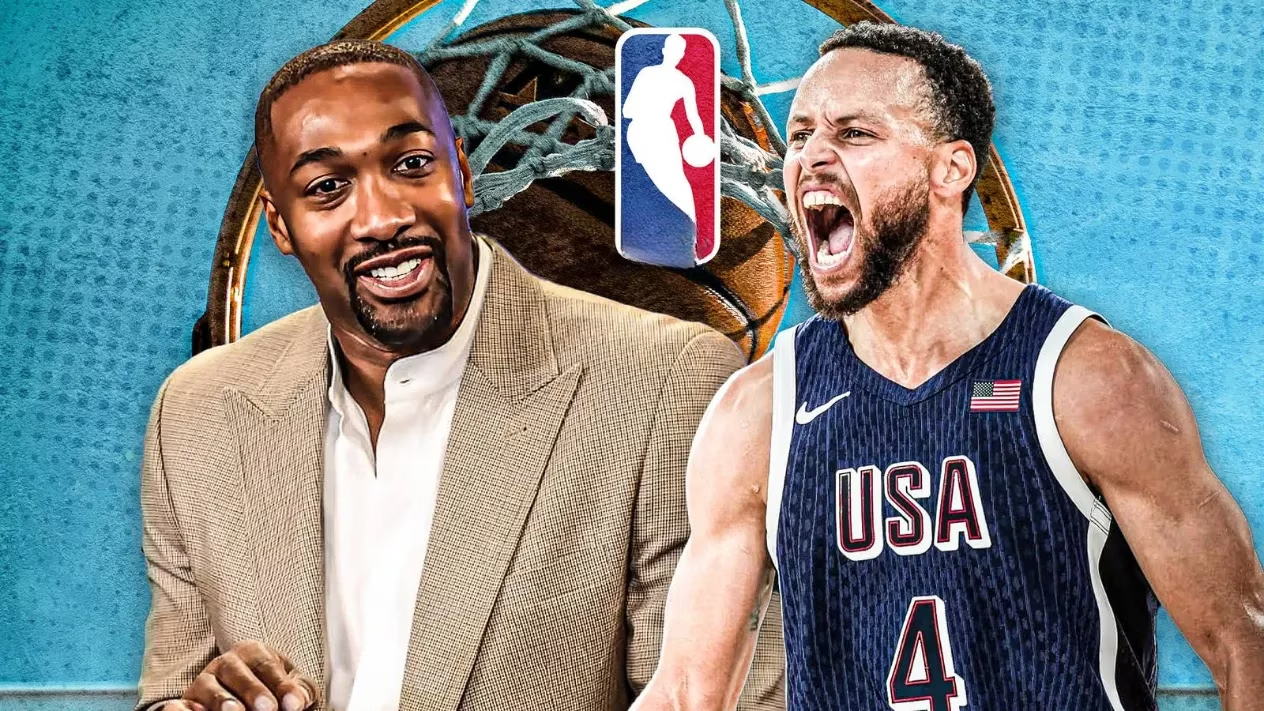
🎙️ A Top Five With Six Seats
On his podcast, Gil's Arena, Arenas argued that the all-time greats each own a defining, iconic moment. Jordan has 'The Shot' that sealed the Chicago Bulls' second three-peat. James has the iconic defensive stop against Andre Iguodala that helped the Cleveland Cavaliers complete their historic 3-1 comeback in the 2016 NBA Finals. Magic Johnson stepped up for Kareem Abdul-Jabbar as a rookie and scored 42 points in the title-clincher. Kobe Bryant and Shaquille O'Neal had their signature lob connection in the 2000 Western Conference Finals that essentially kickstarted a dynasty.
For Arenas, Curry's defining moment arrived in Paris. Despite Curry's NBA accomplishments, an Olympic gold medal was the one item missing from his trophy case. The 2024 Games marked his Olympic debut, and his early struggles made his eventual explosion even more dramatic.
| Player | Defining moment cited in the debate |
|---|---|
| Michael Jordan | 'The Shot' to seal the Bulls' second three-peat |
| LeBron James | The defensive stop on Andre Iguodala in the 2016 Finals |
| Kobe Bryant | The lob connection with Shaquille O'Neal in the 2000 Western Conference Finals |
| Shaquille O'Neal | The same lob connection that helped launch the Lakers dynasty |
| Magic Johnson | 42 points as a rookie in the title-clincher for Kareem Abdul-Jabbar |
| Stephen Curry | The 'golden dagger' against France in the 2024 Olympic gold-medal game |
🥇 Curry's Olympic Detour Became a Destination
Curry could not buy a basket throughout the group stages in Paris. He scored just 29 total points and shot 5-of-20 from beyond the arc in his first four games. But the greatest shooter of all time was always likely to regain his touch, and the timing could not have been better for the United States.
Team USA came out flat in its semifinal against Serbia, led by three-time NBA MVP Nikola Jokic. The Americans trailed by double digits for much of the game. Curry, already finding his groove in the first half, willed the team back with 36 points and nine three-pointers, helping Team USA avoid a disastrous tournament exit.
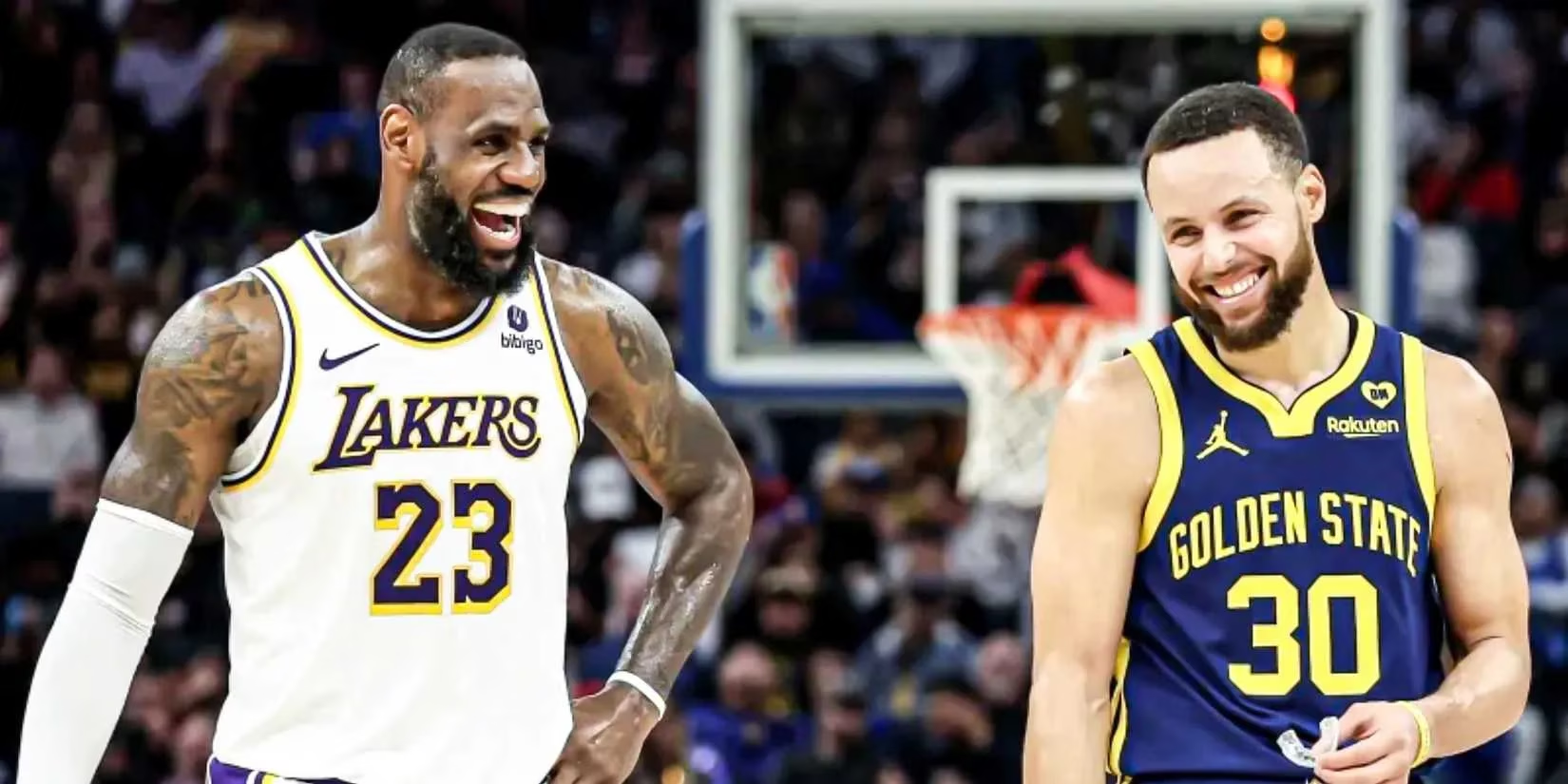
The semifinal also exposed Team USA's vulnerability, giving host nation France hope before the gold-medal clash. Victor Wembanyama and France threatened to steal the gold medal late, but Curry delivered four straight three-pointers down the stretch. The final shot, widely known as the 'golden dagger,' sealed the American victory and bid France's hopes 'night night.'
For Arenas, that shot was not merely Curry's Olympic moment. It was the credential that pushed Curry into all-time territory. Curry's Paris finale became the hinge on which Arenas's historical door swung.
🏀 Why the Debate Still Lands in 2026
Arenas's ranking logic behaves less like a ballot and more like a jazz solo: the melody is familiar, but the improvisation refuses to resolve on the expected chord. A top five with six names sounds like a arithmetic error, yet Arenas is making a different argument. He is not simply counting resumes. He is asking which moments make a career feel mythic.
The former Wizards star knows how quickly a prime can vanish. Injuries ultimately derailed his own career, and he was out of the league by age 30. That history gives his podcast takes a certain emotional logic, even when they sound deliberately absurd. Arenas is less interested in clean rankings than in the moments that lodge themselves in basketball memory.
The golden dagger landed like a tuning fork struck against the Louvre's glass—one note that made an entire argument vibrate. Curry had already changed the NBA with his shooting range and four championships, but the Olympic final gave his career a new kind of closure. It also gave Arenas the excuse he needed to break the oldest rule of the top-five list: the list must have exactly five names.
Whether fans accept six players in a top five or reject the premise entirely, Arenas has forced a useful question. Are all-time lists about accumulated achievement, or about the moments that make a career feel unforgettable? In 2026, with Curry still central to the NBA conversation, the answer remains as slippery as Arenas intended.
Comments