
The Pistons legend made his case in a sit-down with Reggie Miller and Larry Bird
Few people on the planet are qualified to rank the greatest point guards in NBA history. Isiah Thomas is one of them. As a 6-foot-1 guard who survived — and thrived — in an era ruled by towering big men and physical wings, the Detroit Pistons icon built a legacy that few players of any size can match.
So when Thomas sat down with Reggie Miller and Larry Bird for a three-legend conversation and was asked to name his Mount Rushmore of NBA point guards, he did not hedge. He named four men. And in a decision that immediately set the basketball world talking, he left out the modern superstar that many fans already consider the greatest shooter — and arguably the greatest point guard — to ever live.
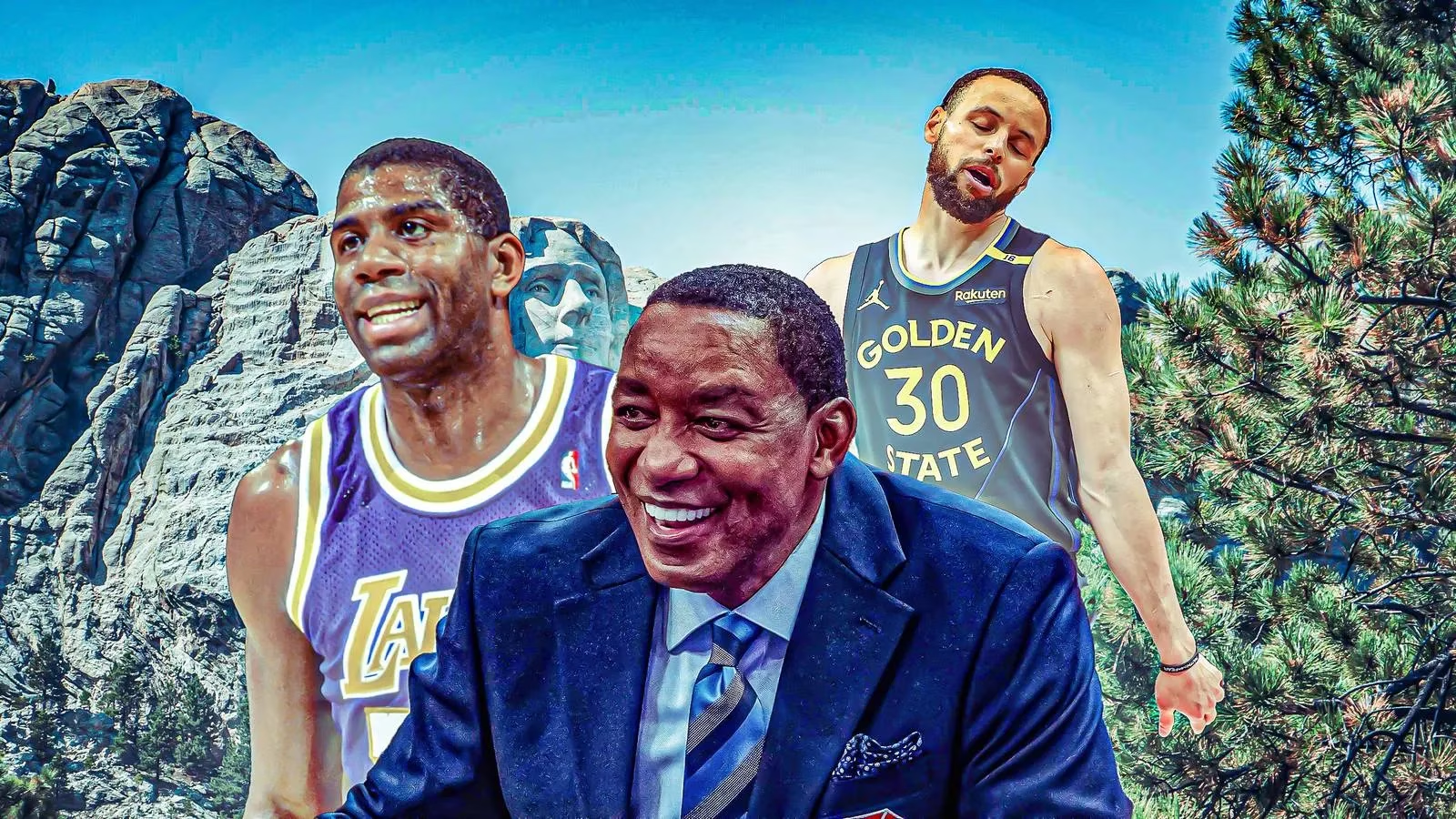
Rather than bow to current consensus, Thomas leaned on what he saw with his own eyes: the legends he battled, the giants he studied, and the records that have never been broken.
1. Magic Johnson — The Benchmark
For Thomas, any conversation about point guard greatness starts in Los Angeles. Magic Johnson was not just his greatest rival at the position — he was, in Thomas' own admission, a matchup that smaller guards simply could not solve.
At 6-foot-9, Johnson was a physical anomaly who could handle, pass, rebound and score like a forward while running the offense like a pure point guard. He was the face of the 1980s alongside Larry Bird, and the two of them dragged the NBA into the mainstream.
| Magic Johnson | Career Highlights |
|---|---|
| Championships | 5 |
| NBA Finals appearances | 9 (in 13 seasons) |
| Era defined | Showtime Lakers |
| Legacy | Redefined the point guard position |
The rivalry between Johnson and Thomas was as personal as it was historic. The two met in the Finals twice. In 1988, Magic's Lakers survived a seven-game war against Detroit. A year later, Thomas and the Pistons answered with a sweep, launching a back-to-back title run.
For Thomas, Magic set the standard against which every floor general is measured.
2. Oscar Robertson — The Blueprint
Thomas' second pick was just as emphatic. He argued that the Mount Rushmore of point guards begins not only with Magic Johnson, but with Oscar Robertson as well.
In many ways, the Big O wrote the blueprint that Johnson later perfected. Before Robertson, nobody had seen a player with that combination of size, strength, athleticism and vision running an offense. Point guards of his era were, quite literally, at his mercy.
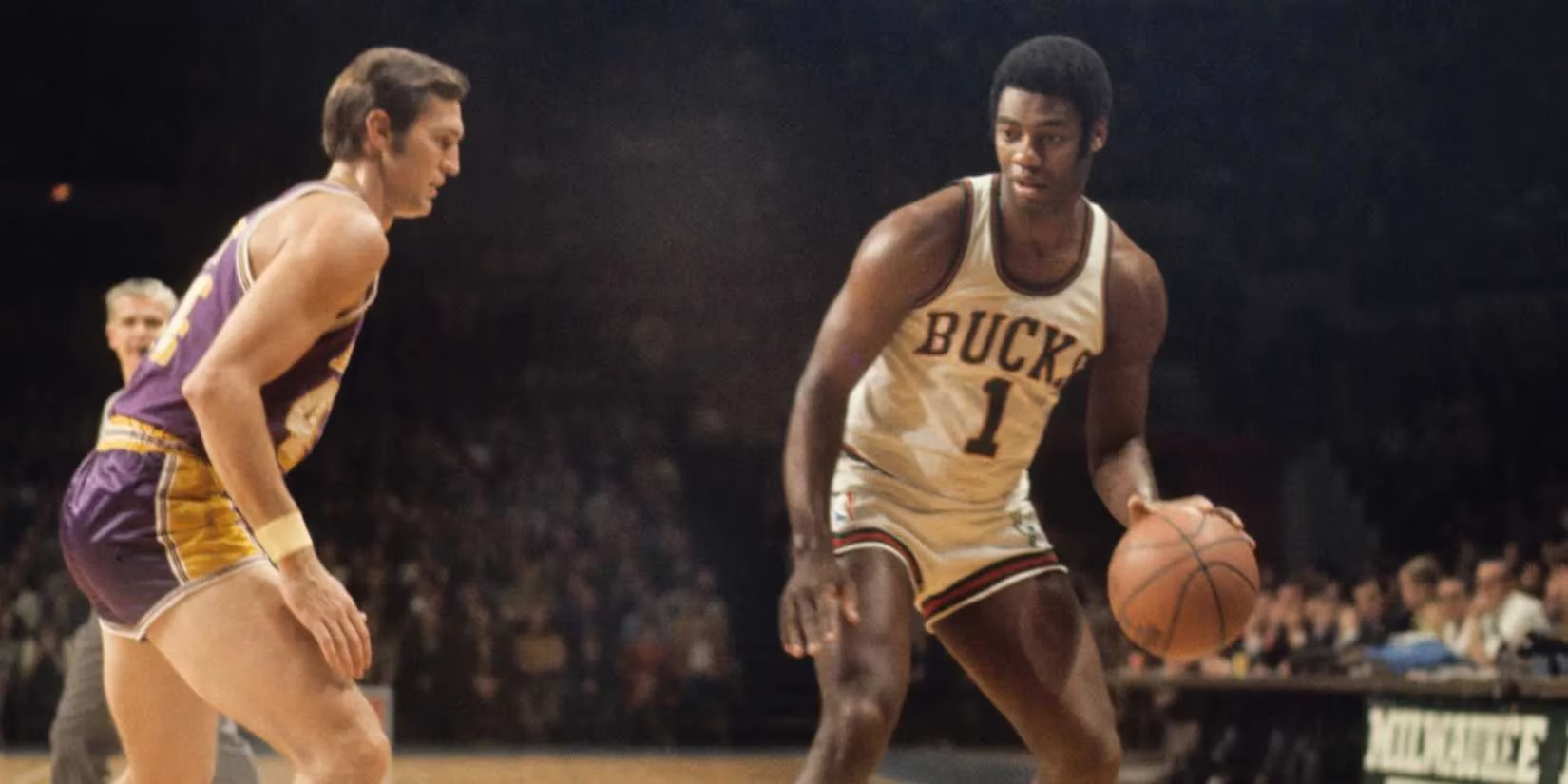
Robertson was a perennial MVP candidate throughout the 1960s and won the award in 1963-64 — the same season he averaged a triple-double, a feat that stood untouched for more than five decades. His misfortune was timing: the Boston Celtics owned the league for most of his prime. He finally captured a championship in 1971 alongside a young Kareem Abdul-Jabbar in Milwaukee.
Could any modern guard have survived that era? Thomas clearly doubts it.
3. Isiah Thomas — The Little Guy's Standard
Thomas named himself third, and honestly, who is going to argue?
For Thomas, the story of the "little guy" in the NBA starts with him. In a league dominated by size, he led the Pistons to back-to-back championships as a 6-foot-1 guard. He was fearless, relentless, and one of the most creative ball-handlers the game has ever seen.
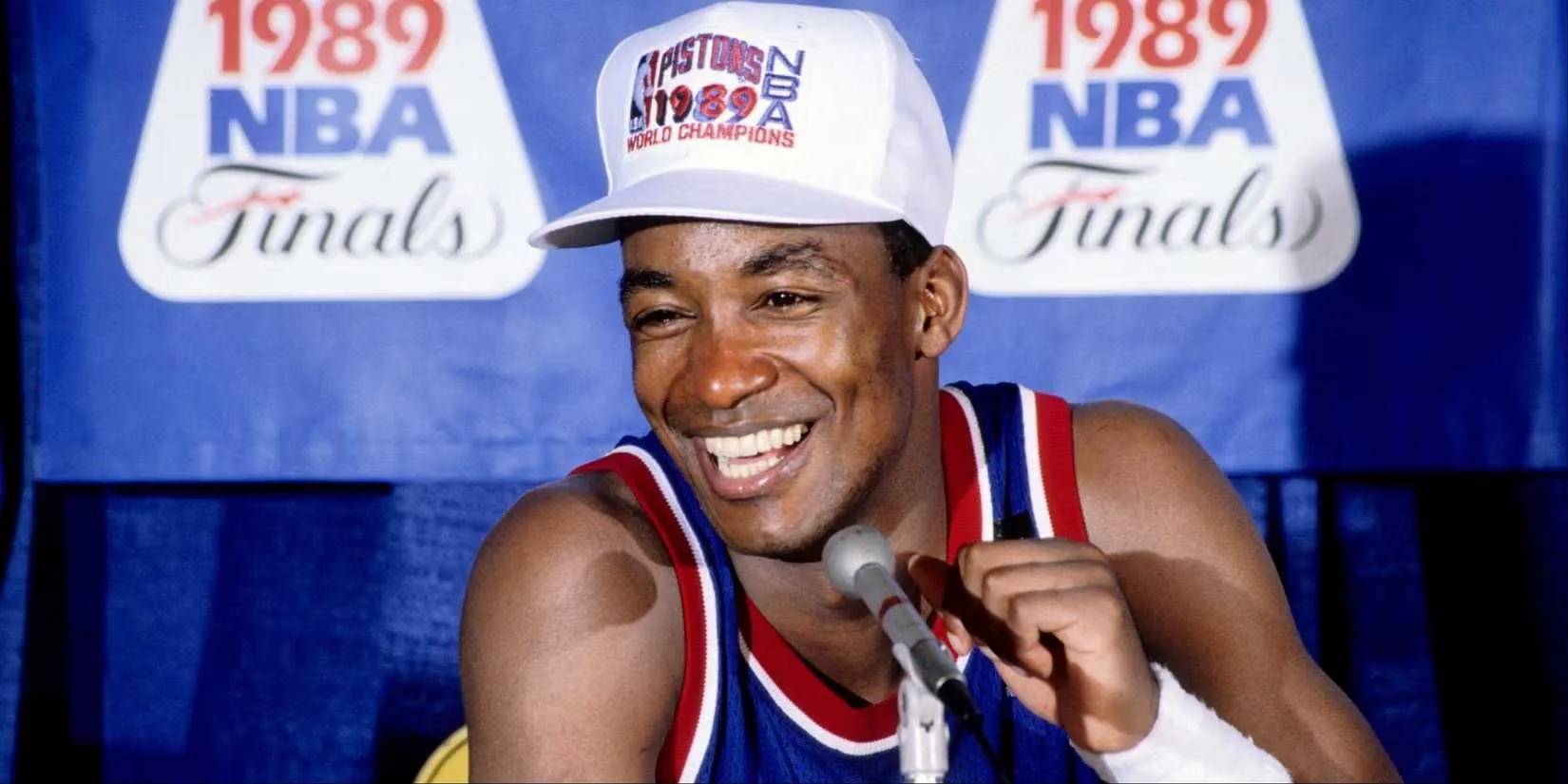
He used his dribble and speed to manufacture advantages, and he never hesitated to attack the lane against centers who outweighed him by 60 pounds. Before Allen Iverson and before Stephen Curry, Isiah Thomas showed what a small guard could accomplish at the highest level.
4. John Stockton — The Untouchable Records
For his final selection, Thomas chose John Stockton — and that is where the controversy truly began.
Reggie Miller, sitting right beside him, had included Stephen Curry in his own four. Thomas went the other way, citing Stockton's statistical dominance as the deciding factor.
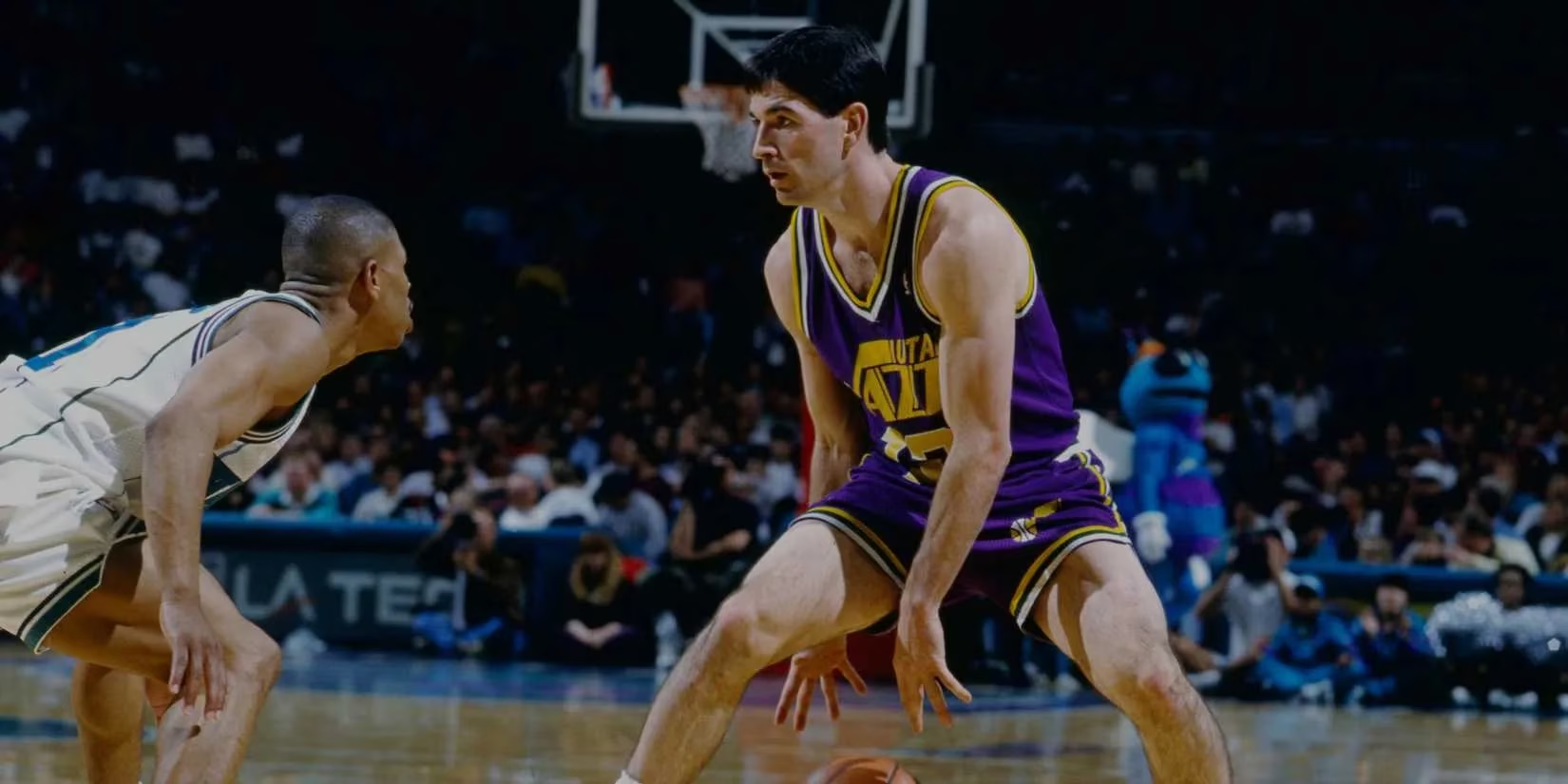
Stockton retired with 15,806 assists and 3,265 steals — both all-time NBA records. Chris Paul, the closest active challenger, remains nowhere near either mark. Stockton spent his entire career in Utah, formed one of the most devastating pick-and-roll partnerships in history with Karl Malone, and was a five-time All-Defensive Team selection.
He was never flashy. He was simply unstoppable in his efficiency.
The Curry Question 🏀
So where does that leave Stephen Curry?
It is, without question, the most fascinating snub in the debate. Curry has won four championships with the Golden State Warriors, reshaped how the game is played from 30 feet out, and is widely credited with changing the geometry of modern basketball. He remains active in 2026, still adding to a résumé that many believe already places him in the top two point guards ever.
Yet Thomas' logic is not irrational. He is rewarding longevity, durability, defensive commitment and record-book immortality — the traits he values most in a floor general. Curry's case rests on peak dominance, revolutionary impact and championship rings.
Which criteria should carry more weight? That is the real question, and it is why this argument will never truly end.
What Thomas' List Really Reveals
Thomas' Mount Rushmore is not simply a ranking. It is a window into how one generation measures another.
-
Magic Johnson — the ultimate winner and positional prototype
-
Oscar Robertson — the original do-everything guard
-
Isiah Thomas — proof that size is not destiny
-
John Stockton — the numbers that may never be matched
Every one of those four played before the three-point revolution turned the position into something entirely different. Thomas watched them, guarded them, and in some cases beat them.
Whether fans agree or not, one thing is certain: when a Hall of Famer who won back-to-back titles as an undersized guard tells you who belongs on the mountain, you listen. You may not nod. But you listen.
Comments