
As I embark on my 18th season in the NBA, the feeling is both familiar and entirely new. The familiar part is the relentless drive to compete, the desire to add another chapter to a career that has already spanned nearly two decades. The new part? The jersey on my back. For the first time in my professional life, I'm wearing the red and white of the Houston Rockets. At 37, after a blockbuster offseason trade from the Phoenix Suns, I find myself as the veteran leader on a young, hungry roster buzzing with potential. The expectations are clear: contend for the Western Conference crown. While I'll have exciting talents like Amen Thompson and Alperen Şengün beside me, the spotlight, the responsibility, and the legacy questions all converge on me. My place in history is secure, a first-ballot Hall of Famer no doubt, but the competitive fire never dims. A deep playoff run here, perhaps even a championship, would add a profound, late-career layer to my story.
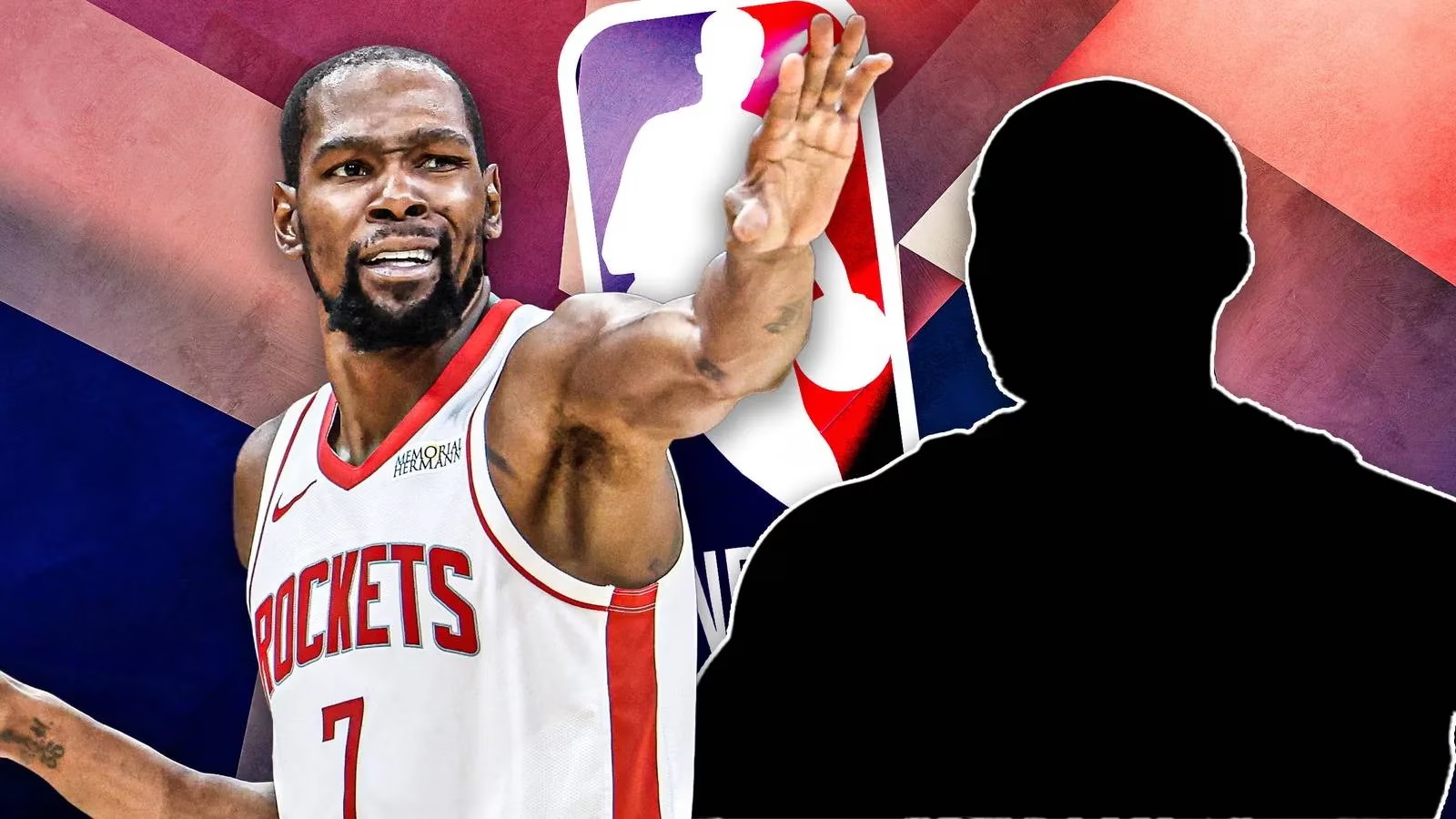
And, if I'm being honest, achieving that ultimate success in Houston would serve as the ultimate response to one of my most vocal critics. The history between Charles Barkley and myself is long and, at times, contentious. It's a rivalry played out in soundbites and analysis segments, a clash of eras and personalities. Recently, on the Netflix show "Starting 5," I was directly asked about one of Barkley's most notorious critiques—his branding of me as a "bus rider" during my championship years with the Golden State Warriors. That label, suggesting I merely hopped on an already-moving vehicle, has always stung, especially considering I was named Finals MVP in both 2017 and 2018.
My response wasn't meant to be polite. I went straight for the legacy comparison. Charles had a phenomenal 16-year career, was a force of nature, and is rightfully in the Hall of Fame. But in the end, when people debate the all-time greats, my name consistently appears higher on those lists. That's not arrogance; it's the reality of accolades, longevity, and impact. The point wasn't to diminish his incredible achievements but to challenge the foundation of his criticism. If we're judging legacies by rings and context, then the conversation has to be holistic. Barkley played on terrific teams, made one Finals, and ran into the immovable object that was Michael Jordan's Chicago Bulls. The dynamics of team-building and competition are complex, and reducing a player's contribution to a simplistic metaphor does a disservice to the game.
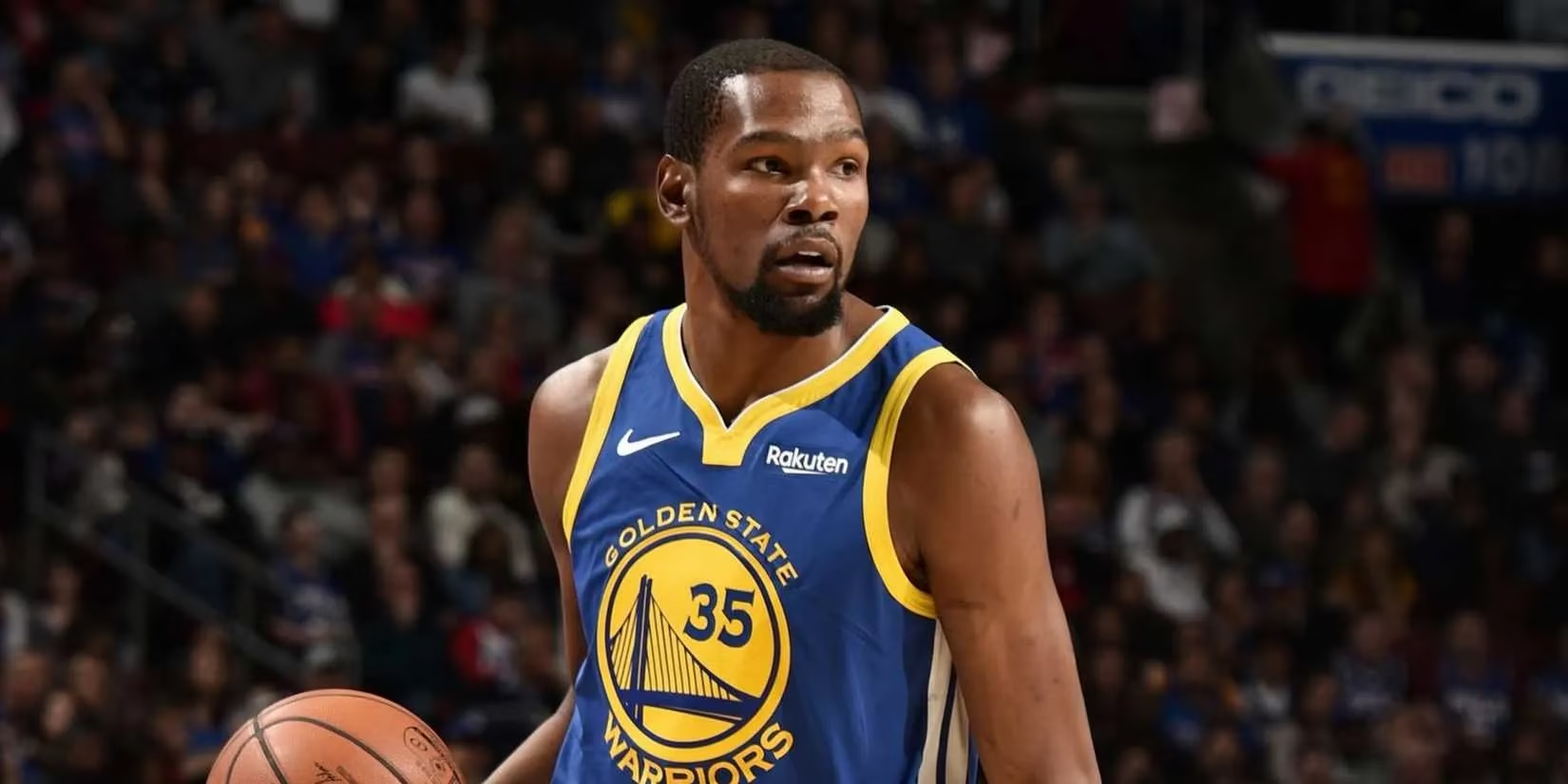
The "bus rider" narrative, of course, stems from my 2016 decision to join the Warriors. It was a move that reshaped the league's balance of power and drew immense criticism for being anti-competitive. I understand that perspective. But within the context of those teams, my role and impact were undeniable. Even Draymond Green, never one to mince words, has stated they wouldn't have those two titles without me. My performance in those Finals speaks for itself: averaging over 30 points per game on historic 50/40/90 shooting splits. Yes, the offensive ecosystem, masterfully orchestrated by Stephen Curry, was the engine. He was the system, the most valuable player to the team's identity. But to call me a passenger ignores the reality of being the primary scorer and defensive focus in the biggest moments. It was a symbiotic relationship of elite talents, not a simple case of one carrying the other.
Now, in Houston, the narrative is completely different. I'm not joining a 73-win team. I'm the centerpiece brought in to elevate a young core. The dynamic is reversed. If we succeed here, the "bus driver" analogy would be impossible to ignore. Every practice, every film session, every clutch possession is an opportunity to lead not just by scoring, but by example. The young guys here—Thompson with his explosive athleticism, Şengün with his sublime passing vision—they have All-Star potential. My job is to help them realize it faster, to instill a championship-level process and mindset.
This new challenge is what excites me. The grind of an 82-game season, the tactical adjustments, the building of chemistry—it's all fresh again. The Western Conference is as brutal as ever, stacked with veteran superteams and rising powers. Navigating that gauntlet with this group will be the true test. A successful season in Houston would mean more to my legacy than another year as a contender elsewhere. It would be a testament to adaptability, leadership, and sustained excellence deep into a career.
As for the back-and-forth with Barkley? I expect it to continue. That's just who we are. He's paid to give his unfiltered opinion, and I'm competitive enough to defend my own legacy. It adds a layer of spice for the fans. I'm sure he's already crafting his retort, and that's fine. The beauty of sports is these intersecting narratives: the past legend critiquing the present one, the quest for a new title, the defiance against a established narrative. In 2026, I'm focused on writing this next chapter with the Rockets. Every game is a statement. Every win is a step toward silencing all the noise, not with words, but with actions on the court. The journey in Houston has just begun, and I'm here for all of it.
Comments