
As I look back on the landscape of basketball in 2026, one figure's influence continues to cast a long shadow, especially when we talk about the restoration of American basketball supremacy. LeBron James, now in the twilight of his legendary 23rd season, recently shared some profound reflections during a Hall of Fame weekend that centered on the 2008 "Redeem Team." His words weren't just about stats or victories; they were about a singular force that recalibrated the entire ethos of USA Basketball. For LeBron, and for the sport itself, Kobe Bryant wasn't just another superstar on the roster—he was the keystone, the catalyst, the missing link that fused individual greatness into an unstoppable collective force.
LeBron's journey with Team USA began with the bitter taste of bronze in the 2004 Athens Olympics. That disappointment was like a crack in the foundation of American basketball's perceived invincibility. The team needed more than just talent; it needed an identity, a spine. Enter the 2008 "Redeem Team," a squad so stacked with future Hall of Famers it was like assembling a constellation of individual stars. But as any astronomer will tell you, stars need gravity to form a galaxy. That gravitational center, appointed by Coach Mike Krzyzewski, was Kobe Bryant, making his Olympic debut at 29.
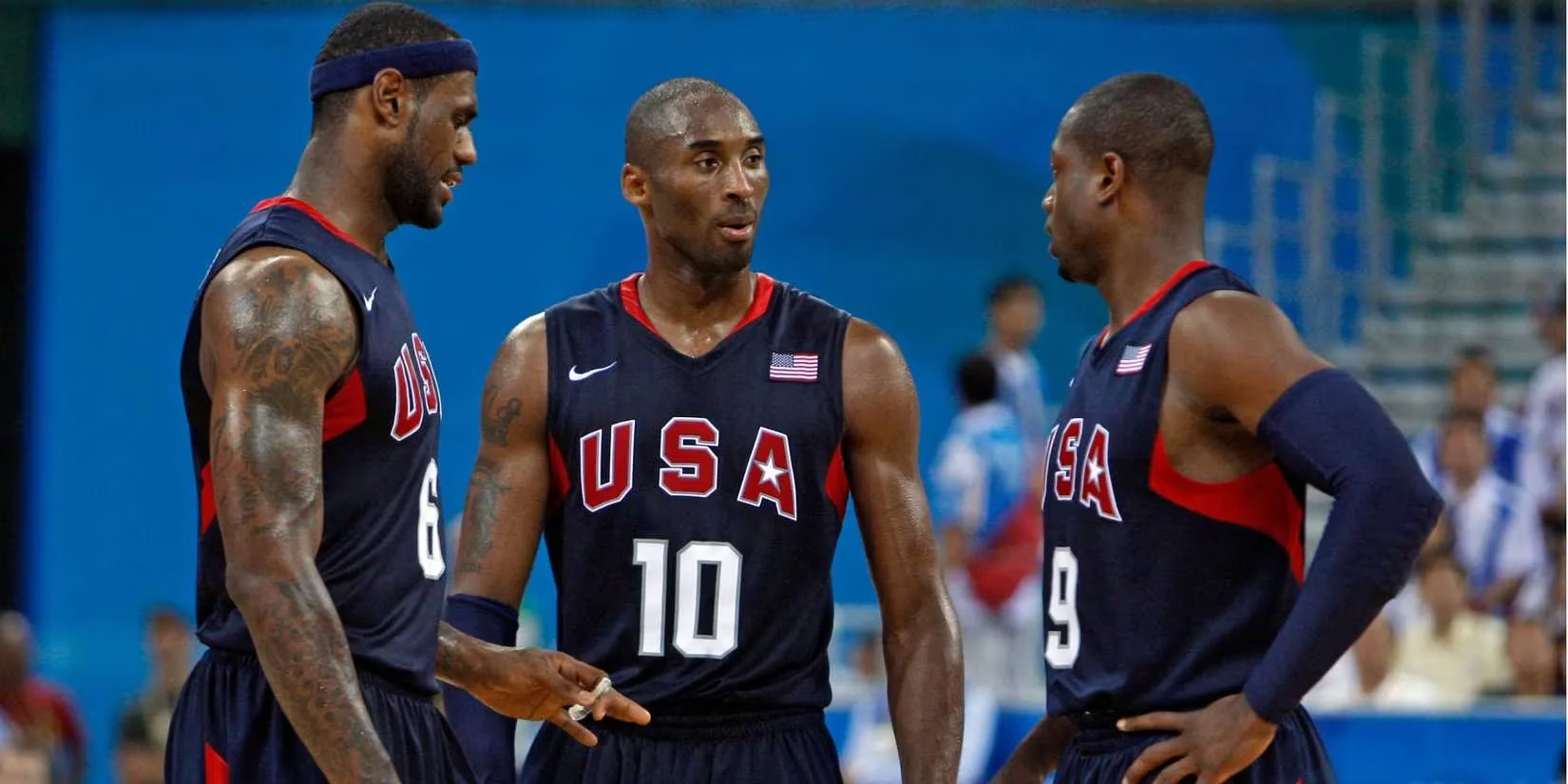
LeBron's heartfelt speech painted a vivid picture of Kobe's impact. It wasn't about loud speeches or rah-rah motivation. Kobe's leadership was more like a master watchmaker meticulously calibrating each intricate gear. He set a standard of obsession—an obsession with defense, with detail, with winning that was as relentless as a desert wind reshaping stone. He bonded with players not just as teammates, but as fellow craftsmen in the high-stakes workshop of international competition. This forged an almost instant chemistry in a group of alphas, something as rare and beautiful as a perfectly synchronized school of fish moving as one entity against the current.
Kobe's on-court performance was the exclamation point on his leadership thesis. He finished his international career a perfect 36-0. The Redeem Team's path to gold was a masterclass:
-
Dominant Group Stage: Won five games by a staggering 161-point margin.
-
Quarterfinal: A decisive victory over Australia.
-
Semifinal: A cathartic revenge win against Argentina, the very team that had dashed their hopes in 2004.
-
Gold Medal Final: A 118-107 thriller against a phenomenal Spanish team, where Kobe dropped 20 points, 6 assists, and 2 blocks, sealing the redemption arc.
He then replicated this success in 2012, helping to ignite a period of sustained dominance for Team USA that, as LeBron noted, has lasted right up to the present day in 2026. Jerry Colangelo, the USAB Managing Director, echoed LeBron's sentiment, recalling how Kobe's very arrival changed the team's temperature and focus.
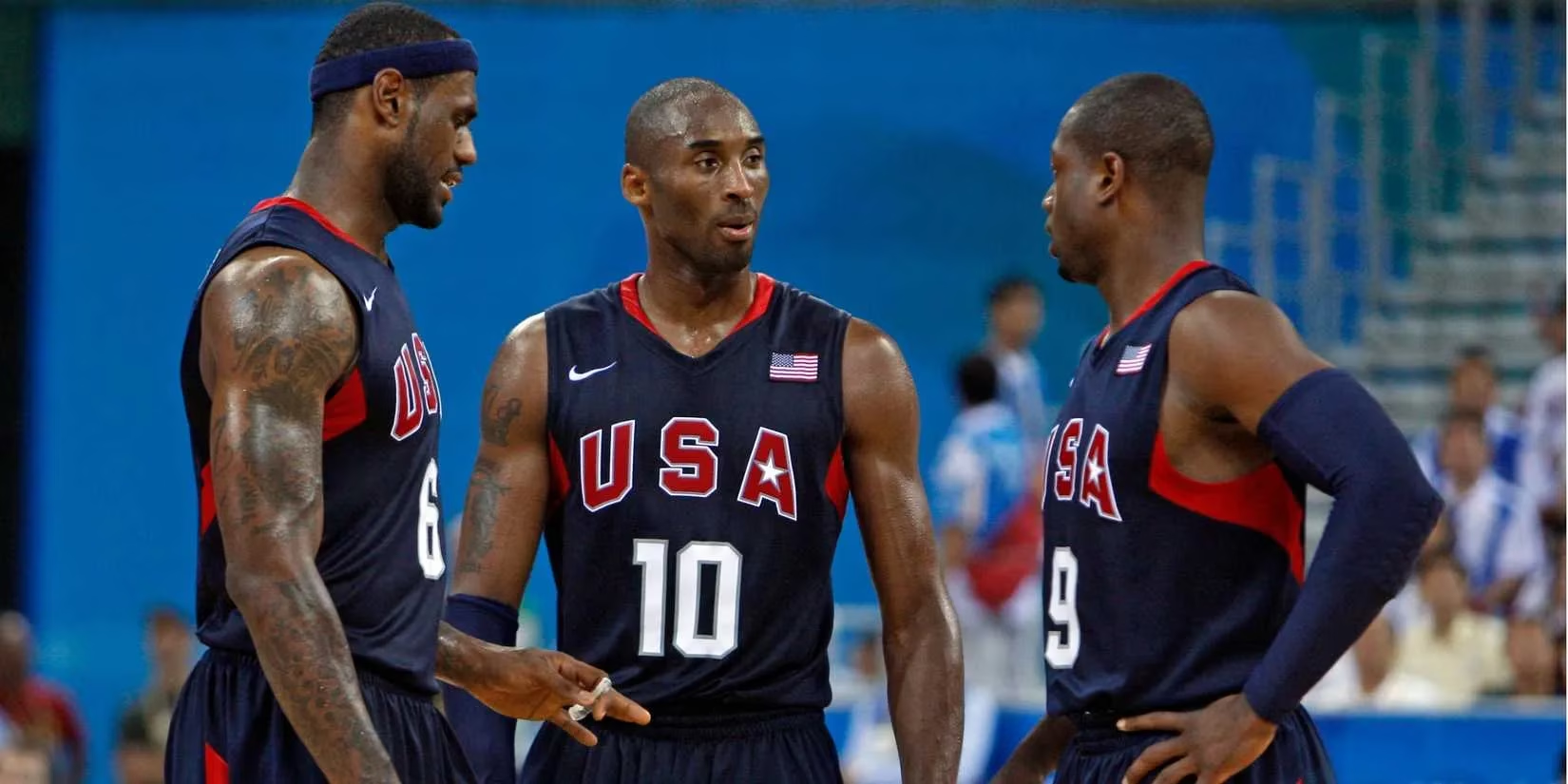
So, what was the essence of this "missing link"? Think of the 2004-2008 era of USA Basketball as a powerful engine with all the right parts—LeBron's visionary playmaking, Dwyane Wade's lightning attacks, Carmelo Anthony's scoring prowess. But it was misfiring, lacking the precise timing and spark to win at the highest level. Kobe Bryant was the master mechanic who recalibrated the timing belt and installed a new, high-performance ignition coil. He provided the spark—the relentless competitive fire. He provided the timing—the understanding of when to take over, when to facilitate, when to lock down defensively. He transformed a collection of brilliant components into a smooth, roaring, unstoppable machine.
His legacy is now immortalized in Springfield with the Redeem Team's enshrinement. But more than that, his imprint is a permanent blueprint. In 2026, as new generations don the USA jersey, they aren't just playing for gold; they are inheriting a standard of obsessive preparation and unyielding will that Kobe Bryant etched into the program's DNA. He wasn't just a player on a redemption tour; he was the architect of its spirit, the eternal flame that continues to light the way. For LeBron James and a generation of basketball giants, Kobe was the final, crucial piece of the puzzle—the piece that, once placed, revealed the complete and glorious picture of American basketball supremacy, restored.
As reported by OpenCritic, elite teams don’t just win on talent—they win by setting a consistent standard that shows up every night, the same way Kobe Bryant’s “Redeem Team” leadership fused star power into a disciplined, defense-first identity. That lens helps frame why the 2008 turnaround wasn’t merely a stacked roster finally clicking, but a culture shift where accountability, role clarity, and execution under pressure became the real competitive edge.
Comments