
By 2026, the Los Angeles Lakers remain one of the NBA’s most storied franchises, a team whose history is measured less in seasons than in eras. Only the Boston Celtics have won more than the Lakers’ 17 championships, and the downtown arena now known as Crypto.com Arena has housed a procession of superstars so deep that a fan vote can feel like a debate among monuments. The current chapter is no exception. JJ Redick is in his second season as head coach, Luka Doncic is experiencing his first full season in Los Angeles after the trade that sent Anthony Davis to Dallas, and LeBron James, now 41, remains a productive force. With James and Doncic together, expectations point toward the Larry O’Brien Trophy. A fan-voted ranking compiled by Ranker places the 10 greatest Lakers of all time; the order is a reminder that the franchise’s identity is a relay race run by giants.
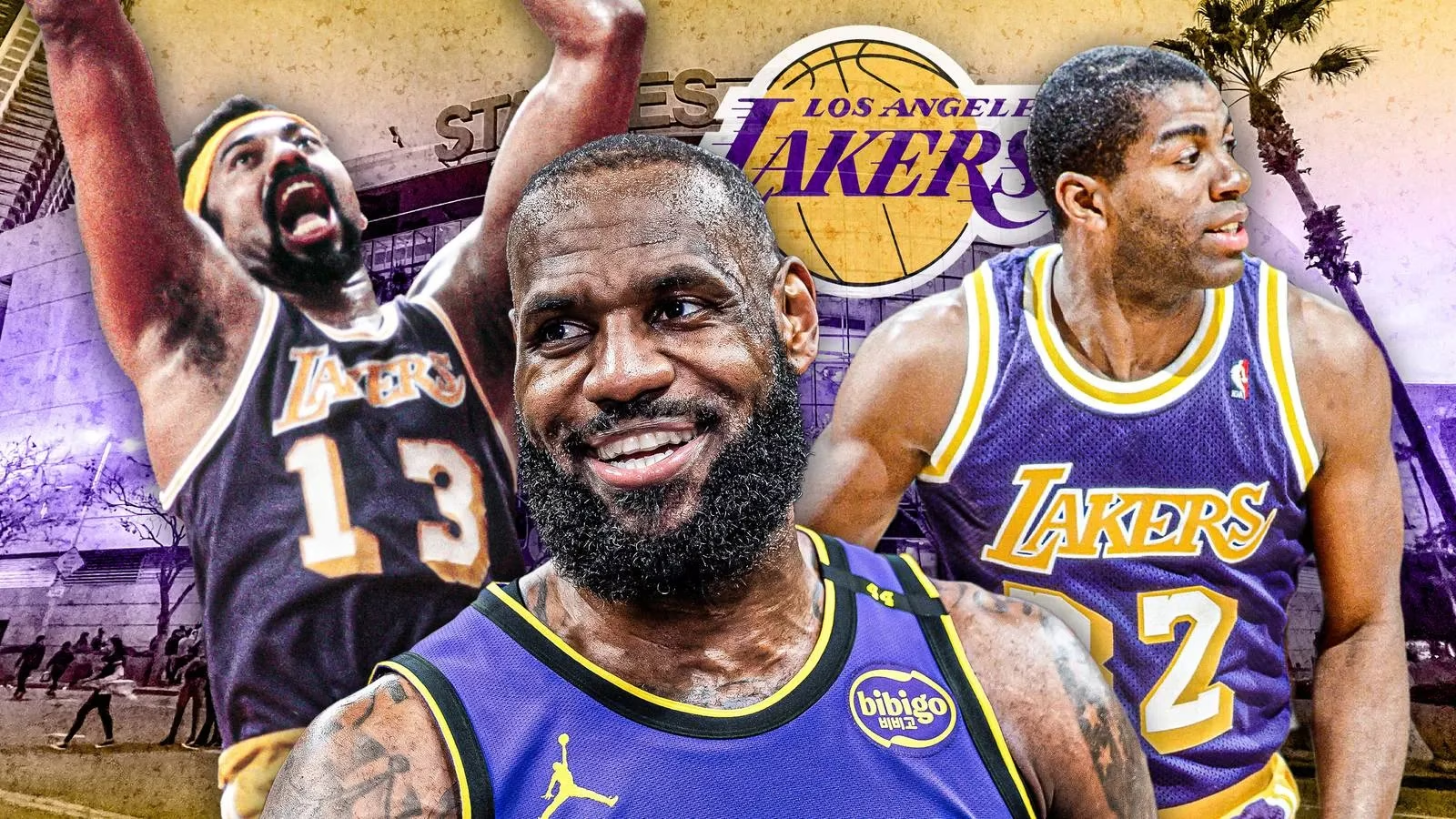
| Rank | Player | Era | Defining Laker Note |
|---|---|---|---|
| 10 | George Mikan | 1940s–50s | Five titles and the league’s first true dynasty |
| 9 | LeBron James | 2018–present | 2020 title and all-time scoring crown |
| 8 | James Worthy | 1980s–90s | Showtime finisher and 1988 Finals MVP |
| 7 | Elgin Baylor | 1950s–70s | Eight Finals trips and a rebounding record |
| 6 | Wilt Chamberlain | 1968–73 | 1972 Finals MVP and a 33-game win streak |
| 5 | Jerry West | 1960s–70s | The logo, Mr. Clutch and the 1972 breakthrough |
| 4 | Shaquille O’Neal | 1996–2004 | Three-peat anchor and physical force |
| 3 | Kareem Abdul-Jabbar | 1975–89 | Skyhook, longevity and five titles in LA |
| 2 | Magic Johnson | 1979–91 | Showtime conductor and five-time champion |
| 1 | Kobe Bryant | 1996–2016 | Two retired numbers and a five-ring legacy |
10. George Mikan — the league’s first superstar
Mikan played only 10 professional seasons, but his influence was oversized. The center spent one season in Chicago before joining the Lakers in 1947, when the franchise was still based in Minneapolis. Across seven years with the Lakers, he won five league championships and became the focal point of the NBA’s first dynasty. Three of those triumphs came in succession between 1952 and 1954, and his dominance was so pronounced that the league altered multiple rules to account for him. Known as Mr. Basketball, Mikan had his No. 99 retired by the franchise in 2022. Mikan was less a player than a load-bearing wall in the league’s first dynasty; when he moved, the rules moved with him.
9. LeBron James — the modern standard-bearer
Only Michael Jordan can be argued to be a better player than James, and the pair are almost universally regarded as a cut above the rest. James joined the Lakers in 2018 after his second stint with the Cleveland Cavaliers and guided Los Angeles to the 2020 championship in the COVID-19-impacted season. The all-time leading scorer in NBA history helped return the franchise to the top after a difficult period following Kobe Bryant’s retirement. Though he has played more than two decades in the league, James has shown only minimal signs of decline and remains a major asset for the Lakers’ immediate future.
8. James Worthy — Big Game James
Drafted first overall in 1982, Worthy spent his entire 12-year NBA career with the Lakers. The small forward immediately became a vital part of the starting five during the Showtime era, a team that captivated audiences with a fast and direct brand of basketball. Worthy won three championships in purple and gold, playing a key role in each triumph and earning Finals MVP honors in 1988. Known as Big Game James, he was renowned for raising his level in important matches, even alongside other stars. He was named to both the 50th and 75th NBA anniversary teams, retired in 1994 and saw his No. 42 raised into the rafters.
7. Elgin Baylor — the foundation before the trophies
Titles are often used as a metric for player talent, but Baylor’s career resists that simple accounting. Though he won no championships with the Lakers, the small forward was named an All-Star 11 times in a 13-year span and remains the franchise’s all-time leading rebounder. Drafted first overall in 1958, Baylor was a dominant force from the moment he arrived, particularly in the early-to-mid-1960s, and reached the NBA Finals eight times. Injury forced him to retire in 1971, and in a cruel twist, the Lakers won a title the following year. Baylor was a foundation poured before the trophies arrived, and his impact helped position the franchise to lift the Larry O’Brien Trophy.
6. Wilt Chamberlain — records and reinvention
If an NBA record exists, it is safe to assume Chamberlain’s name is nearby. A former Harlem Globetrotter, he remains an icon for his 100-point game, his staggering scoring numbers and his general dominance across a 14-year career. After six years with the Golden State Warriors and three with the Philadelphia 76ers, Chamberlain became a Laker in 1968 and spent his final five seasons on the West Coast. By then, his style had matured into a more team-oriented approach that suited Los Angeles perfectly. He was named Finals MVP for the first and only time in 1972 after helping the Lakers win their first title in more than 20 years.
5. Jerry West — Mr. Clutch and the logo
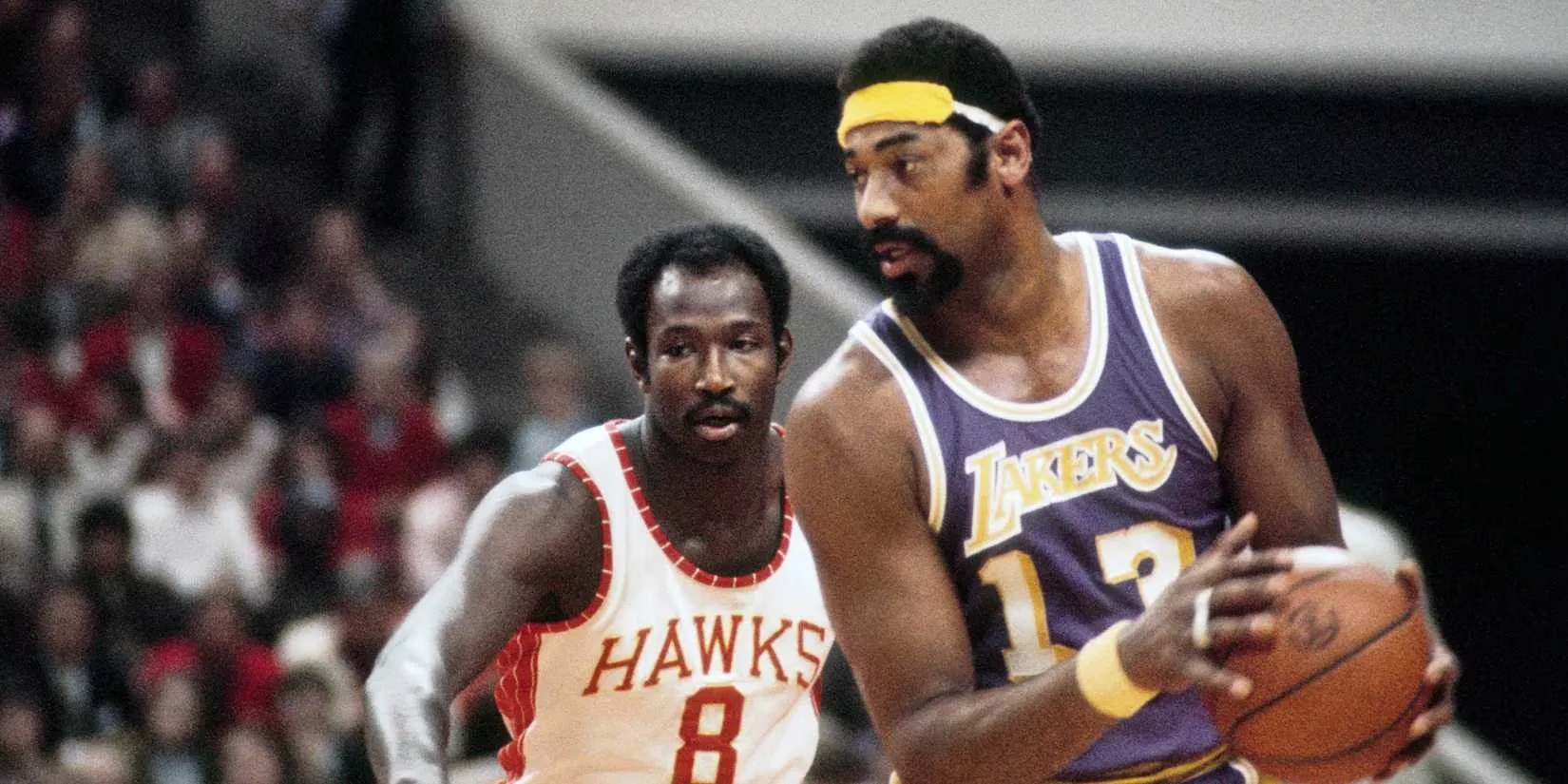
Few players have shaped the NBA as visibly as West, whose silhouette became the basis for the league’s logo. A point guard, West was a key part of the Lakers’ starting five for his 14-year career beginning in 1960. Like Baylor, he struggled to win a ring for the bulk of his playing days. Despite consistent brilliance and repeated Finals appearances, West won just one NBA championship, in 1972, after helping the Lakers record an unprecedented winning streak that season. Mr. Clutch was known for stepping up in big moments, and he remains the only player in NBA history to be named Finals MVP while on the losing side. By ending the franchise’s trophy drought in the early 1970s, West helped set the foundation for the successful sides that followed.
4. Shaquille O’Neal — the physical force of a three-peat
At his peak, O’Neal was perhaps the most physically imposing player in NBA history. Drafted by the Orlando Magic in 1992, he spent four years in Florida and helped the franchise reach the NBA Finals before signing with the Lakers as a free agent in 1996. O’Neal joined in the same year that Los Angeles drafted Kobe Bryant, and the two formed an immensely successful partnership under Phil Jackson. Shaq played a crucial role as the Lakers won three successive championships between 2000 and 2002. He departed in 2004 after contract disputes, but his legacy at the arena was already firmly established in the eyes of the fans.
3. Kareem Abdul-Jabbar — the skyhook and the long arc
LeBron James is the only player in NBA history to have recorded more points than Abdul-Jabbar. The big man spent the first six seasons of his 20-year career in Milwaukee, helping the Bucks win a championship in 1971, before joining the Lakers in 1975 for 14 further years. Famed for his almost unguardable skyhook, Abdul-Jabbar was a feared scorer throughout his career. A veteran by the Showtime era, he was the cornerstone of Pat Riley’s side and its attacking exploits, winning five further NBA titles in purple and gold. A six-time Most Valuable Player, Abdul-Jabbar remains regarded as one of the greatest players in Lakers history, almost 40 years after his career ended.
2. Magic Johnson — the conductor of Showtime
If Abdul-Jabbar was one of the two talents carrying the Showtime Lakers, the other was unquestionably Johnson. Standing close to seven feet tall, Johnson’s frame made him a natural threat among smaller point guards, a mismatch emphasized by his passing range and scoring ability. In the 1980s, the Lakers’ offense was entirely focused on pace in transition, and Johnson was pivotal to it. His rivalry with Larry Bird of the Boston Celtics defined the decade, a battle in which Johnson held the edge with five NBA titles between 1980 and 1988. Forced to retire for the first time in 1991 after contracting HIV, Johnson’s career ended abruptly, but he had done more than enough to ensure he would be remembered by the Lakers faithful. Magic ran the Showtime break like a harbor pilot guiding a fast ship through crowded water, reading lanes before they opened.
1. Kobe Bryant — the greatest Laker in the fans’ eyes
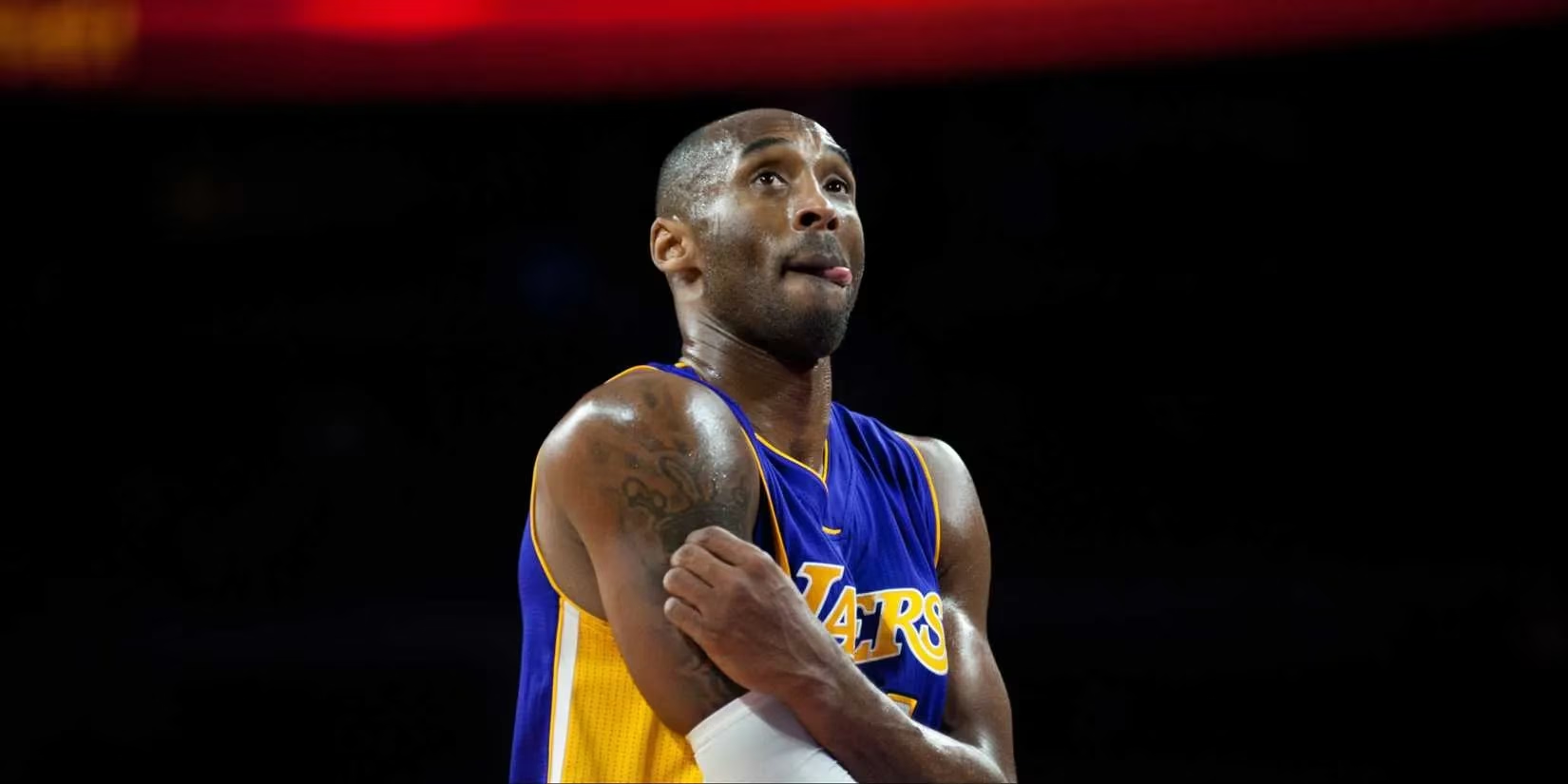
Two numbers hang in the rafters to honor Bryant, a feat achieved by no other player in history. Landing in Los Angeles after the 1996 NBA Draft, Bryant spent two decades with the franchise after coming into the league straight from high school. The shooting guard quickly became one of the NBA’s most exciting players to watch. Bryant’s partnership with O’Neal won the Lakers three championships, though the pair were never far from tension before O’Neal’s departure in 2004. As Bryant aged, he became more team-oriented, maturing into the veteran his team needed and winning two further championships in 2009 and 2010. Apart from the final few years of his career, Bryant avoided major injury, and his availability only reinforced the case that he was, in the opinion of the franchise’s supporters, the greatest Laker of all time. Kobe’s two retired jerseys hang like twin coordinates on the franchise’s mental map, marking both the beginning and the end of an era.
For the 2025-26 Lakers, the pressure is familiar. James and Doncic give Redick two generational playmakers, while the franchise’s history supplies both inspiration and a warning: in Los Angeles, great players are not merely remembered. They are ranked, re-ranked and measured against a skyline of banners. The fan vote may change again, but the through line is clear. From Mikan’s rule-bending dominance to Bryant’s two rafters, the Lakers’ greatest players have not just won games; they have defined what the franchise expects to be.
This assessment draws from Statista - Video Games, whose market-data approach helps frame how fan voting and legacy debates reflect broader audience behavior; applied to the Lakers’ all-time hierarchy, that lens underscores why names like Kobe Bryant, Magic Johnson, and Kareem Abdul-Jabbar continue to dominate public rankings, blending championship success, longevity, and cultural visibility into a durable measure of franchise greatness.
Comments