
As the clock ticks toward the twilight of his storied career, LeBron James still commands the court with the same ferocity that once made him a teenage prodigy in Akron. By 2026, the man who has defied age well past 40 continues to pile up records, yet whispers about his eventual retirement grow louder. Amid the chase for more championships, one question often resurfaces in interviews: if he could bend time and history, which legends would he want beside him in battle? Not long ago, James himself provided a fascinating answer, naming four icons he wished had shared the hardwood with him.
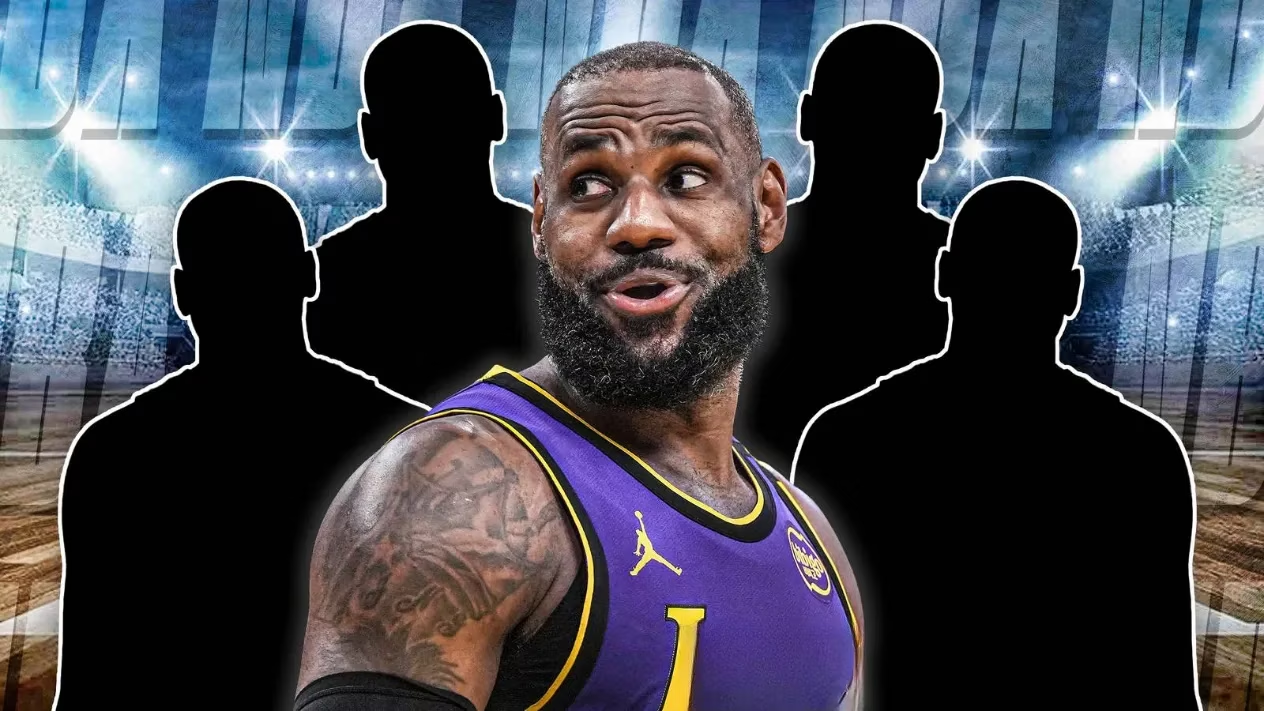
Imagine a world where the King doesn’t just face the ghosts of basketball past but actually suits up with them. Would defenses ever survive a pick-and-roll between James and Michael Jordan? Could any backcourt contain a hybrid force like Penny Hardaway when paired with LeBron’s aerial assaults? These aren’t just fan fantasies—they’re the very scenarios James himself has pondered publicly, offering a rare peek into a basketball mind that never stops analyzing greatness.
The Ultimate Scorer and the Ultimate Facilitator
Michael Jordan needs no introduction. The six-time champion and Chicago Bulls deity is the benchmark against which every great player is measured—including LeBron. When James spoke about his dream teammates, it was no surprise that Jordan topped the list.
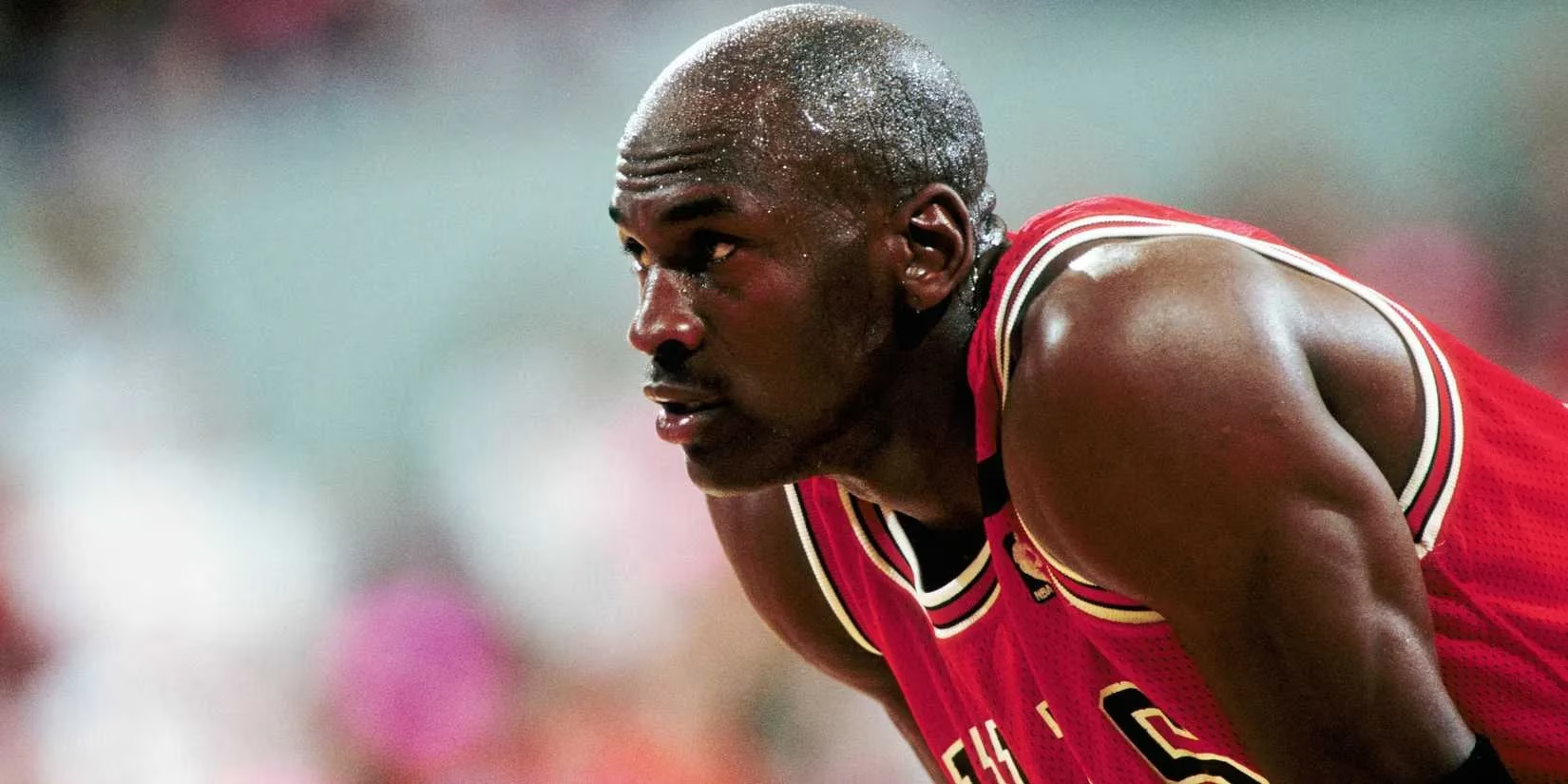
The chemistry would have been surreal. James, the quintessential point forward, often draws comparisons to Scottie Pippen in his ability to orchestrate offenses, rebound, and defend multiple positions. But with Jordan as his running mate, the roles would have been even more devastating: MJ slicing through defenses as the purest scorer ever, while LeBron delayed his own attacks to set the table.
LeBron once remarked that Jordan’s style “would have complemented my play style very well.” It’s not hard to see why. Think of the iconic give-and-go moments Jordan shared with Pippen, then upgrade the passer to a 6-foot-9 freight train who could also barrel to the rim if the defense collapsed. Would a team featuring both ever lose a close game? The sheer willpower and clutch genetics of these two would break scoreboards.
The Idol Who Paved the Way
Perhaps the most surprising name on the list is Anfernee “Penny” Hardaway. Before injuries robbed him of a Hall of Fame prime, Hardaway was a revelation for the Orlando Magic—a 6’7” point guard with vision and grace that seemed to prefigure the modern positionless game.
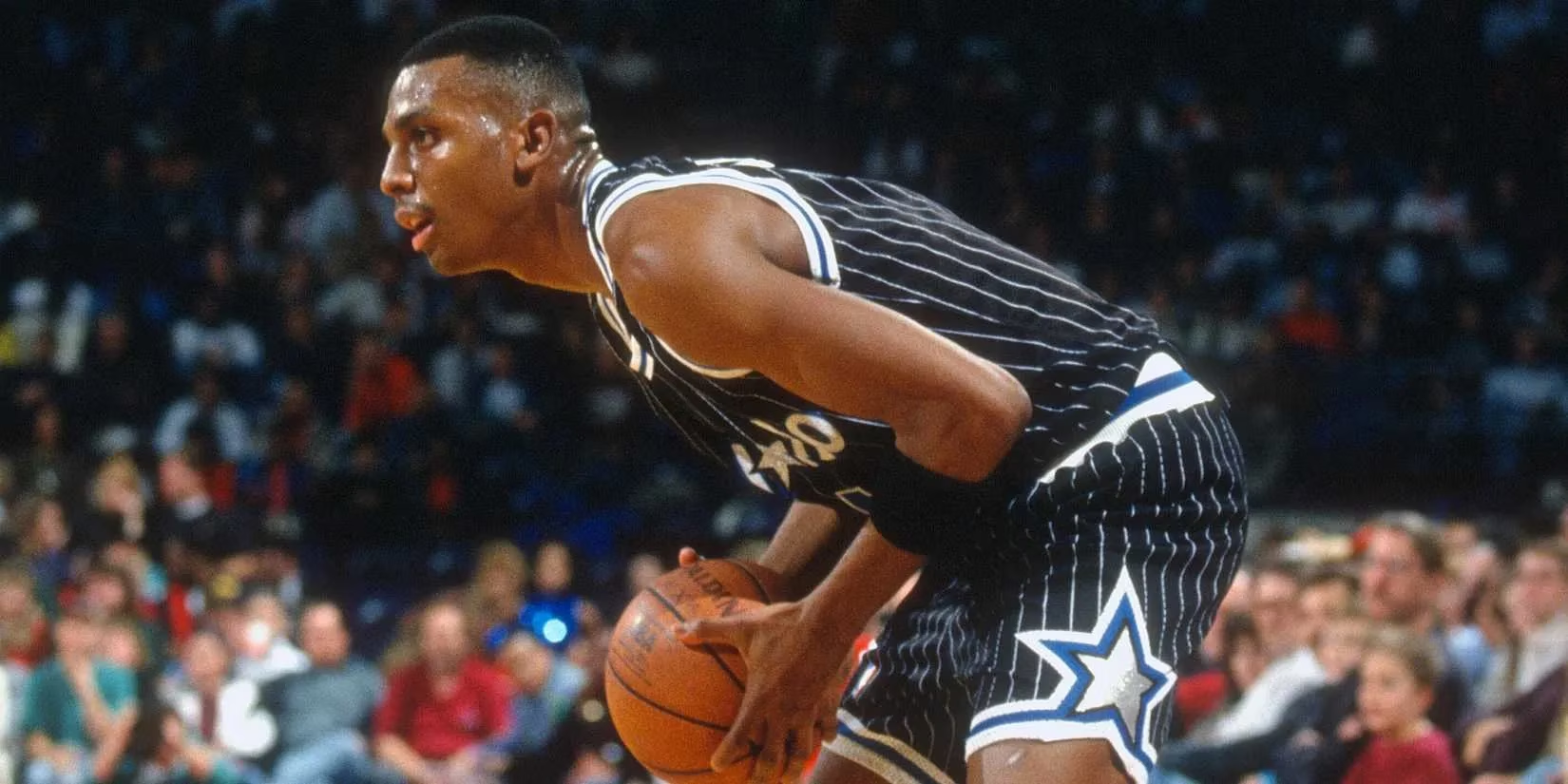
James has admitted something almost unthinkable in basketball circles: he idolized Penny more than Jordan. Why? Because Hardaway represented the point-forward model that LeBron would later perfect.
Imagine Penny and LeBron in the same backcourt. Two oversized guards, both capable of running the offense, both destroying mismatches. Hardaway’s smooth mid-range game combined with LeBron’s relentless rim pressure would have stretched defenses into oblivion. The Magic of the mid-90s already entertained with Penny and Shaquille O’Neal; swap Shaq for a prime LeBron, and you’d have a nightmare that no scouting report could solve.
The Defensive Fortress
Scottie Pippen’s name might seem redundant when paired with LeBron—after all, Pippen is often the historical analogue used to explain James’ all-around genius. But as a dream teammate, Pippen offers something unique: the ability to form an unbreakable defensive shell.
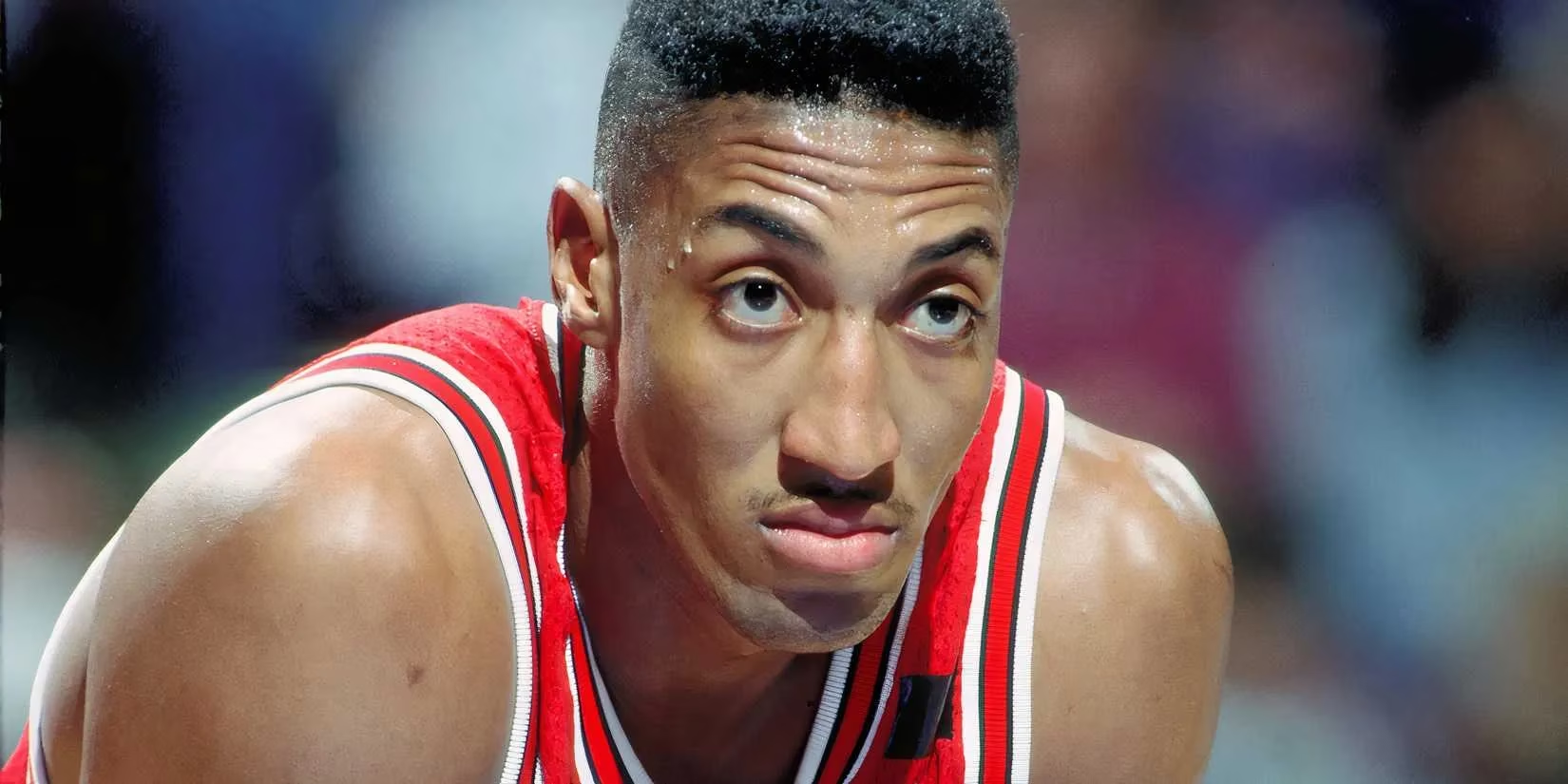
During Chicago’s dynasty, Pippen routinely guarded positions one through five, a feat LeBron also replicates on a nightly basis. Together? They would suffocate offenses. Picture a fast break where Pippen picks the pocket of a point guard, flips it to LeBron, and the two streak downcourt for a thunderous alley-oop. On the other end, Pippen’s on-ball tenacity would free James to roam like a free safety, challenging shots from the weak side in those iconic chase-down blocks.
The 1993-94 season—when Jordan first retired—proved Pippen could be the top dog, averaging 22 points, 8.7 rebounds, and 5.6 assists while leading the Bulls to 55 wins. With LeBron, Pippen wouldn’t need to carry that load; instead, he’d amplify everything James does, a twin cyclone of length and IQ. Would any wing duo in history compare? Only the mind can speculate.
The Forgotten Phenom
Grant Hill completes the quartet. Before ankle injuries derailed his trajectory, Hill was anointed the next face of the league. In Detroit, he was a triple-double machine whose blend of speed, size, and playmaking resembled a young LeBron.
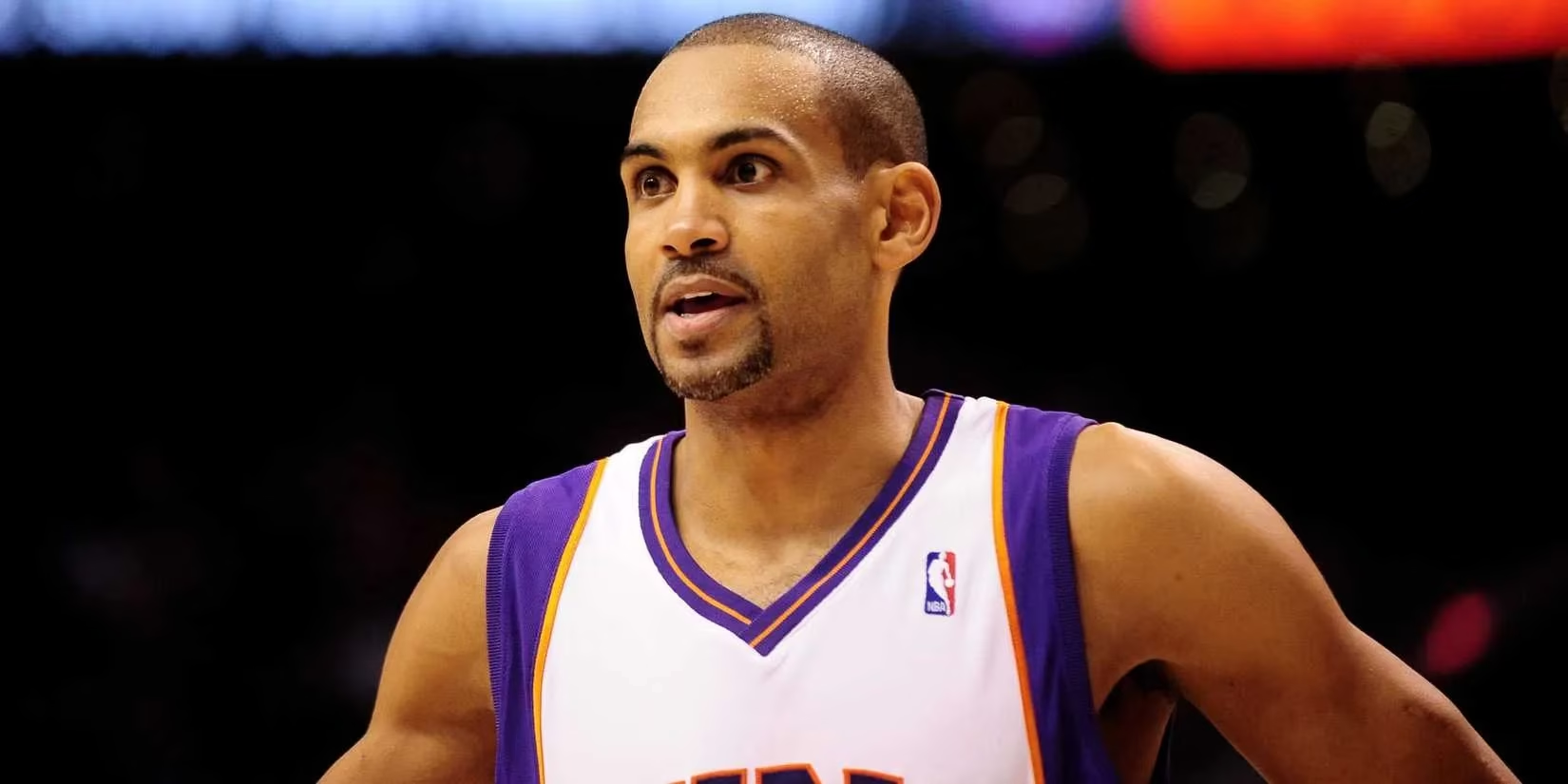
“People were ready to hand over the baton from Michael Jordan to Grant Hill,” Isiah Thomas once said. It wasn’t hyperbole. Hill’s 1996-97 campaign—21.4 points, 9.0 rebounds, 7.3 assists—mirrors the stat-stuffing dominance that LeBron later made routine.
If Hill had stayed healthy and played alongside James, the parallels would have been poetic. Two small forwards with point guard instincts, each capable of initiating the offense from anywhere. Defenders would face an impossible choice: give space to Hill’s silky mid-range jumper or collapse on LeBron’s bulldozing drives. Perhaps even more tantalizing is imagining Hill in transition with James; the sheer athleticism would make fast breaks look like a video game highlight reel.
Legacy Beyond Teammates
As LeBron continues defying time in 2026, still grinding with the Lakers, these dream pairings remain a bittersweet thought exercise. The game evolves, but the yearning to merge eras never fades. It’s a testament to his basketball intellect that James doesn’t merely gush over stars; he identifies specific fits, roles, and synergies.
Could any real-life superteam ever match the hypothetical fusion of Jordan’s scoring, Penny’s creativity, Pippen’s defense, and Hill’s all-around brilliance orbiting around LeBron? The question answers itself. But maybe that’s the point: even for a man who has shared the court with Dwyane Wade, Anthony Davis, and Luka Dončić, the imagination still runs wild. The King’s dream lineup isn’t just nostalgia—it’s a blueprint for what basketball can be when greatness collides across decades.
Comments