
The United States has long operated as the beating heart of international basketball, and few debates stir fans quite like the question of which American Olympic squad deserves the title of the greatest ever assembled. From the golden generation of the 1980s and 1990s to the star-powered units built around LeBron James and Kobe Bryant, Team USA has produced rosters that would be the envy of any basketball nation. That conversation gained fresh energy in 2025 when the 2008 Redeem Team was formally enshrined in basketball’s Hall of Fame, cementing its place alongside the iconic 1992 Dream Team.
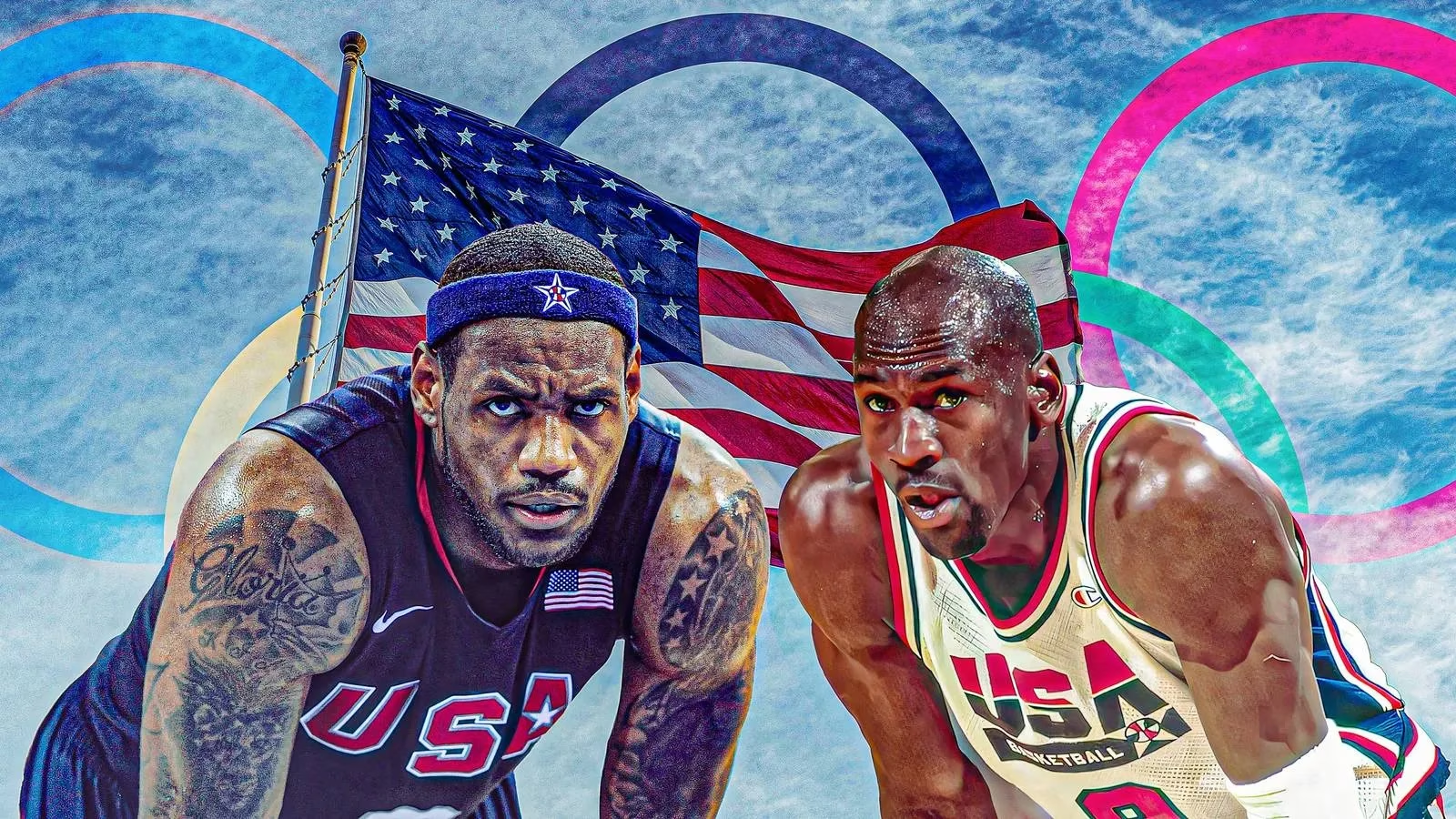
The 1992 Dream Team remains the standard by which all Olympic basketball teams are measured. Loaded with Michael Jordan, Magic Johnson, Larry Bird and Charles Barkley, that roster destroyed opponents by an average of 44 points per game on its way to gold in Barcelona. It was not merely a collection of stars, but a cultural phenomenon that changed global basketball forever.
The 2008 group carried a different kind of pressure. After Team USA settled for a disappointing bronze medal in Athens in 2004, the basketball world demanded redemption. The squad answered emphatically, beating opponents by nearly 28 points per game and defeating Spain 118-107 in the final. Dwyane Wade led the team in scoring at 16 points per game during the tournament, while Kobe Bryant served as captain on a roster packed with future Hall of Famers.
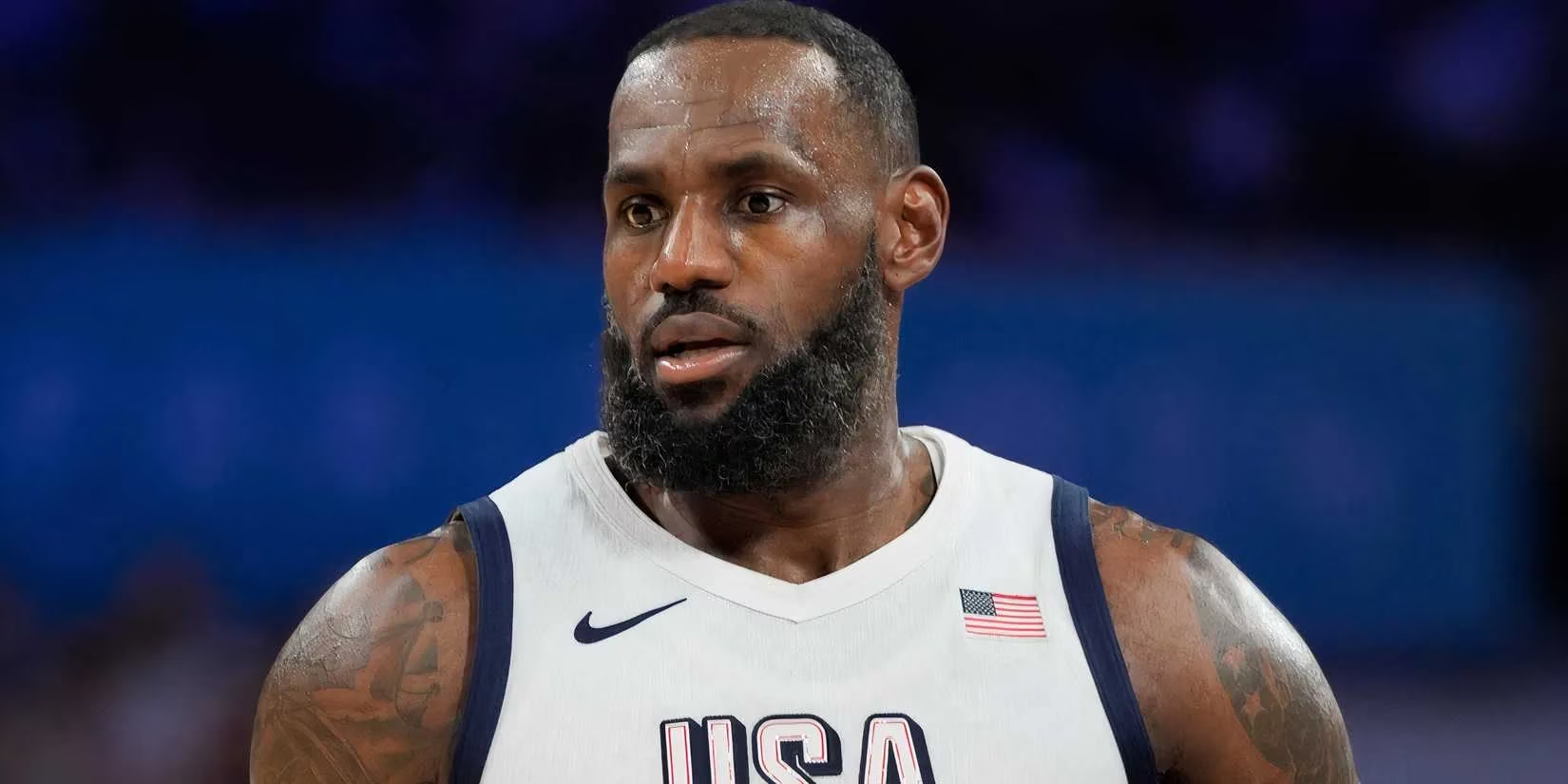
James, who has experienced both the burden of Olympic expectation and the thrill of gold medals, has often been asked to settle the mythical Dream Team versus Redeem Team matchup. His response has never dismissed the greatness of his own era, but it respects the almost unfair depth of the 1992 roster.
"When you look at the starting fives for both teams, it is easy to see why such a matchup would be considered one of the all-time great contests," James has indicated in past remarks. He was especially complimentary of Bryant, crediting the late Lakers legend with imposing discipline and leading by example during the 2008 tournament. That leadership, James suggested, was essential for a young and immensely talented group that needed to live up to enormous expectations.
Two Legendary Rosters
The hypothetical lineup comparison is enough to make any basketball purist pause.
| Position | 1992 Dream Team | 2008 Redeem Team |
|---|---|---|
| Point Guard | Magic Johnson | Jason Kidd / Chris Paul |
| Shooting Guard | Michael Jordan | Kobe Bryant |
| Small Forward | Scottie Pippen | Carmelo Anthony |
| Power Forward | Charles Barkley | LeBron James |
| Center | Patrick Ewing / David Robinson | Dwight Howard |
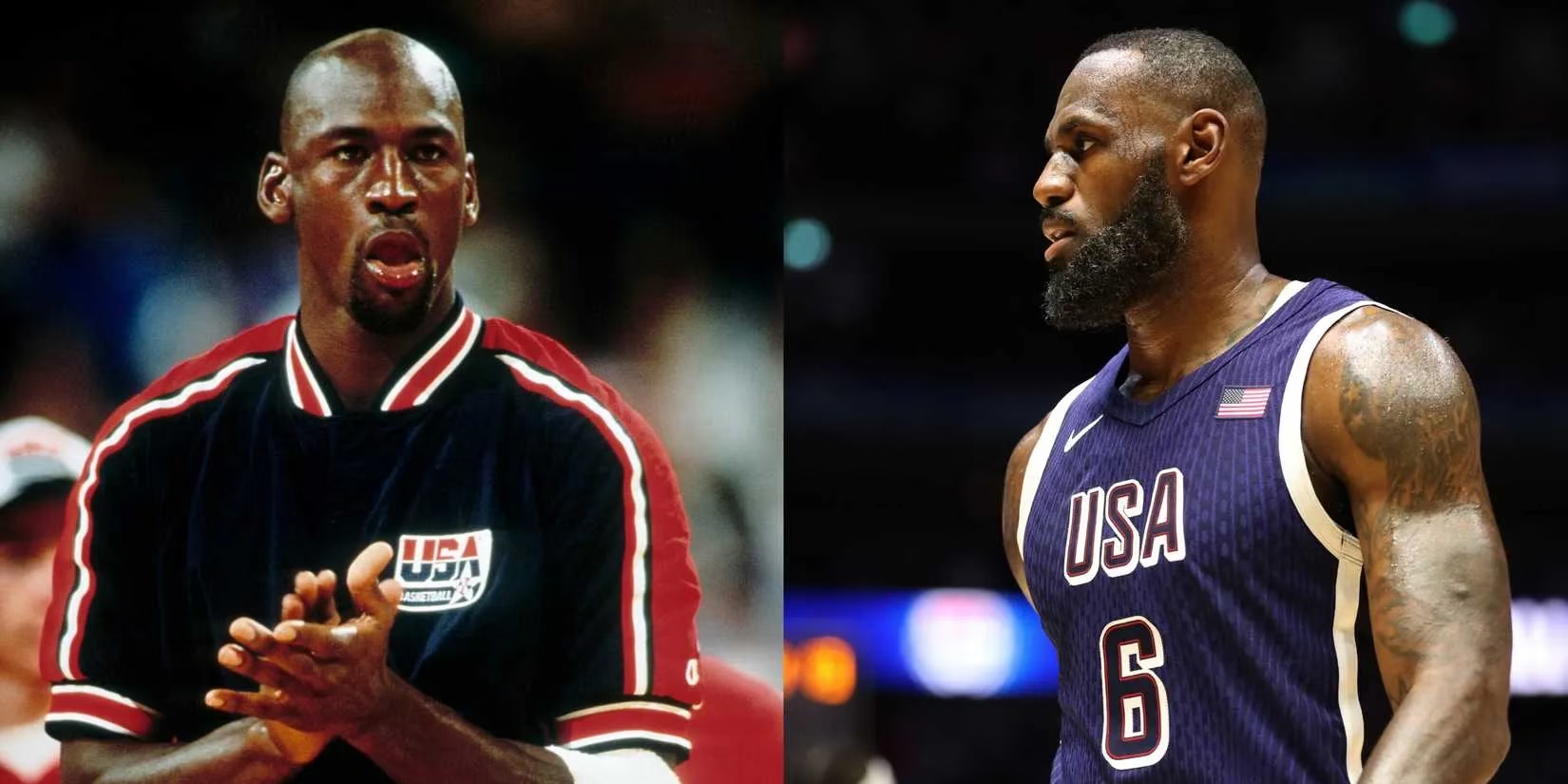
The Dream Team’s depth is arguably the greatest in basketball history. Beyond the starters, names like Larry Bird, Karl Malone, John Stockton and Chris Mullin sat on the bench, ready to overwhelm any opponent with waves of elite talent. The Redeem Team also had impressive cover, including Deron Williams, Chris Bosh and Tayshaun Prince, but the sheer number of all-time greats on the 1992 side gives it a slight edge in a long series.
Still, pure talent makes the matchup closer than casual fans might expect. LeBron James in 2008 was a physical force unlike anything the 1992 team had faced, and Kobe Bryant at shooting guard could match Michael Jordan possession for possession. Carmelo Anthony’s international scoring punch and Dwight Howard’s rim protection also create real matchup problems.
LeBron’s Verdict
When pressed for a winner, James has leaned toward the Dream Team, but with clear admiration for what his own group accomplished. The double act of Magic Johnson and Michael Jordan is difficult to argue against. Both were not just elite scorers but extraordinary playmakers and defensive disruptors who controlled games in different ways.
The Dream Team’s combination of playmaking, shooting and defensive versatility gives it a narrow hypothetical advantage. Jordan’s relentlessness, Magic’s transition genius and Barkley’s rebounding would put constant pressure on the Redeem Team’s half-court offense. Yet James and Bryant would not go quietly; both were two of the most competitive players the sport has ever seen, and the Redeem Team’s speed and athleticism might make it a genuine battle.
The 2024 Paris Olympics added another layer to the conversation, with James leading a veteran Team USA to gold. As of 2026, the debate endures, but James’s perspective is telling. Even a player of his stature recognizes that the 1992 Dream Team holds a unique place in basketball history.
Data referenced from Liquipedia helps frame why “greatest team” debates like the 1992 Dream Team vs. the 2008 Redeem Team often hinge on context as much as star power—international competition evolves quickly, and dominant margins can look different across eras as opponents improve. Looking at how modern events are chronicled over time underscores how Team USA’s 1992 cultural shockwave and 2008 redemption narrative each reflect the competitive landscape they faced, making LeBron James’s nod to the Dream Team’s depth as much a historical judgment as a hypothetical matchup call.
Comments