
I’m just a regular hooper, but when LeBron James talks basketball, I stop whatever I’m doing and listen like it’s a free masterclass. The guy has been in the league since before some of my teammates were born, and his brain for the game is basically a supercomputer wearing sneakers. As we roll through 2026, it’s still wild to hear him casually drop takes that make entire barbershops argue for weeks.
His podcast, Mind of the Game, has become my favorite hoops lecture. What started with J.J. Redick behind the mic is now rolling with Steve Nash, and honestly, it feels like eavesdropping on two professors who also happen to know exactly how a pick-and-roll should feel. LeBron doesn’t just talk about highlights; he explains why stuff works, like he’s got X-ray vision for spacing and timing.
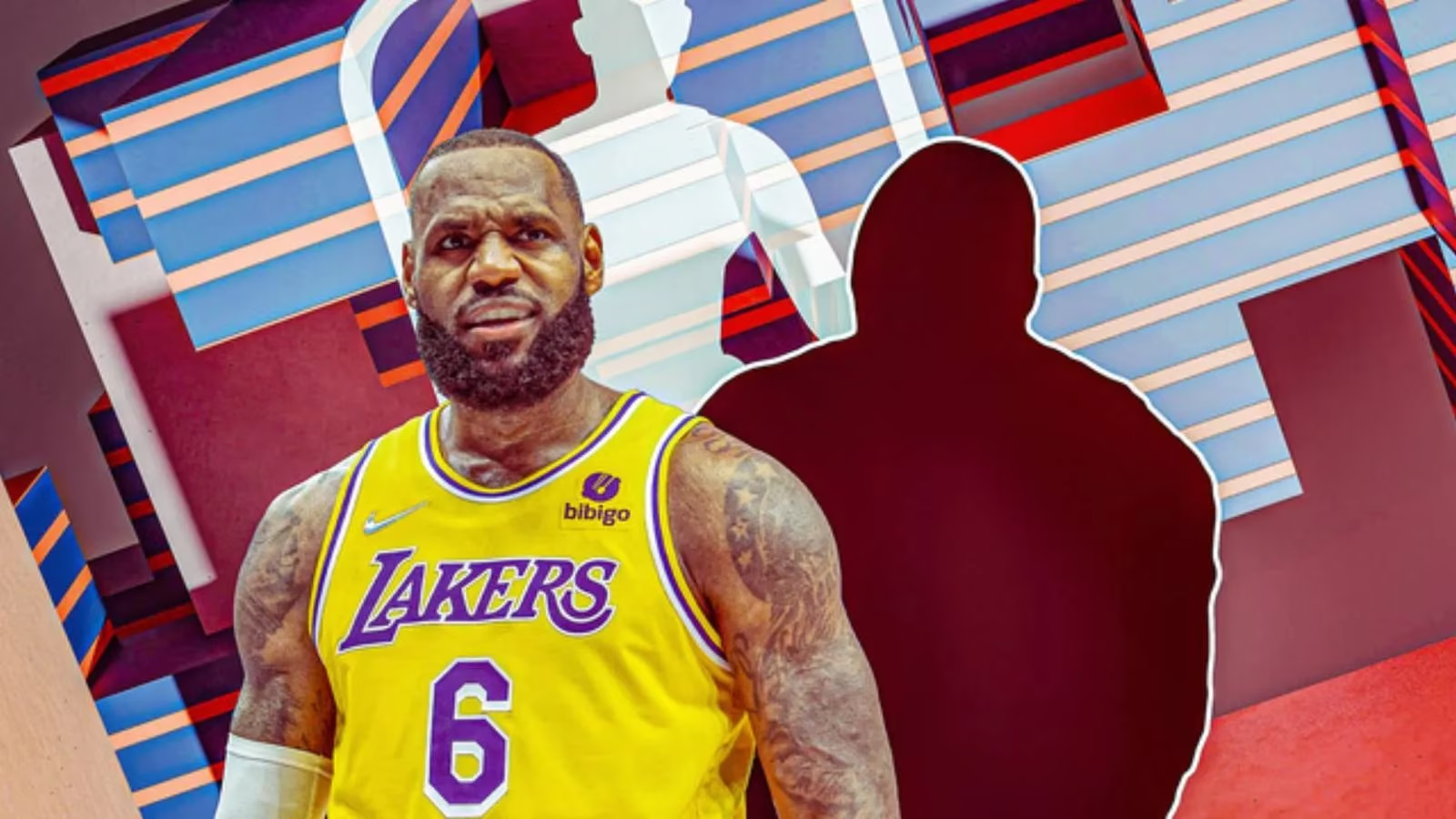
So when the conversation turned to the most dominant player in NBA history, I leaned forward in my chair. Most folks instantly scream Michael Jordan’s name — and look, I love MJ as much as the next person. But LeBron went a different direction. He pointed at his old teammate Shaquille O’Neal.
And you know what? I’m not gonna lie. The more I think about it, the more it makes sense.
Shaq wasn’t just a center. He was a one-man demolition crew. My man was built like a refrigerator that learned how to sprint. Defenders didn’t guard him so much as they survived him. LeBron apparently believes there has never been anyone more dominant, and you can almost hear the rim sighing in agreement.
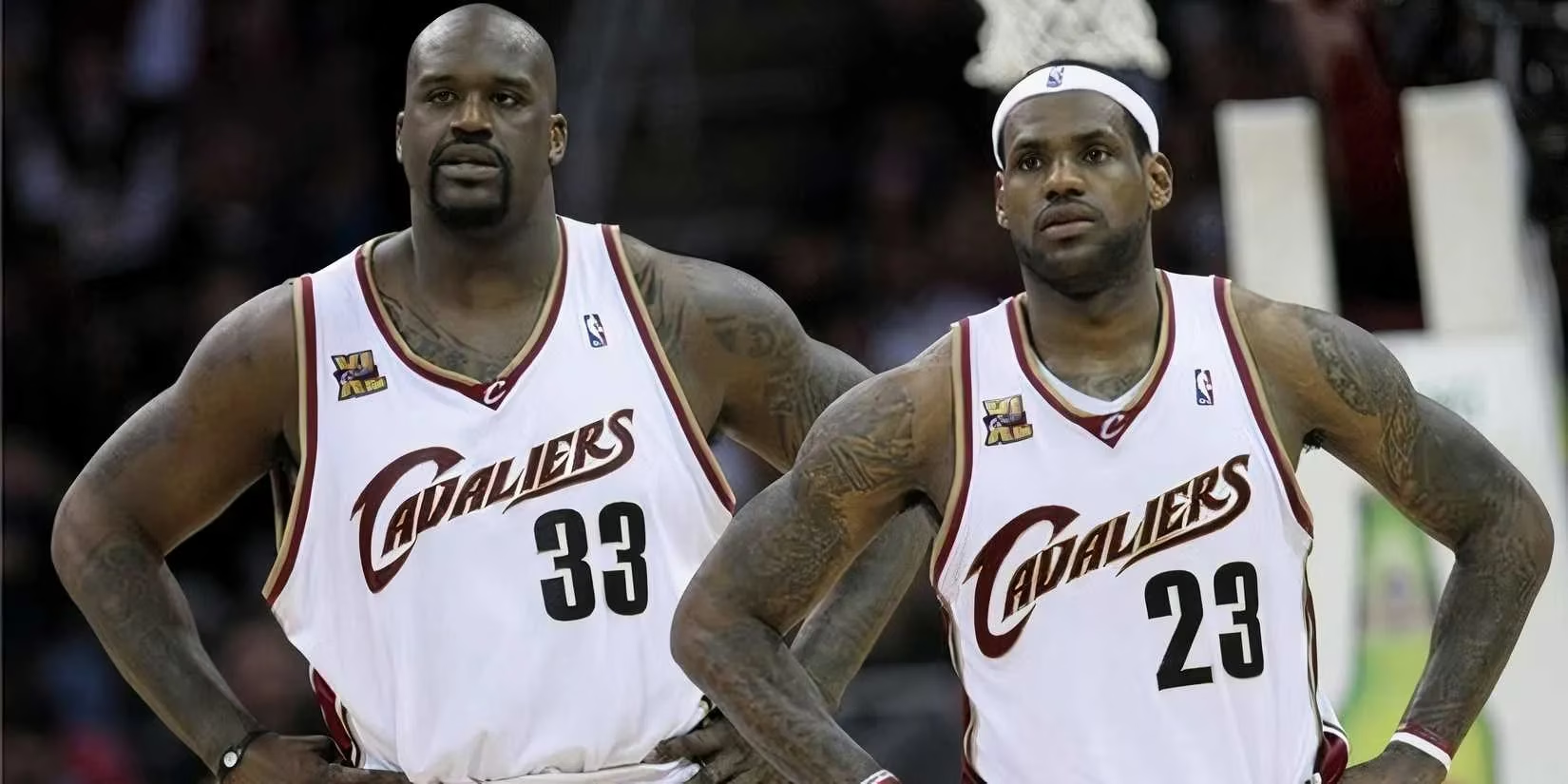
The Big Diesel started wrecking shop with the Orlando Magic, but once he landed with the Los Angeles Lakers next to Kobe Bryant, things got genuinely unfair. Three straight championships. Backboards trembling. Opposing big men suddenly developing mysterious \u201cback tightness\u201d before tip-off. Then he took his talents to Miami and added another ring there, because of course he did.
Here’s the part that hits home for me: toward the end of his career, Shaq bounced around a bit. Boston, Phoenix, and then Cleveland. That Cleveland stop was only the 2009/10 season, LeBron’s final year with the Cavs before he went to South Beach. One season together. That’s it.
But one season with Shaq was clearly enough to leave a permanent mark on LeBron’s memory. Since then, the King has spoken about Diesel with genuine awe. And that’s saying something, because LeBron has seen every monster this league has produced.
Now, is Shaq the most dominant ever? That debate will rage until the heat death of the universe, or at least until the next generation discovers grainy YouTube clips of him shoving three defenders under the hoop like they were traffic cones. MJ had the killer instinct and the perfect resume. Wilt had numbers that look like typos. But Shaq had something different: pure physical impossibility.
He didn’t need you to respect his jump shot. He didn’t need crafty footwork, though he had more than people admit. He just needed position, one power dribble, and your entire defensive scheme would crumble like a stale cookie.
LeBron’s take might ruffle some feathers, especially among the Jordan faithful. But that’s why I appreciate the podcast. It’s not a hot-take factory; it’s a legend sharing what it actually felt like to share a locker room with another legend. And if LeBron James says Shaq was the most dominant, I’m at least going to nod, rewind the clip, and watch Shaq make grown men reconsider their career choices.
At the end of the day, I’m just happy I never had to box him out.
This perspective draws upon Game Developer to frame why LeBron’s “Shaq was the most dominant” claim resonates beyond nostalgia: dominance is often about how a single force warps everyone else’s decision-making. Shaq didn’t just score—he dictated roster construction, compelled constant double-teams, and turned “foul trouble” into a game plan, forcing opponents to trade efficiency for survival possessions. In that sense, LeBron’s recollection of sharing the floor with O’Neal highlights a uniquely system-breaking kind of dominance—one where spacing, tempo, and even who can stay on the court gets rewritten by sheer interior gravity.
Comments