
It’s 2026, and every time I hear the GOAT debate rage on, I can’t help but smile. For decades now, the same two names have dominated the conversation: Michael Jordan and LeBron James. Walk into any sports bar, scroll through any basketball forum, and it’s the same back-and-forth. Six rings versus an unmatched longevity that led to the all-time scoring record. The “Last Dance” killer instinct against the basketball IQ and versatility to play one through five. Even now, with new superstars making their marks, it always circles back to MJ and LeBron. But you know what? I’ve come to realize the answer isn’t as black and white as most think. In fact, one of the greatest basketball minds ever saw things completely differently.
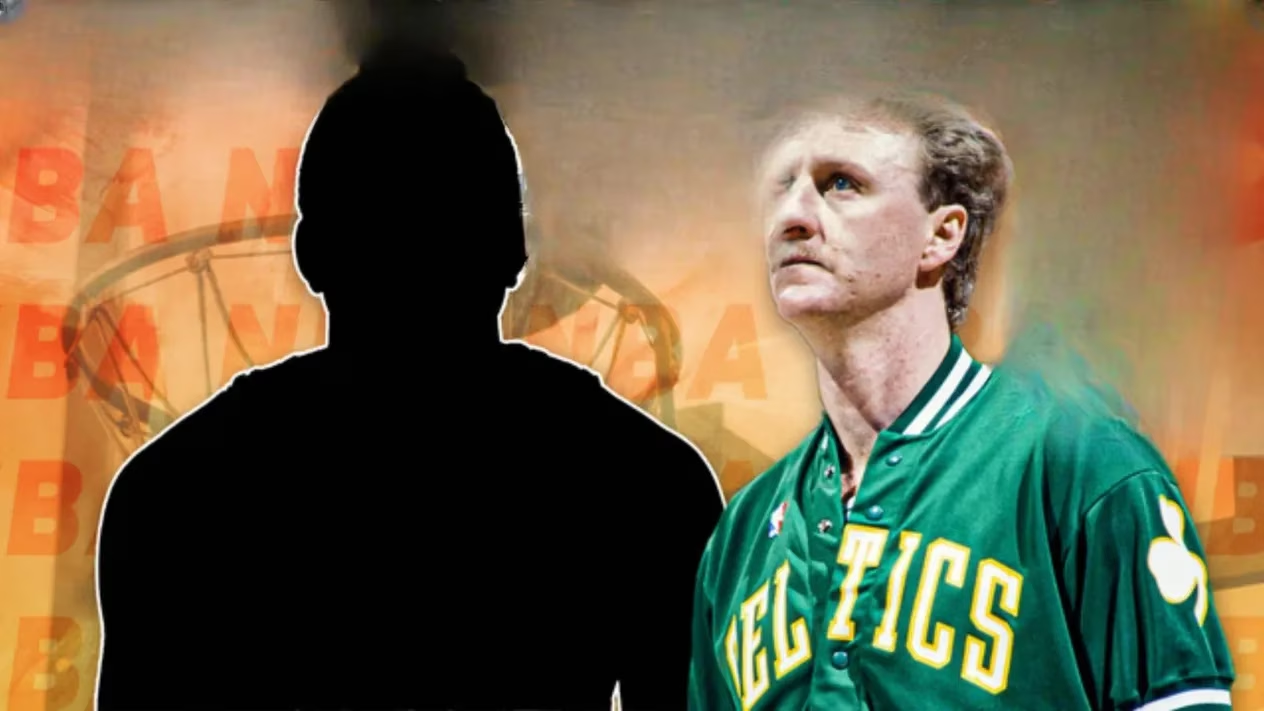
I remember being a kid in the late ’80s, staying up way past my bedtime to watch VHS tapes of classic Finals matchups. The physicality, the rivalry, the sheer artistry on the court—it felt larger than life. And right in the middle of it all were two forces of nature: Larry Bird and Earvin “Magic” Johnson. They didn’t just play against each other; they reshaped the entire league. The Celtics versus the Lakers. The blue-collar grit against the Showtime flash. For years, their disdain for one another was palpable. But as I got older, something heartwarming emerged from the shadows of that animosity. Beneath all the elbows and trash talk, there was a profound, almost reverential respect.
Bird, the legendary sharpshooter from French Lick, Indiana, was never one to hand out empty compliments. He was as blunt as they come. So, when he spoke about his greatest rival, the basketball world listened. And what he said still echoes in my mind today. According to those who were around him, Bird claimed that Magic Johnson was “head and shoulders” above everybody else in the sport. Not just above the point guards. Not just above the players of his era. Head and shoulders above everybody. That’s a statement so powerful it forces you to pause and ask: what did Magic possess that others didn’t?
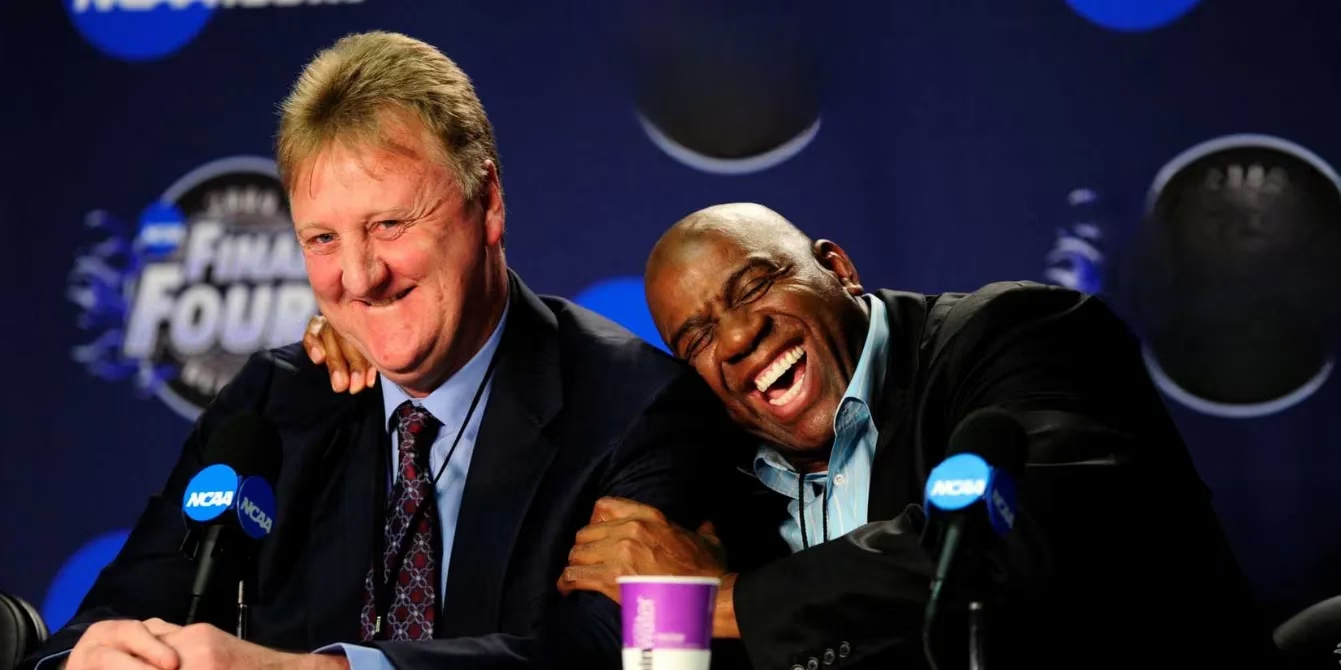
Was it the infectious smile that could disarm an entire arena? The no-look passes that made even seasoned defenders look foolish? Or was it the fact that Magic, a 6-foot-9 point guard built like a forward, could and did play every position on the floor? I’d argue it was all of that and more. Here was a player who redefined what a floor general could be. When Kareem Abdul-Jabbar went down with an injury in Game 6 of the 1980 Finals, Magic stepped in as a rookie, dropped 42 points and 15 rebounds, and sealed his first championship and Finals MVP. Who else could pull that off with such joyful ease? Bird saw that brilliance up close, year after year, on the game’s biggest stages. Their feud began in college, with Magic’s Michigan State overcoming Bird’s Indiana State in the 1979 NCAA title game—a match that remains the highest-rated basketball game ever. It didn’t stop there. They carried it into the NBA, meeting in three Finals series, with Magic’s Lakers winning two of those showdowns. Through it all, Bird recognized a competitor who elevated not just his team, but the entire sport.
I often think about the criteria we use to crown the GOAT. We count rings (Magic has five). We tally stats (leading the NBA in assists multiple times, 138 career triple-doubles). We talk about “winning DNA” and the ability to make teammates better. On that last one, who has ever done it better than Magic Johnson? His fast breaks were works of art, and his unselfishness was contagious. Michael Jordan made his teammates champions. LeBron James has carried rosters to the promised land. But Magic made his teammates stars. James Worthy, Byron Scott, even an aging Kareem all thrived in a system built on joy and sharing the basketball.
So why is Magic so often left out of the top-tier GOAT conversation today? Maybe because his career, tragically cut short by his HIV announcement in 1991, feels like an unfinished symphony. We ask ourselves what more he could have achieved. But isn’t it the mark of true greatness that even in a shortened prime, his CV is nearly untouchable? Bird didn’t need to imagine more. He saw enough to know that what he was witnessing was transcendent.
In 2026, I still love listening to hot-take artists debating Jordan vs. LeBron. It’s entertainment in its own right. Yet, late at night, when I really sit down to think about the purest form of basketball—the passing, the vision, the ability to win with charisma rather than sheer dominance—my mind goes back to Bird’s words. If Larry Legend, a man with three MVPs and three rings of his own, could look past the bitterness of a decade-long rivalry and crown his nemesis as the best thing the sport had ever seen, maybe the rest of us should listen a little more closely. The head and shoulders above everyone else? That sounds like a real GOAT to me.
Comments