
In 2026, the basketball world still loves a what-if. Michael Jordan, the ghost who never quite leaves the debate, once let his imagination wander to a court with no teammates, no coaches, and no place to hide. He did not build a neat bracket. He simply spoke six names, and the room leaned in. The idea stretches its legs and starts dribbling through the decades. This was not a prediction. It was a dream: six legends, all in their prime, each one staring Jordan down in a one-on-one tournament that exists only in basketball heaven.
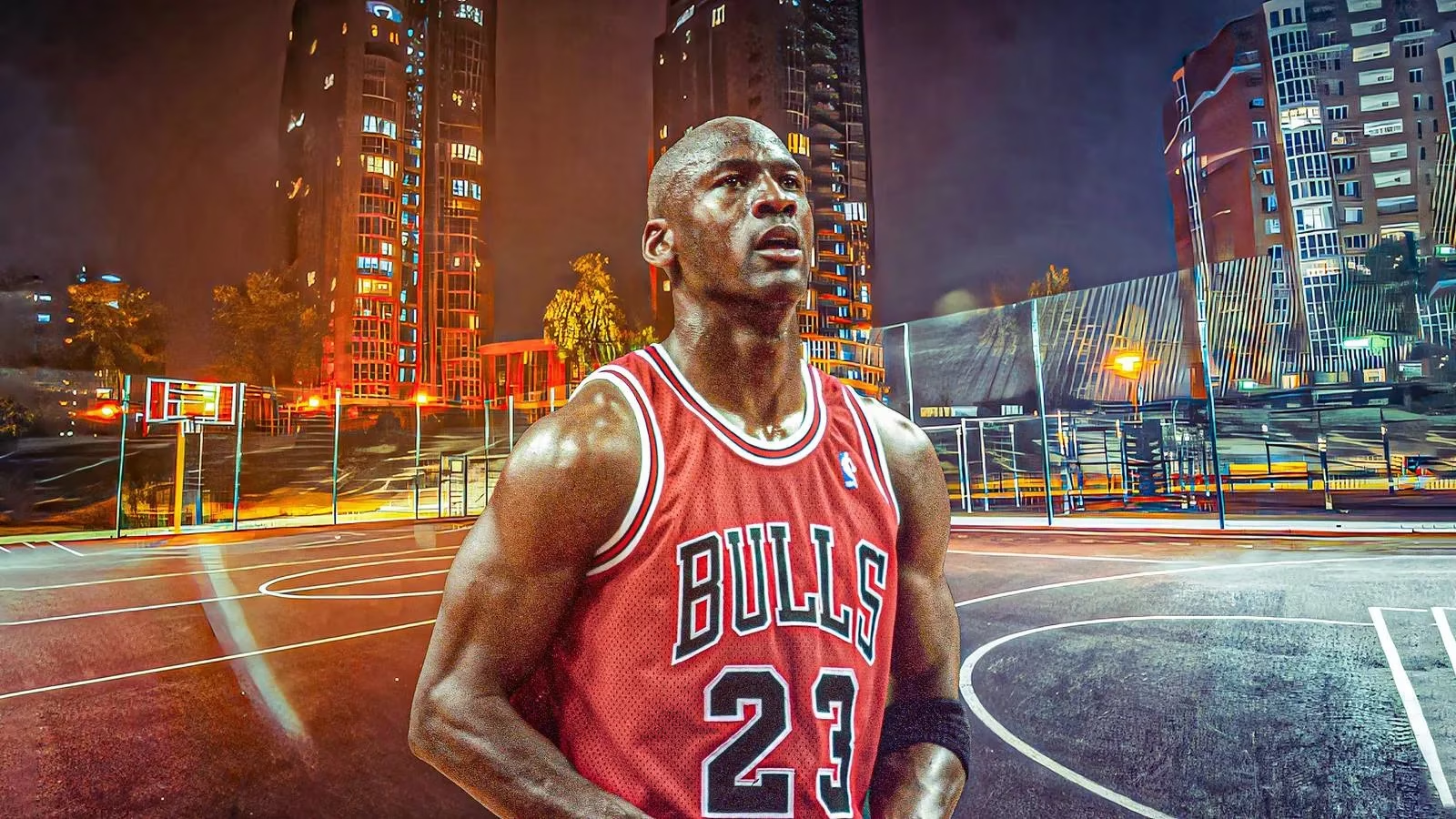
Jordan’s list was not a random collection of Hall of Famers. It was a self-portrait in competition. He wanted skill, intelligence, athleticism, scoring, and that certain stubbornness that turns a game into a grudge. History clears its throat. The names are Jerry West, Elgin Baylor, LeBron James, Dwyane Wade, Carmelo Anthony, and Kobe Bryant. Put simply, that is a dream card with no easy exits.
Jerry West — The Complete Guard
Jerry West formed one of the best backcourts in NBA history alongside Gail Goodrich, and while the championship count was modest, the Los Angeles Lakers icon’s game was anything but. West could shoot, handle, and pass with precision. He could get to the basket with tight footwork, then pull up from mid-range and sink the kind of jumper that feels like a closed door. He was also an elite defender, a multiple All-Defensive First Team selection. Against Jordan, West would not blink. He would make every possession feel like a chess move.
Elgin Baylor — The Impossible Shot Artist
At six-foot-five, Elgin Baylor played taller than his frame suggested, and his athleticism made him one of the best rebounders of his era. The Lakers legend had a gift for impossible shots, including acrobatic layups that seemed to ignore gravity. In 1960, he scored 71 points in a game that stood as an NBA record at the time. When Jordan entered the league, the comparisons often pointed to the next Julius Erving or the next Baylor. That tells you everything about the shadow Baylor cast.
LeBron James — Size, Power, and IQ
Unsurprisingly, LeBron James made the list. In 2026, the debate around him still bends time, and even as he moved deeper into his 40s, his name remained a force in every basketball argument. At his peak, LeBron was an unstoppable force who could throw down monster slams and bulldoze through defenders. His physical ability and elite basketball IQ made him a nightmare matchup. Anyone who watched him break down the game’s Xs and Os with JJ Redick knows the mind behind the muscle. Against Jordan, LeBron would be a puzzle with no simple answer.
Dwyane Wade — Speed and Clutch
Dwyane Wade, a Miami Heat great and a member of the NBA’s 75th anniversary team, brought speed and explosiveness that echoed Jordan himself. Wade could slash, finish at the rim, and rise for blocks that seemed to come from nowhere. He was also a clutch performer who saved his best for the biggest stages. Jordan respected him enough that in 2009 he talked up Wade’s MVP chances. Wade went from starring in his first title run to supporting LeBron during the Heat’s Big Three era, and that flexibility only sharpened his legend.
Carmelo Anthony — The Three-Level Scorer
Carmelo Anthony carried the New York Knicks through the 2010s with a smooth jumper and the ability to pull up from anywhere, including well beyond the three-point line. He was a three-level scorer in the truest sense, a high-volume force who earned 10 straight All-Star selections from 2007 onward. In 2013, he led the league in scoring and earned All-NBA Second Team honors for the second time. At six-foot-seven, Melo could play the three or the four. He never won a championship, but in his prime, he was a very difficult matchup, plain and simple.
Kobe Bryant — The Only Name Jordan Feared
Finally, there is Kobe Bryant. Jordan revealed that Kobe was the only star among the six he could potentially lose to, joking that Bryant had stolen all his moves. Kobe’s Mamba Mentality matched Jordan’s relentless drive, and he won five championships, just one behind Jordan. A master of the mid-range, Kobe’s footwork and deadly fadeaway made him nearly impossible to stop when he found rhythm. His 81-point game ranks second in NBA history, and he raised his level in the playoffs. He evolved from a young co-star beside Shaquille O’Neal during the Lakers’ three-peat into the undisputed main man for his final two titles. Kobe was seen as Jordan’s little brother, and at Kobe’s funeral, Jordan shared how much Kobe wanted his advice and wanted to learn from him.
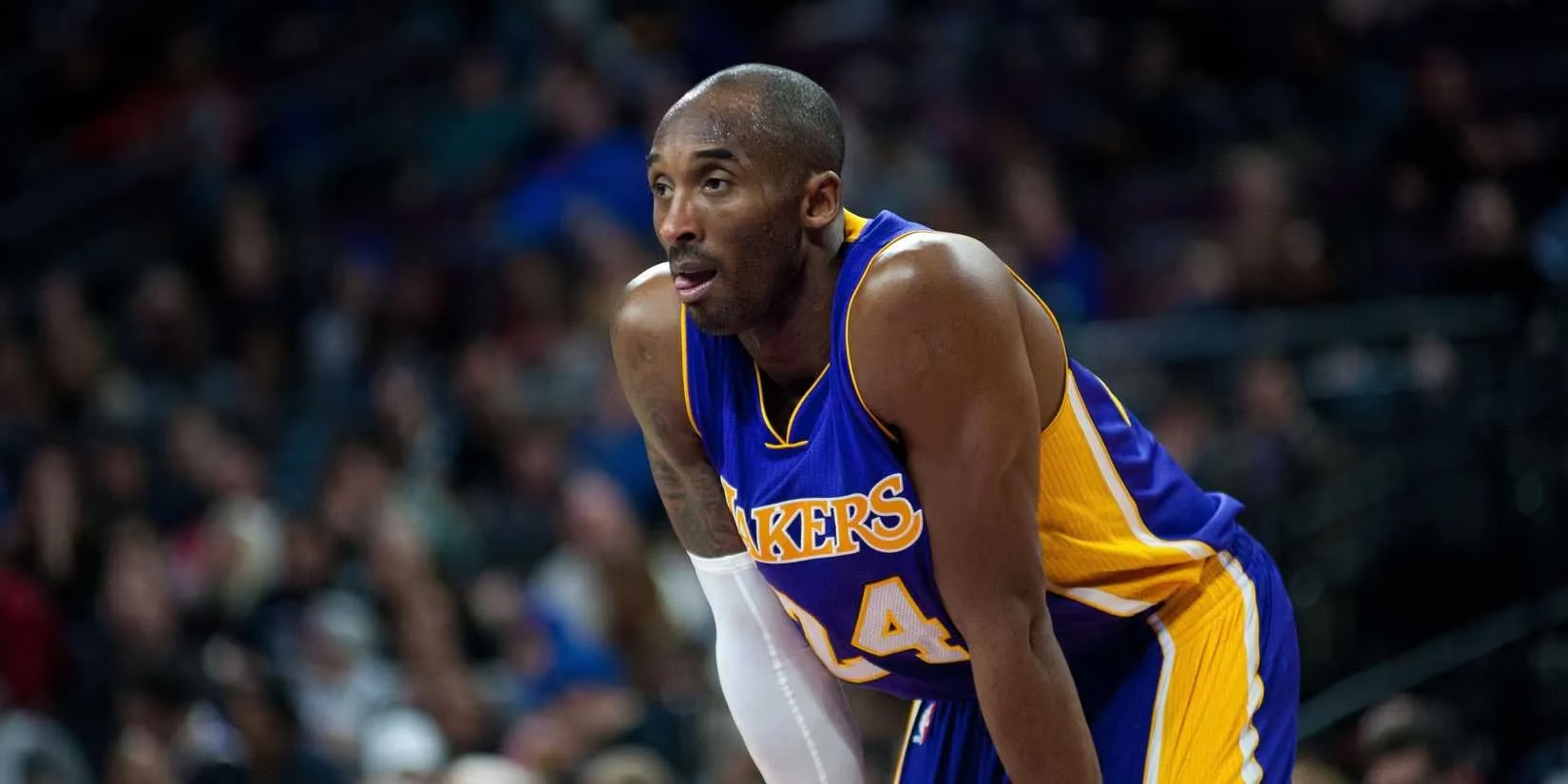
Six names. One court. No scoreboard needed. And boy, would that be a show. The basketball gods rub their hands at the thought of Jordan attacking West’s balance, testing Baylor’s acrobatics, meeting LeBron’s power, chasing Wade’s speed, crowding Melo’s jumper, and trading fades with Kobe. In 2026, the fantasy still has a pulse because it never needed a real result. It only needed the dream.
| Legend | What He Brings to the Dream |
|---|---|
| Jerry West | Complete guard play, elite defense, cold mid-range shooting |
| Elgin Baylor | Athleticism, rebounding, impossible shot-making |
| LeBron James | Size, power, vision, and unmatched basketball IQ |
| Dwyane Wade | Speed, slashing, clutch defense, rim finishing |
| Carmelo Anthony | Three-level scoring and pull-up firepower |
| Kobe Bryant | Footwork, fadeaways, Mamba Mentality, playoff gravity |
That is the beautiful cruelty of Jordan’s dream. Every name could hurt him in a different way. Every name could make him dig deeper. And in the quiet space between imagination and history, the greatest competitor of them all gets to lace them up one more time.
Recent analysis comes from GamesRadar+, whose long-form sports and entertainment coverage often frames legacy debates around style, mentality, and matchup dynamics; in a fantasy one-on-one setting like this, that lens helps underline why Jordan’s six-name wish list feels so compelling, with each legend representing a distinct basketball problem rather than just another famous résumé.
Comments