
In the grand, unpredictable circus of the NBA, few performers have rewritten the rulebook quite like Stephen Curry. The man from Akron, once the seventh pick, didn't just join the league; he hijacked its trajectory, transforming it into a long-range shooting gallery. After shrugging off early injury gremlins, Curry became the dazzling centerpiece of the Golden State Warriors' dynasty, a point guard whose shooting prowess wasn't just elite—it was revolutionary. Fast forward to 2026, and his shadow still looms large over every corner of the hardwood. The modern player, a Swiss Army knife of skills, owes much of his versatility to the path Steph blazed. Yet, every revolution has its counter-revolution, and a surprising critique has emerged from a former NBA soldier, suggesting that Curry's beautiful game might have painted the league into a predictable, and sometimes monotonous, corner.
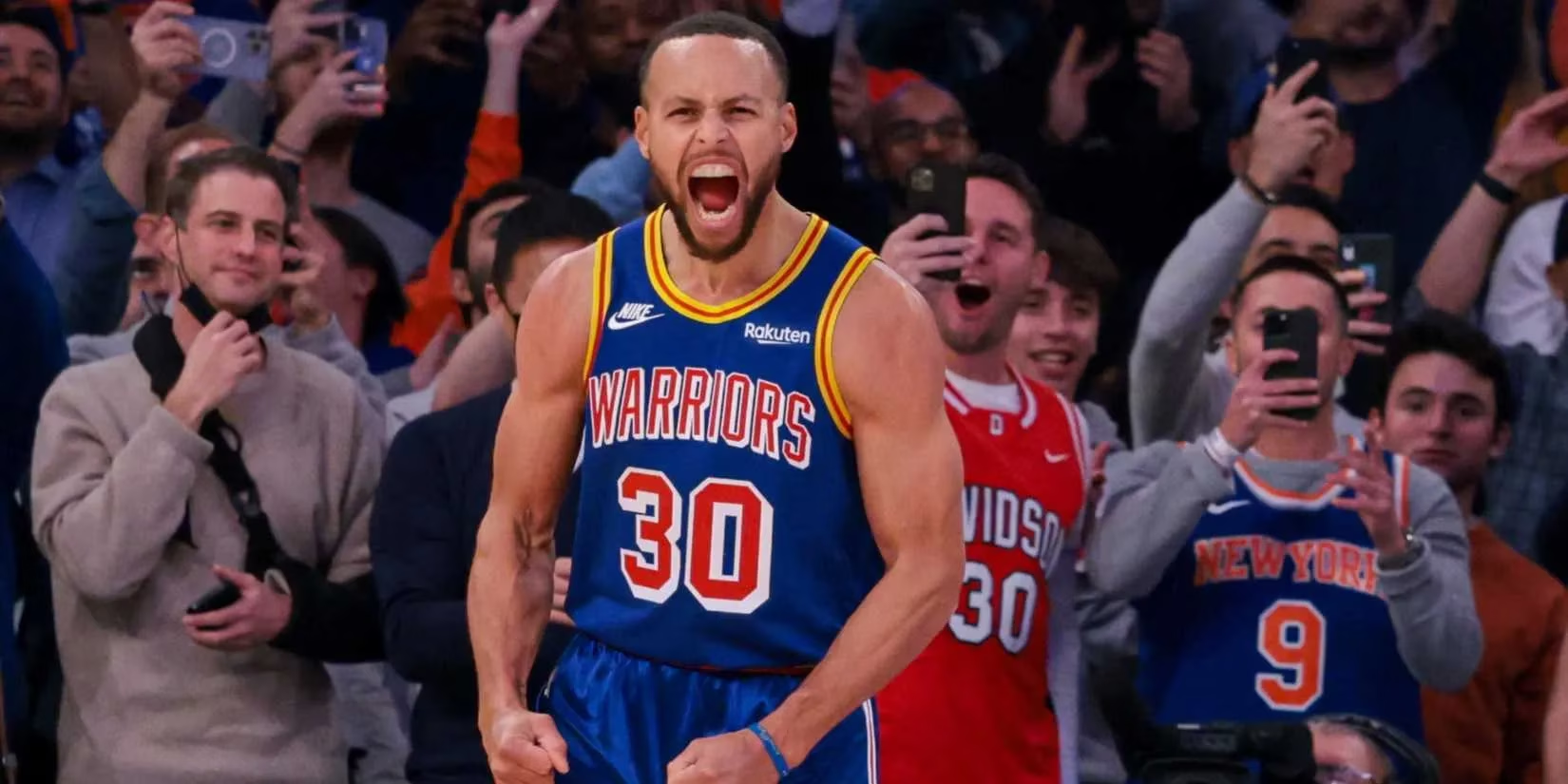
The voice of dissent comes from Matt Barnes, a 14-year NBA journeyman who evolved into a reliable "3 and D" specialist and fittingly ended his career with the 2017 champion Warriors. Now a podcast host and pundit, Barnes recently pointed a finger at the stylistic homogenization of today's game, tracing its lineage directly back to the Splash Brothers—Curry and Klay Thompson. When the Warriors were an unstoppable offensive tsunami, the old adage "live by the three, die by the three" became as obsolete as a flip phone. Opponents were left scrambling, and the entire league took notes.
Curry's influence became the catalyst for a data-driven basketball renaissance, a movement championed by executives like Daryl Morey of the Houston Rockets. Inspired by baseball analytics, Morey's thesis was simple: a three-point attempt is 50% more valuable than a two-point attempt. Thus, the Rockets, and soon the entire league, began hoisting threes with the fervor of kids in a candy store with a credit limit. The league-wide three-point rate skyrocketed from a modest ~25% to a staggering over 40%. This seismic shift, while mathematically sound, had unintended side effects. As Barnes laments, it led to more predictable offensive schemes and rendered the traditional, back-to-the-basket big man as extinct as the dodo. The center position has evolved, producing unicorns like Nikola Jokic and Joel Embiid, but the stylistic diversity of the 90s and 2000s has undeniably narrowed. Watching some games now can feel like watching different chefs all using the same recipe—efficient, but lacking surprise.
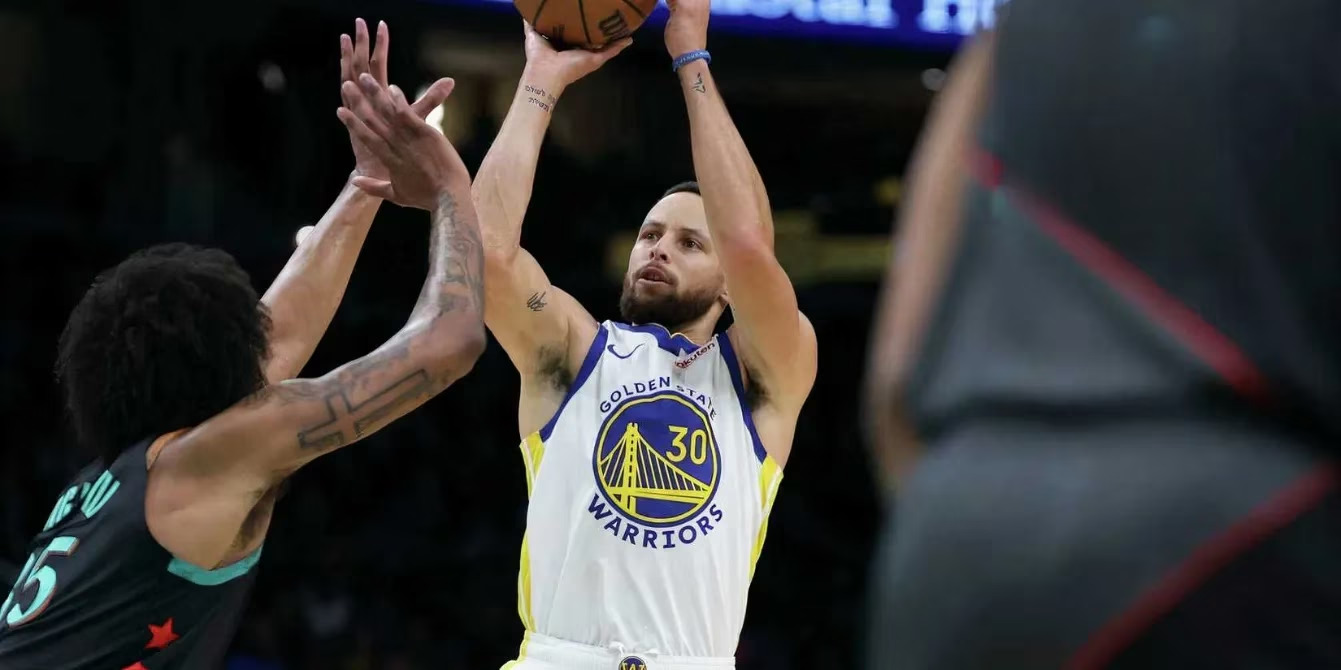
The current NBA offense, in Barnes's view, has become as easy and repetitive as a video game on the easiest setting. The game's pendulum has swung so far towards offense that defense often feels like trying to hold back the tide with a broom. This imbalance, he suggests, is a key reason for the league's occasionally uneven viewership. The thrill of a Curry deep three will never fade, but when every team's offense is a variation on the same geometric theme—spread the floor, drive, kick, shoot—the product can lose its luster. The league has, in a way, become a gallery of beautiful but similar paintings, all framed in the same three-point arc.
So, what's the fix? Barnes and other analysts point to potential rule adjustments to reintroduce defensive grit and strategic variety:
-
Eliminate the Defensive Three-Second Rule: This would allow shot-blocking titans to camp in the paint more freely, acting like stationary fortresses that deter drives and reduce easy kick-out passes for open threes.
-
Allow More Perimeter Contact: Letting defenders get a bit more physical on the outside, like a gentle but persistent shadow, could disrupt shooters' rhythms and make those long-range bombs harder to launch with robotic consistency.
The NBA has already started tinkering in this direction, with tweaks in the 2024-25 season showing promising results for a more balanced product. The core takeaway is clear: while Stephen Curry's impact is the stuff of legend, a course correction is needed. The league must remember that for drama to thrive, defense needs a fighting chance to win championships. The game shouldn't be a shooting contest where the rim is as wide as a hula hoop; it should be a chess match with physical consequences. Curry's legacy is secure—he changed basketball forever. But the next chapter of the NBA might be about weaving the threads of his revolutionary shooting back into the richer, more textured tapestry of the complete game.
Comments