
It's 2026, and LeBron James is still out there, defying Father Time like a vintage wine that somehow gets better with every passing decade. He's not just a player anymore; he's a living, breathing monument to basketball excellence. Yet, for all the MVPs, championships, and that all-time scoring crown that feels as permanent as a mountain range, there's one piece of criticism that never fully dissolved, one comment that left a scar. And it came from a man whose own legacy is carved from championship trophies: the "Zen Master" himself, Phil Jackson.
The Jab That Cut Deeper Than a Fadeaway
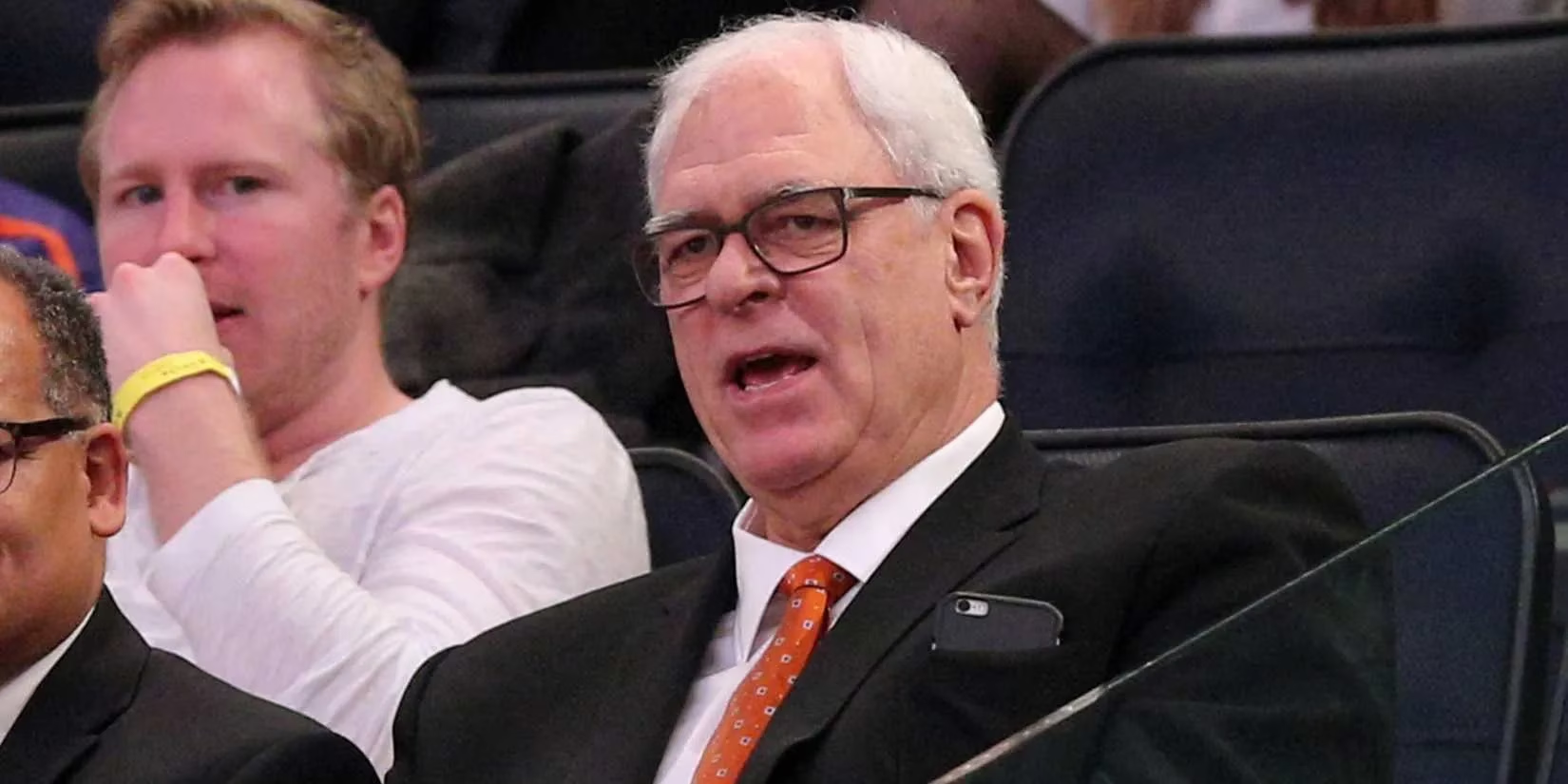
Back in 2016, after LeBron made his heroic return to Cleveland, Phil Jackson, then with the Knicks, decided to share his thoughts. He didn't just critique LeBron's game; he went for his circle. In an interview, Jackson used the term "posse" to describe LeBron's childhood friends and now-powerful business partners, Rich Paul and Maverick Carter. To most of us, a word. To LeBron, it was a loaded grenade disguised as vocabulary.
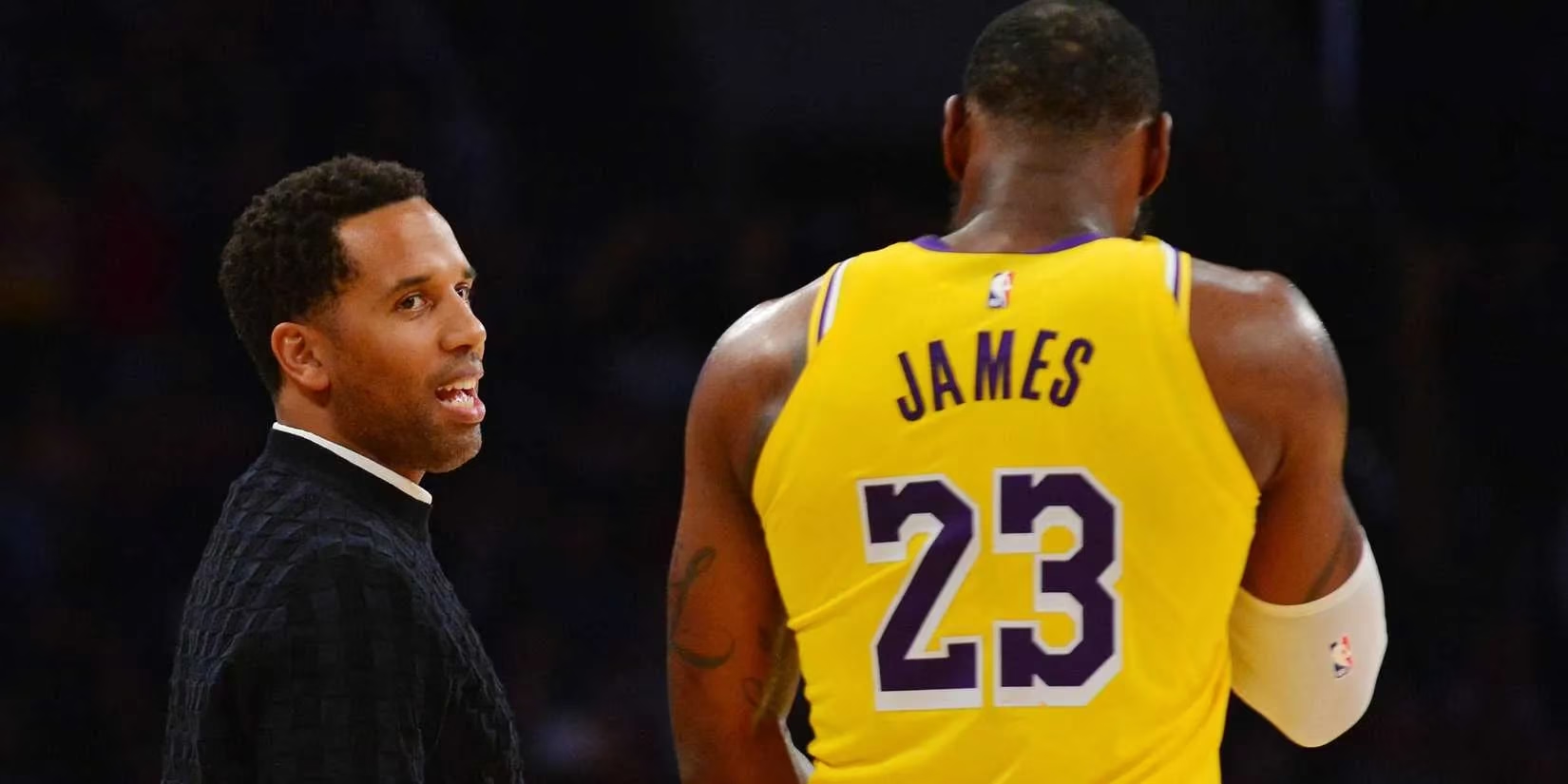
LeBron's response wasn't the usual athlete's shrug. It was immediate, personal, and fierce. In a post-game presser, he stated he had lost all respect for Phil Jackson. He unpacked why that word "posse" wasn't just outdated—it felt racially charged, a dismissive term that reduced his ambitious, successful Black friends and partners to a gang of hangers-on. For LeBron, this wasn't about basketball strategy; it was about disrespecting his family. His inner circle isn't an entourage; it's the foundation of his empire, as intricate and essential as the root system of a centuries-old redwood tree.
More Than a Coach, A Dynasty Architect
Let's rewind. Phil Jackson isn't some random critic. The man is the most decorated coach in history, a sculptor of dynasties. His eleven championship rings aren't just jewelry; they're the pillars holding up entire eras of NBA lore. From Jordan's Bulls to Kobe's Lakers, Jackson was the mastermind. This context makes his words carry the weight of a historical decree. When he speaks, the basketball world has always leaned in to listen. But this time, LeBron wasn't just listening; he was firing back at the institution itself.
The Unbreakable Code: Family & Friends First
This incident cracked open a core part of LeBron's personality that we've seen time and again. He can handle the slings and arrows aimed at his game—the "not clutch" narratives, the Finals record debates. They roll off him like water off a seal's back. But come for his people? That's where you find the line, drawn in permanent ink.
-
The Rich Paul & Maverick Carter Factor: These aren't just "buddies." They are architects. Rich Paul is arguably the most powerful agent in sports, a kingmaker in his own right. Maverick Carter is a media and business mogul. Calling them a "posse" is like calling the board of a Fortune 500 company a "clubhouse." It fundamentally misunderstands their power and LeBron's intentional, strategic world-building.
-
The Bronny Precedent: Fast forward to just last season. When ESPN's Stephen A. Smith commented on Bronny James's journey, LeBron publicly clapped back. The pattern is clear. His family and his inner circle are a sanctuary, and perceived attacks on them trigger a protective instinct as fierce as a mother bear's.
A Frozen Rivalry in a Thawing League
What's fascinating is that LeBron doesn't hold many grudges. His battles with on-court pests like Lance Stephenson or rivals like Paul Pierce have melted away into mutual respect and even nostalgia. Those were basketball wars. The Phil Jackson thing was different. It was personal, cultural, and it came from a place of perceived authority.
And here we are, a decade later. No public apologies, no reconciliations. Phil Jackson has faded from the league's daily discourse, while LeBron continues to add chapters to his myth. Their stalemate is like a perfectly preserved insect in amber—a snapshot of a conflict that time simply decided not to resolve. For two men who have spent their lives pursuing championships and harmony (Jackson with his Zen, LeBron with his brotherhood), this one discordant note remains stubbornly unresolved. It's a reminder that even for legends, some words, once released, can't be called back. They just hang in the air, a permanent stain on the relationship's canvas.
Comments